





Pull to refresh
Logo
Daily Brief
Following
Why Ranks Sign Up
Supreme Court bars private lawsuits under the 1940 mutual fund law

Supreme Court bars private lawsuits under the 1940 mutual fund law

Rule Changes

A 6-3 ruling hands enforcement of the Investment Company Act to the SEC and strips activist investors of a favored legal weapon

Yesterday: Court bars private lawsuits, 6-3

Overview

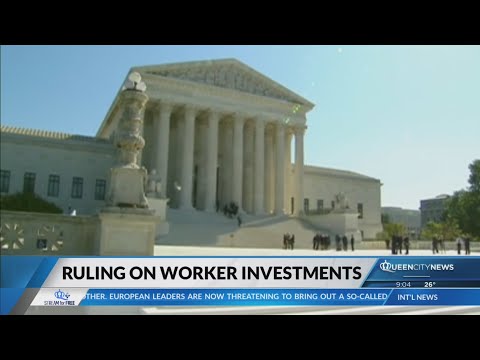
For decades, investors could sue a mutual fund directly to undo contracts that broke federal fund law. On June 11, 2026, the Supreme Court closed that door. By a 6-3 vote, the justices ruled that ordinary investors have no right to sue under the Investment Company Act of 1940, the law that governs mutual funds and similar pooled investments.

Enforcement now rests almost entirely with one regulator: the Securities and Exchange Commission. The decision ends a campaign by hedge fund Saba Capital, which had used the courts to strike down fund rules that capped its voting power. Fund managers won a shield. Activist investors lost a tool.

Why it matters

If you own a closed-end fund, the SEC, not activist investors, is now the main check on a manager who breaks the 1940 law.

Questions about this story

No questions yet — be the first to ask.

Key Indicators

6-3
Court vote
The justices split along ideological lines, with Barrett writing for the majority.
86 years
Age of the law
The Investment Company Act was signed in 1940 and had never been read this way by the high court.
11
Funds Saba sued
Saba Capital won against eleven closed-end funds in lower courts before the reversal.
~$250B
Closed-end fund market
Roughly the total assets held in U.S. closed-end funds, the corner of the market this fight centered on.

Voices

Curated perspectives — historical figures and your fellow readers.

Ever wondered what historical figures would say about today's headlines?

Sign up to generate historical perspectives on this story.

Play

Exploring all sides of a story is often best achieved with Play.

Log in to play. Track your picks, climb the leaderboards. Log in Sign Up
Predict 4 ways this could play out. Contrarian picks score more — points lock when the scenario resolves. Log in to play
Higher or Lower Two numbers from this story. Guess which is bigger. 5 rounds to set a streak. Log in to play
Timeline Five events from this story — drag them oldest to newest. Log in to play
Connections Sixteen names from the news. Find the four hidden groups of four. Log in to play

People Involved

Organizations Involved

Timeline

August 1940 June 2026

5 events Latest: Yesterday
Tap a bar to jump to that date
  1. Congress passes the Investment Company Act

    Legislation

    The law sets rules for mutual funds and other pooled investments, including a requirement that every share carry equal voting power.

Historical Context

3 moments from history that rhyme with this story — and how they unfolded.

April 2001

Alexander v. Sandoval (2001)

The Supreme Court ruled 5-4 that private individuals could not sue to enforce disparate-impact rules under Title VI of the Civil Rights Act. Justice Scalia wrote that courts should not invent private lawsuits Congress did not clearly create.

Then

The decision shut down a common route civil-rights plaintiffs had used against state agencies.

Now

It set the modern test: courts presume no private right of action unless the statute's text plainly grants one.

Why this matters now

Sandoval is the doctrine Barrett applied. Both cases turn on the same question: did Congress actually authorize private suits, or did courts read them in?

June 1979

Touche Ross & Co. v. Redington (1979)

The Court held that Section 17(a) of the Securities Exchange Act gave investors no private right to sue an accounting firm. The provision set recordkeeping duties but said nothing about who could enforce them in court.

Then

Investors lost a path to sue auditors directly under that section.

Now

It marked the Court's shift away from freely implying private remedies in securities laws.

Why this matters now

Like Section 47(b), the provision in Touche Ross was about duties and remedies, not lawsuits. The Court again declined to read a right to sue into silence.

January 2008

Stoneridge Investment Partners v. Scientific-Atlanta (2008)

The Court ruled 5-3 that investors could not sue a company's suppliers and customers for helping it commit securities fraud. It narrowed who counts as a defendant under the main antifraud rule.

Then

Third parties such as vendors and banks gained protection from private fraud suits.

Now

It reinforced a trend of limiting private securities litigation and leaning on the SEC to pursue secondary actors.

Why this matters now

Stoneridge shows the same pattern: the Court trims private suits and points plaintiffs toward the regulator, exactly the shift this ruling makes for fund law.

Sources

(7)