
Pull to refresh
Logo
Madsen Park closes for $1.15M upgrade as revitalization continues

Madsen Park closes for $1.15M upgrade as revitalization continues

Built World Salt Lake City, UT local

Expanded playground, game zone, and dog park funded by voter-approved bond; reopening set for spring 2027

Yesterday: City announces $1.15M second phase for Madsen Park

Overview

Updated 1 hour ago

Madsen Park in Salt Lake City's Fairpark neighborhood closes October 26 for a $1.15 million expansion. Funded by a voter-approved parks bond, the project adds an expanded playground, a game zone, and a new dog park, with reopening scheduled for spring 2027.

The closure is the final phase of a five-year turnaround. The park was shut down over crime concerns in 2021, rebuilt with help from the nonprofit Kaboom! and Morgan Stanley, and is now one of several city parks benefiting from the $85 million bond voters approved in 2022.

Why it matters

Voter-approved bonds are turning Salt Lake City's once-neglected Madsen Park into a family hub — a model for park reinvestments.

Monday: what changed in Salt Lake City, UT

One short email a week with the openings, closings, permits and council votes we covered. Free. Unsubscribe in one click.

Questions about this story

Free account needed to ask — your question is kept and asked for you right after sign-up. Answers are public.

No questions yet — be the first to ask.

Key Indicators

$1.15M
Total project funding
Composed of $1.05M from the 2022 GO bond and $100K in impact fees.
$85M
Voter-approved parks bond (2022)
Parks, Trails, and Open Space General Obligation Bond backing the Madsen Park project.
100+
Volunteers at 2025 playground build
Most volunteers came from Morgan Stanley, which also funded the playground through a grant.
2
Rounds of community engagement
Residents prioritized amenities for children, dogs, and neighbor gatherings.

Voices

Curated perspectives — historical figures and your fellow readers.

Ever wondered what historical figures would say about today's headlines?

Sign up to generate historical perspectives on this story.

People Involved

Organizations Involved

Timeline

December 2021 October 2026

5 events Latest: Yesterday
Tap a bar to jump to that date
  1. Madsen Park closes for construction

    Upcoming Construction

    Park closes for upgrades scheduled to finish in spring 2027. Nearby parks listed as alternatives during the closure.

  2. City announces $1.15M second phase for Madsen Park

    Latest Announcement

    Department of Public Lands says the park will close October 26 for construction of expanded playground, game zone, and dog park.

  3. Kaboom! builds new playground at Madsen Park

    Construction

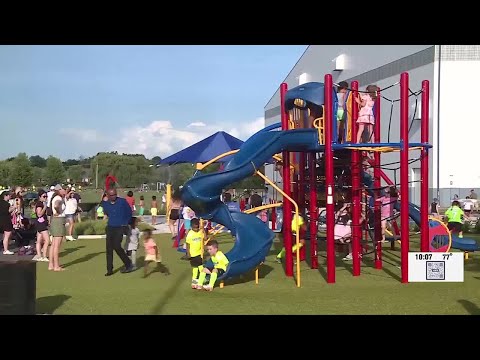
    Over 100 volunteers assemble a new playground and complete other improvements; ribbon cut by city officials and Morgan Stanley.

  4. Voters approve $85M parks bond

    Referendum

    Salt Lake City voters approve the Parks, Trails, and Open Space General Obligation Bond, funding park improvements citywide.

  5. City closes Madsen Park over safety concerns

    Closure

    Drug use, dealing, and crime in the park led to its temporary shutdown — likely a first for a Salt Lake City public park.

Scenarios

1

Madsen Park reopens on schedule with all planned amenities

Likely Resolves by Aug 31, 2027

Discussed by: SLC.gov (city announcement)

Construction proceeds without major delays. The park reopens in spring 2027 with the expanded playground, game zone (cornhole, ping pong, chess), dog park, and new trees. The city's stated timeline holds and residents return to a fully upgraded park.

2

Construction delays push Madsen Park reopening into late 2027

Possible Resolves by End of 2027

Discussed by: Common delays in municipal construction projects (weather, supply chains, contractor availability)

Winter weather or permit issues delay the project beyond the scheduled spring 2027 reopening. The park remains fenced through summer or into fall, leaving residents without the promised amenities for longer than planned.

3

Madsen Park turnaround becomes a model for other Salt Lake City parks

Uncertain Resolves by Q2 2028

Discussed by: City Council members and Public Lands officials (public statements)

The community-driven revitalization — engagement rounds, Kaboom! partnership, bond funding — becomes a template. The city accelerates similar upgrades at other parks funded by the remaining $85M bond, announcing new projects modeled on Madsen Park.

Historical Context

2 moments from history that rhyme with this story — and how they unfolded.

1979-1992

Bryant Park, New York City (1979-1992)

By the late 1970s, Bryant Park behind the New York Public Library was a crime hotspot known for drug dealing and had become largely unusable. A private nonprofit, the Bryant Park Restoration Corporation, was established in 1979 to lead a roughly $18 million restoration. The park closed for redesign in 1988 and reopened in April 1992.

Then

The restored park became one of midtown Manhattan's busiest public spaces within a few years, hosting events like Fashion Week.

Now

It became the national model for public-private park management, showing that targeted investment can transform neglected urban green spaces.

Why this matters now

Like Madsen Park, Bryant Park was a neglected public space with severe crime problems transformed through public and private investment plus community demand for change.

1987-2020s

Prospect Park, Brooklyn (1987 onward)

Prospect Park, designed by Frederick Law Olmsted and Calvert Vaux, had deteriorated badly by the 1980s with a reputation for crime. The Prospect Park Alliance, a public-private partnership, was founded in 1987 to restore the park.

Then

Over three decades, the Alliance raised hundreds of millions of dollars to restore the landscape, paths, and buildings.

Now

Crime declined dramatically and park usage rebounded, demonstrating that sustained maintenance partnerships outlast any single construction project.

Why this matters now

Shows how a public-private partnership model — similar to Salt Lake City's City + Kaboom! + Morgan Stanley approach — can rehabilitate parks that cities alone struggled to maintain.

Sources

(3)