
Pull to refresh
Logo
San Diego port orders emergency repairs to El Niño-damaged Bayshore Bikeway

San Diego port orders emergency repairs to El Niño-damaged Bayshore Bikeway

Built World San Diego, CA local

An eroded embankment and a damaged culvert will close parts of the 24-mile bayfront route between Flamingo Trail and State Route 75 for 15 to 20 days.

Overview

Updated 1 hour ago

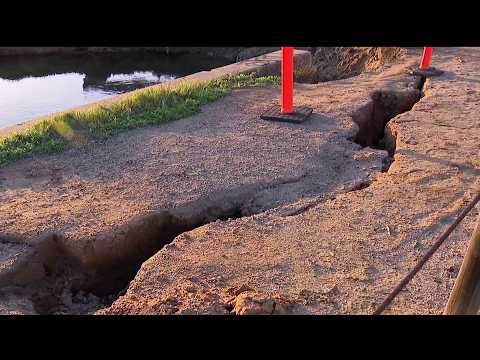
The Port of San Diego will make emergency repairs to a section of the Bayshore Bikeway in Imperial Beach. Rising water eroded an embankment and destabilized a culvert at Pond 10A, where the path crosses a tidal channel. The damaged stretch runs between Flamingo Trail and State Route 75, and flaggers will route cyclists around intermittent closures for 15 to 20 days.

The 24-mile route from Coronado through Imperial Beach to downtown San Diego is the region's main car-free bayfront corridor. The port counts it among the stretches most exposed to flooding. The repairs are temporary, and no timetable has been given for a permanent fix.

Why it matters

The same water levels now closing a bike path will test San Diego's entire low-lying bayfront through the winter.

Last Monday's email for San Diego, CA

Sent Nov 16. It carried:

Get next Monday's: one short email a week. Free. Unsubscribe in one click.

Questions about this story

Free account needed to ask — your question is kept and asked for you right after sign-up. Answers are public.

No questions yet — be the first to ask.

Key Indicators

24 mi (38 km)
Bayshore Bikeway length
Runs from Coronado through Silver Strand, Chula Vista and Imperial Beach to downtown San Diego.
15–20 days
Emergency repair window
Depends on tides; the port targets a full reopening around mid-December.
Up to 30 cm
Water-level rise from Kelvin waves
Warm-water pulses that travel up the West Coast and stack on top of normal tides.
5
Bayfront zones the port flags as flood-prone
The Embarcadero, Embarcadero Marina Park North, downtown, Point Loma and the Bayshore Bikeway.

Voices

Curated perspectives — historical figures and your fellow readers.

Sign up to generate historical perspectives on this story.

People Involved

Organizations Involved

Timeline

October 2026 November 2026

4 events Latest: Yesterday
Tap a bar to jump to that date
  1. Port announces emergency bikeway repairs

    Latest Infrastructure

    Work on the eroded embankment and culvert at Pond 10A brings intermittent closures.

  2. Coastal flood advisory covers San Diego County

    Warning

    Weather Service warned of flooded roads; the port listed the Bayshore Bikeway as vulnerable.

  3. Dry-weather flooding closes West Harbor Drive

    Flooding

    High water shut a stretch between Market and Front streets for roughly an hour.

  4. Port declares local emergency ahead of El Niño

    Declaration

    Commissioners declared a local emergency citing forecast storm impacts and dry-season bayfront flooding.

Scenarios

1

Bikeway segment reopens on schedule in mid-December

Likely Resolves by End of 2026

Discussed by: Port of San Diego project statement; Times of San Diego

The port says the work takes 15 to 20 days depending on tides, with full reopening possible by mid-December. Hitting that window depends on tidal cycles that limit when crews can work in the channel. The stretch between Flamingo Trail and State Route 75 returns to cyclists without further closure.

2

Winter tides force a second closure of the repaired segment

Possible Resolves by Q1 2027

Discussed by: Port of San Diego flood-vulnerability list; National Weather Service coastal flood advisories

The repairs are temporary and no permanent fix has a timetable. If another Kelvin wave pulse or a storm arrives on a king tide, the rebuilt embankment and culvert meet the same water levels that broke them the first time.

3

The winter arrives weaker than forecast and the repairs outlast the threat

Possible Resolves by Apr 30, 2027

Discussed by: Seasonal precipitation records from past El Niño years

Strong El Niño forecasts have overshot before. If this winter delivers below-normal rain to San Diego, the October emergency declaration and the Pond 10A repairs will read as preparation for a season that mostly did not show up.

Historical Context

3 moments from history that rhyme with this story — and how they unfolded.

1997–1998

El Niño winter of 1997–98

One of the strongest El Niños on record sent a train of storms into California through the winter. Beaches eroded, bluffs collapsed and coastal highways were cut, with damage concentrated on low-lying shorelines.

Then

State and federal agencies funded emergency beach nourishment and bluff stabilization along the hardest-hit stretches.

Now

The season became the reference case for how El Niño-driven water levels attack California coastal infrastructure.

Why this matters now

The failure mode now showing at Pond 10A is the same one: elevated water, higher tides and wave energy arriving together.

January 2024

January 2024 San Diego floods

An atmospheric river stalled over San Diego on January 22, 2024. Storm drains built for ordinary rain backed up, and neighborhoods in the city's southeast flooded, stranding residents and vehicles.

Then

The city and county opened shelters and began reviewing the stormwater network.

Now

The floods pushed San Diego to reassess a drainage system sized for typical rain, the same constraint its El Niño guidance now cites.

Why this matters now

It is the recent baseline for what happens when San Diego's drainage meets water it was not designed for.

2015–2016

The 2015–16 El Niño that underdelivered

Forecasters expected a historically strong El Niño to soak Southern California. Southern California ended that winter with below-normal rainfall, though Northern California fared better.

Then

Preparations and emergency declarations in the south went largely unused.

Now

It became the standard caution against treating El Niño forecasts as certainties for any single stretch of coast.

Why this matters now

This season's 'super' El Niño forecast carries the same uncertainty, which is part of why the port calls the current work temporary and tide-dependent.

Sources

(3)