Anchor

Addictive feed ban for minors and AI chatbot audits take effect in 2027
Yesterday: Child safety package signedNew here? Follow stories to track developments over time. Create a free account to get updates when stories you care about change.
Overview
Updated YesterdayCalifornia will require social media platforms to verify users' ages before serving them addictive features, and ban those features for users under 16. A companion law forces AI chatbot operators to audit their products for child-safety risks and hand results to independent auditors.
Governor Gavin Newsom signed the package Thursday in Sausalito, flanked by parents of teens who died by suicide after using social media and AI chatbots. The rules are among the strongest state-level child online protections in the country, and because companies rarely build state-specific versions, they could shape how minors everywhere experience social media.
Why it matters
California's rules could dictate how social media and AI chatbots treat minors nationwide, since platforms rarely build state-specific versions.
Questions about this story
Free account needed to ask — your question is kept and asked for you right after sign-up. Answers are public.
No questions yet — be the first to ask.
Key Indicators
3
Bills signed in the 2026 child safety package
SB 1119 (Adam's Law), AB 2, and AB 1709, signed Sept. 10, 2026.
$18B
Meta's settlement with states over addictive design
Up to $18 billion to California and most other states, announced days before the signing.
16
Age cutoff for addictive social media features
Platforms must verify ages or delete accounts of under-16 users who refuse a non-addictive version.
5
States with companion chatbot safety laws
California, New York, Idaho, Oregon, and Washington.
Related Media
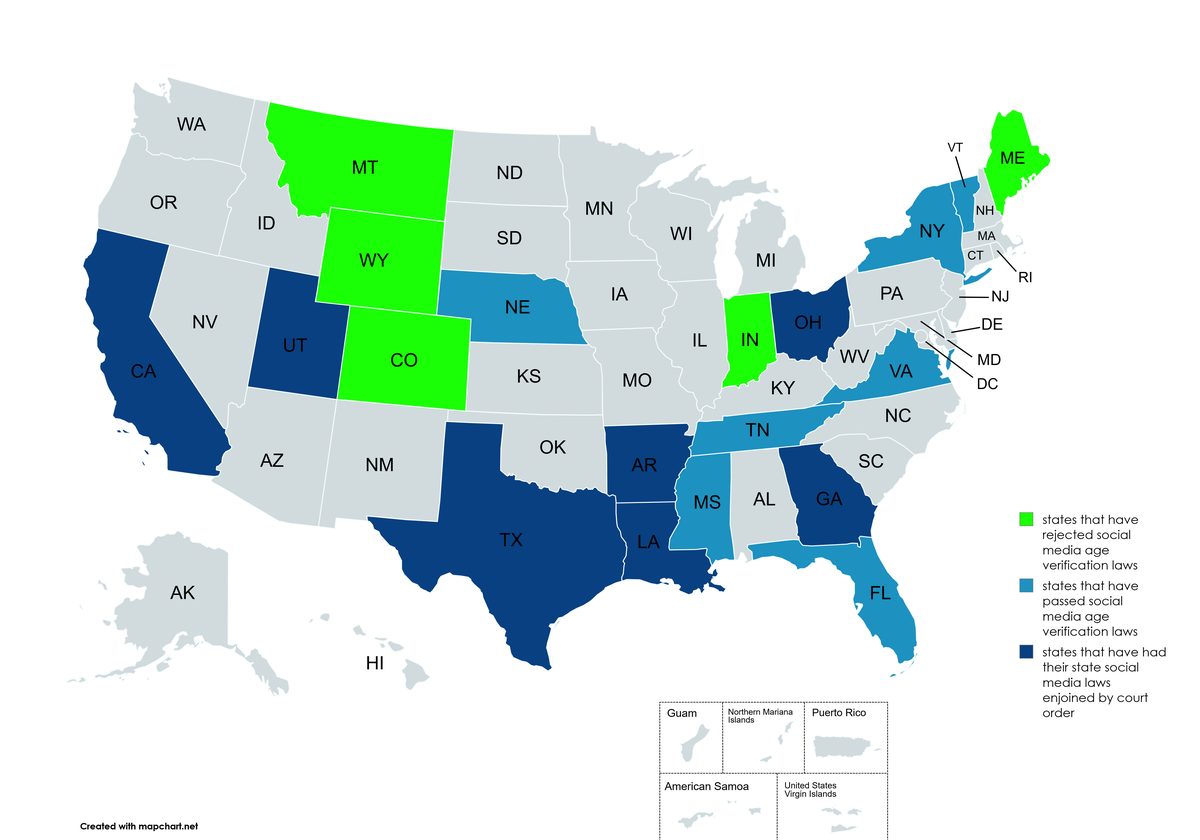
Social Media Age Verification Laws as of Jan 30, 2026 in the United States.
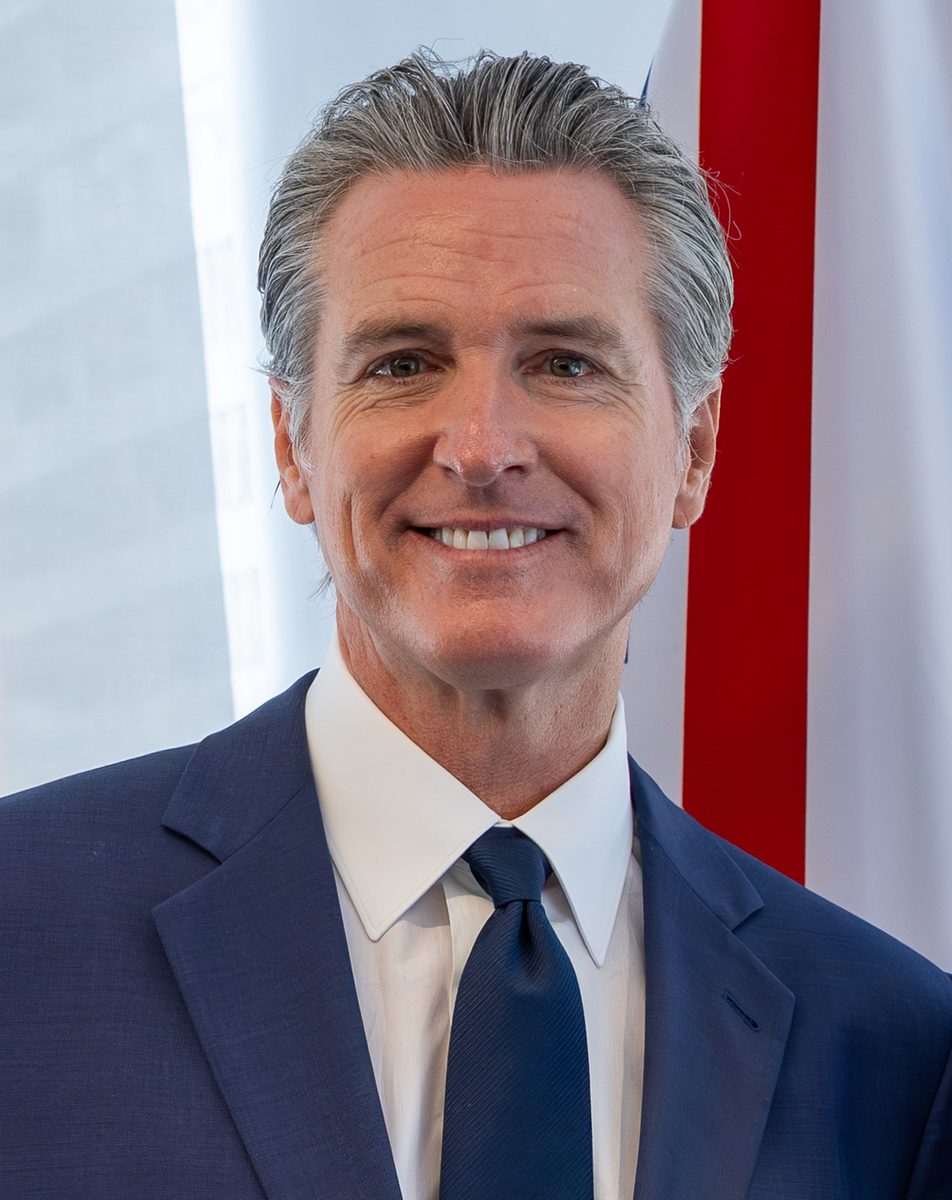
Governor Gavin Newsom in 2025

Sausalito, California - USA

178 views
4:51
California lawmaker discusses online child safety
CBS LA

421 views
1:23
California lawmakers approve bill restricting social media for ...
ABC10

361 views
0:34
California legislators could ban addictive social media features ...
CBS 8 San Diego
Images from Openverse under Creative Commons licenses. Videos from YouTube.
Voices
Curated perspectives — historical figures and your fellow readers.
Play
Exploring all sides of a story is often best achieved with Play.
Most of these play right now — no account needed. Sign up to save scores, keep a streak, and unlock Debate and Predict.
Log in
Sign Up
WHO SAID WHAT?
Can you match the quotes to the right people?
Rounds
People
Per question
Scoring
- points for each correct match.
- time bonus when you answer in under seconds.
- streak bonus once you hit correct in a row.
Score:
Round /
streak
— Who said this?
Tip: press 1– to answer.
Score:
Round /
streak
+
Base +
⚡ Speed +
🔥 Streak +
Streak reset · the answer was
No answer in time · it was
Next Up
Round
of
Score
points
Correct
Best Streak
Time Bonus
Avg. Time
points — sign up to put that on the leaderboard.
Now try on this story
Higher or Lower
A number from this story, against one from elsewhere in the news — guess which is bigger, then keep the chain going. 5 rounds, 3 strikes; a miss costs a strike and resets your streak.
Example
Anchor
EU tariff revenue
$52B
Big for this kind of number
Mystery
Pentagon AI contract
?
Round 1
Streak: 0
Mystery
?
Keyboard: ↓/L lower · ↑/H higher
0 pts
Best streak: 0 · Rounds: 0
0 points — sign up to put that on the leaderboard.
Now try on this story
Connections
Sixteen names from the news. Find the four hidden groups of four. Four mistakes max.
Loading today's puzzle…
0/4 groups
Mistakes
Sign up to keep a daily streak — a new puzzle lands every day.
Now try on this story
Exit debate?
Your progress in this debate will be lost.
How it works
- 1 Two AI personas square off on this story.
- 2 You predict who'll win each round — correct picks earn XP.
- 3 One crossfire question is yours to fire. Pick it carefully.
Couldn't generate a topic
Select Your Champions
Choose one persona for each side of the debate
DEBATE TOPIC
Choose personas with different perspectives for a more dynamic debate.
SIDE A (PRO)
Select debater for this side:
No debate personas available right now.
SIDE B (CON)
Select debater for this side:
No debate personas available right now.
VS
Get ready to make your prediction...
Round of
Claim
Evidence
Stakes
Crossfire Answer
Closing Statement
Claim
Evidence
Stakes
Crossfire Answer
Closing Statement
Your Crossfire Question
Generating arguments...
Who's Got This Round?
Make your prediction before the referee scores
The referee scores both sides on
Correct predictions earn +20 XP
· Press 1 or 2 to pick
Evidence
40%
Logic
30%
Detail
20%
Style
10%
Round Results
Your Pick
Not this time
(%)
Overall Score
/10
Your Pick
Not this time
(%)
Overall Score
/10
Set the Crossfire
Pick the question both personas must answer in the final round
Crafting crossfire questions...
Choosing a question earns +10 XP crossfire bonus
🏆
Total XP Earned
Cred Change
Predictions
Debate Oracle! You called every round!
Sharp Instincts! You know your debaters!
The Coin Flip Strategist! Perfectly balanced!
The Contrarian! Bold predictions!
Inverse Genius! Try betting the opposite next time!
XP Breakdown
Base completion
+20 XP
Rounds played ( rounds x 5 XP)
+ XP
Correct predictions ( correct x 20 XP)
+ XP
Crossfire bonus
+10 XP
Accuracy
%
Prediction History
Round
You picked:
✓
✗
Now try on this story
Keep debating to level up your credibility and unlock achievements
People Involved
Gavin Newsom
Governor of California
Signed the child safety package Sept. 10, 2026
Steve Padilla
California State Senator (D-San Diego)
Co-authored SB 1119
Rebecca Bauer-Kahan
California Assemblymember (D-Orinda)
Co-authored SB 1119; authored AB 1405
Jim Steyer
Founder and CEO, Common Sense Media
Backed all three bills
Maria Raine
Mother of Adam Raine
Advocating for chatbot safety laws
JC
Jacob Coxon
Former researcher, Anthropic
Resigned September 2026
Organizations Involved
California State Legislature (SB 237)
State government
Enacted the 2026 child safety package
Enacted the child safety package in 2026, building on earlier AI and social media regulation.
OpenAI
AI company
Backed SB 1119
Developer of ChatGPT, which Adam Raine used before his death. Endorsed the chatbot safety law.
Anthropic
AI company
Endorsed AB 1405 and SB 813
AI company that endorsed the auditor and verification bills, while facing researcher resignations.
ME
Meta
Social media company
Reached $18B settlement with states
Parent of Instagram and Facebook; subject of the new addictive-features ban.
Common Sense Media
Nonprofit
Backed all three bills
Children's media nonprofit that advocated for the package.
Timeline
2024 September 2026
9 events
Latest: Yesterday
Tap a bar to jump to that date
-
Child safety package signed
Latest LegalNewsom signs Adam's Law (SB 1119), AB 2 damages, and AB 1709 banning addictive feeds for under-16s.
-
AI auditor registry signed
LegalNewsom signs AB 1405 (auditor registry) and SB 813 (verification standards).
-
Meta reaches $18B settlement
LegalMeta agrees to pay up to $18 billion to California and most other states over addictive design claims.
-
Coxon resigns from Anthropic
ResignationResearcher warns Anthropic and OpenAI are racing to super-intelligence and 'gambling with our lives.'
-
Other states pass chatbot laws
LegislationNew York's companion chatbot law takes effect; Idaho, Oregon, and Washington pass their own rules.
-
Newsom signs first child safety package
LegalSB 243 companion chatbot rules, AB 56 social media warning labels, and AB 853 AI transparency become law.
-
Newsom declines expansive chatbot bill
VetoGovernor rejects a broader AI chatbot safety bill with similar prohibitions on harmful chatbot behavior.
-
Adam Raine dies by suicide
IncidentOrange County teen dies after weeks of using ChatGPT to discuss mental health; father says the bot offered to write a suicide note.
-
Raine family sues OpenAI
LegalParents file wrongful death and negligence suit in California court over their son's death.
Historical Context
3 moments from history that rhyme with this story — and how they unfolded.
October 1998
Children's Online Privacy Protection Act (COPPA, 1998)
Congress enacted the first federal law restricting online data collection from children under 13, requiring parental consent and creating the under-13 age gate that still shapes the web.
Then
The Federal Trade Commission enforced COPPA through numerous consent decrees, making age-gated data practices a national baseline.
Now
Demonstrated that a single strong law can become a de facto national standard through industry compliance.
Why this matters now
California's new rules aim to replicate that playbook: a robust state law that platforms adopt nationwide rather than build state-specific versions.
September 2022
California Age-Appropriate Design Code (2022)
California became the first state to require online services to design products for children's safety by default, mandating privacy protections, data minimization, and transparency. NetChoice immediately sued.
Then
A federal judge partially blocked key provisions in 2023, but the 9th Circuit largely upheld the law in 2024.
Now
Confirmed California's authority to regulate platform design for minors, a precedent the 2026 package extends.
Why this matters now
The same industry group that fought AB 2273 now faces AB 1709, which pushes regulation from privacy design into engagement mechanics.
2022-2024
Kids Online Safety Act (KOSA, 2022-2024)
Bipartisan federal bill imposing a duty of care on platforms for minors, requiring parental controls and reporting on harms. Passed the Senate in July 2024 but never reached a House floor vote.
Then
Reintroduced in subsequent Congresses but has not advanced in the House.
Now
Created a federal vacuum that states, led by California, have stepped into with their own laws.
Why this matters now
The concerns KOSA addressed now drive state legislation, reinforcing a pattern where California sets rules and Washington follows or stalls.
Sources
(3)Related Stories
AI chatbot makers build age gates for minors under legal pressure
Rule Changes
Updated Aug 18
Europe moves to ban social media for minors
Rule Changes
Updated May 27
America's two largest school districts impose student AI moratoriums
Rule Changes
Updated 4 days ago
California's regulatory laboratory
Rule Changes
Updated May 19
The great AI governance war
Rule Changes
Updated May 20
Australia boots under–16s off social media in world–first crackdown
Rule Changes
Updated May 10