

Pull to refresh
Logo
California bars 'robo bosses' as Newsom signs AI workplace laws

California bars 'robo bosses' as Newsom signs AI workplace laws

Rule Changes San Francisco, CA local

New state rules require human sign-off on AI firings, ban bathroom surveillance, and limit AI in healthcare

Yesterday: Newsom signs AI worker protection package

Overview

Updated 1 hour ago

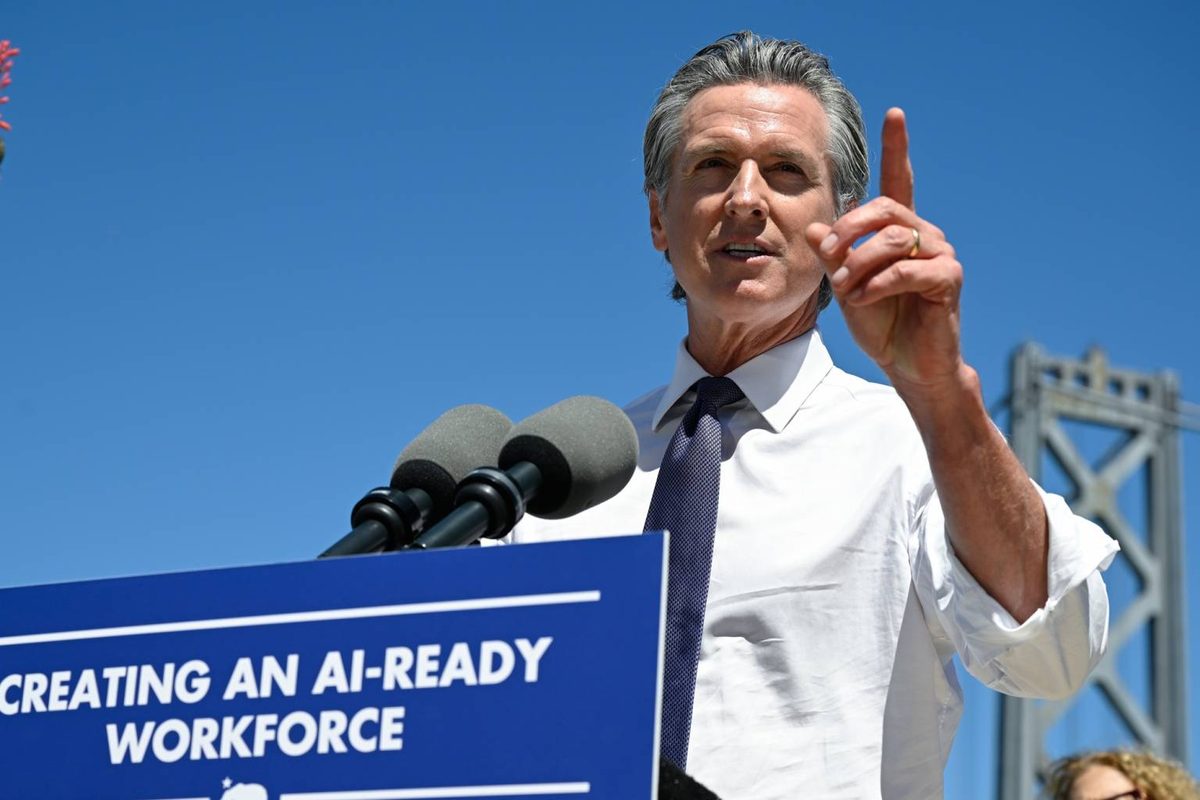
California Gov. Gavin Newsom signed a package of laws on September 30 that bars employers from relying on automated systems to fire or discipline staff, bans AI surveillance in workplace bathrooms, and restricts AI's role in patient care. The laws, taking effect as early as July 2027, are among the strongest state-level AI worker protections in the country.

Newsom vetoed two healthcare AI bills at the same time, and the new 'robo boss' law exempts rideshare drivers classified as independent contractors under Proposition 22. The signing came a day after President Trump announced a voluntary tech accord to self-police AI, widening the policy gap between California and Washington.

Why it matters

With no federal standard in place, California's new rules set a template for how algorithms can fire, discipline, and surveil American workers.

Questions about this story

Free account needed to ask — your question is kept and asked for you right after sign-up. Answers are public.

No questions yet — be the first to ask.

Key Indicators

7 of 9
Labor AI bills signed
Unions won seven of the nine AI bills they backed; Newsom vetoed two healthcare measures.
2
Labor AI bills vetoed
Newsom rejected a mental health worker bill and an anti-retaliation measure for healthcare workers.
July 1, 2027
SB 947 effective date
The 'robo boss' law requiring human sign-off on AI firings takes effect on this date.

Voices

Curated perspectives — historical figures and your fellow readers.

Ever wondered what historical figures would say about today's headlines?

Sign up to generate historical perspectives on this story.

People Involved

Organizations Involved

Timeline

5 events Latest: Yesterday
Tap a bar to jump to that date
  1. Newsom signs AI worker protection package

    Latest Legislation

    Signs laws requiring human sign-off on AI firings, banning bathroom surveillance, limiting AI in healthcare.

  2. Newsom vetoes two healthcare AI bills

    Legislation

    Rejects mental health worker and anti-retaliation measures, citing scope and enforcement concerns.

  3. Newsom orders state to use 'artificial intelligence'

    Executive Order

    Executive order requires state agencies to use 'artificial intelligence,' not 'super intelligence.'

  4. Trump announces voluntary AI self-policing accord

    Policy

    Tech leaders sign voluntary accord to self-police AI, a day before Newsom acts.

  5. Labor protests at Salesforce Dreamforce

    Protest

    Workers rally against AI job takeover at Salesforce's annual conference in San Francisco.

Scenarios

1

Business groups sue to block California AI worker laws

Possible Resolves by End of 2027

Discussed by: California Chamber of Commerce and employer groups, which have challenged similar state mandates

Business groups could file suit arguing the new laws conflict with federal law or exceed state authority, seeking an injunction before SB 947 takes effect in July 2027. Courts have split on California labor mandates, and the weakened enforcement provisions may shape the challenge. The Chamber declined comment when asked about the package.

2

Legislature revives vetoed healthcare AI bills

Possible Resolves by End of 2027

Discussed by: California Nurses Association and labor advocates

Lawmakers could reintroduce the mental health worker and anti-retaliation bills in the next session starting January 2027. The CNA is pressing for the protections. Passage would require a new governor's signature after Newsom terms out.

3

Congress passes national AI labor law preempting California

Unlikely Resolves by End of 2028

Discussed by: Federal lawmakers and industry groups; Trump's voluntary accord points the other direction

A comprehensive federal AI law could preempt state rules, but Congress has not passed one. Trump's voluntary self-policing accord suggests industry prefers to avoid binding federal rules. Preemption would require a new law signed by the president, a long shot in a divided Congress.

Historical Context

3 moments from history that rhyme with this story — and how they unfolded.

November 2020

Proposition 22 (2020)

California voters approved Prop 22, classifying app-based rideshare and delivery drivers as independent contractors. Uber, Lyft, and DoorDash funded the campaign, the most expensive in state ballot history.

Then

Drivers remain independent contractors, ineligible for employee benefits and many labor protections.

Now

Created a carve-out that the new AI laws do not override.

Why this matters now

Explains why rideshare drivers, who face algorithmic management daily, are excluded from SB 947's human-oversight requirement.

May 2018

EU GDPR Article 22 (2018)

The European Union's General Data Protection Regulation took effect, including Article 22, which gives people the right not to be subject solely to automated decisions that produce legal effects. It is the best-known human-oversight rule for algorithms.

Then

EU residents gained a right to human review of significant automated decisions.

Now

Became the global model for 'human-in-the-loop' AI rules.

Why this matters now

California's SB 947 applies the same principle to firing and discipline, borrowing a concept that has shaped AI regulation worldwide.

Fall 2025

Newsom veto of earlier 'robo boss' bill (2025)

Newsom vetoed a broader version of the automated-firing bill, part of a pattern of rejecting labor-backed AI measures. The 2026 version was narrowed, losing an appeals process, the right to sue, and coverage of contractors.

Then

Unions regrouped and pushed the narrower SB 947.

Now

Produced the final law with weaker enforcement and a contractor exemption.

Why this matters now

Shows the compromise that got the law signed, and why labor called it only partial victory.

Sources

(4)

More from San Francisco, CA

Openings, permits and council decisions in San Francisco, CA, in your inbox every Monday.