

Pull to refresh
Logo
Lyft agrees to largest-ever California wage settlement over driver pay

Lyft agrees to largest-ever California wage settlement over driver pay

Money Moves San Francisco, CA local

$272.5 million deal settles claims Lyft misclassified drivers before Prop 22

Yesterday: Settlement announced publicly

Overview

Updated Yesterday

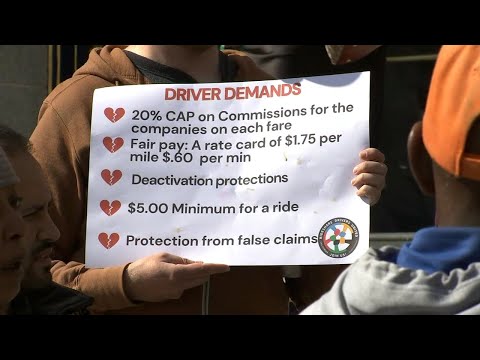
Lyft has agreed to pay $272.5 million to settle claims it misclassified California drivers as independent contractors, denying them minimum wage, overtime, and other protections. It's the largest wage-and-hour settlement in California history.

The deal covers drivers who worked between April 2016 and December 2020, before voters passed Proposition 22, which created a separate classification for app-based drivers. The same plaintiffs are still litigating against Uber, the remaining defendant in the coordinated case.

Why it matters

The settlement sets a benchmark for gig-economy misclassification costs and raises the stakes for Uber's still-pending case.

Questions about this story

Free account needed to ask — your question is kept and asked for you right after sign-up. Answers are public.

No questions yet — be the first to ask.

Key Indicators

$272.5M
Total settlement amount
Largest wage-and-hour settlement in California history, covering April 2016 through December 2020.
87%
Share of settlement going to drivers
The remainder covers attorneys' fees, costs, and expenses.
$210M
Lyft's Q4 2025 accrual for the case
Lyft recorded the charge in the fourth quarter of 2025, before the settlement was reached.

Voices

Curated perspectives — historical figures and your fellow readers.

Ever wondered what historical figures would say about today's headlines?

Sign up to generate historical perspectives on this story.

People Involved

Organizations Involved

Timeline

August 2020 October 2026

10 events Latest: Yesterday
Tap a bar to jump to that date
  1. Settlement announced publicly

    Latest Statement

    State officials announce the largest wage-and-hour settlement in California history.

  2. Lyft records $210M accrual

    Financial

    Lyft records $210 million accrual for the pending case in Q4 2025.

  3. Proposition 22 passes

    Election

    California voters approve Prop 22, classifying app-based drivers as independent contractors.

Scenarios

1

Court Approves Lyft Settlement

Likely Resolves by Q2 2027

Discussed by: Settlement parties, including the California Labor Commissioner and San Francisco City Attorney, negotiated the terms and expect approval.

The San Francisco Superior Court holds a fairness hearing and grants final approval. Lyft begins paying into the settlement fund over four years, with 5% simple interest accruing after the first year. Eligible drivers are contacted by a third-party settlement administrator.

2

Court Rejects or Modifies Settlement

Unlikely Resolves by Q2 2027

Discussed by: No major publication has predicted rejection; courts typically approve settlements negotiated by state agencies.

The court finds the settlement insufficient or the notice process flawed, sending parties back to negotiate. This would delay payments and could change the amount. Lyft's $210 million accrual might need adjustment.

3

Uber Reaches Similar Settlement

Possible Resolves by End of 2027

Discussed by: Rideshare Drivers United has publicly pushed for Uber to settle; the Labor Commissioner's office anticipates trial in 2026 if no deal is reached.

Uber, facing the same claims and the Lyft precedent, negotiates its own settlement in the coordinated case. The amount could be larger given Uber's larger California driver base. A trial would follow if no deal emerges.

Historical Context

2 moments from history that rhyme with this story — and how they unfolded.

April 2018

Dynamex Operations West v. Superior Court (2018)

The California Supreme Court adopted the ABC test for determining whether workers are employees or independent contractors. The test requires companies to prove workers are free from control, perform work outside the company's core business, and operate independently.

Then

The ruling upended gig-economy business models in California and led directly to Assembly Bill 5 in 2019.

Now

AB5 codified the ABC test, and the Lyft and Uber lawsuits followed when the companies continued classifying drivers as independent contractors.

Why this matters now

The Dynamex ABC test is the legal standard the state used to argue Lyft misclassified its drivers.

December 2000

Microsoft 'permatemps' settlement (2000)

Microsoft agreed to pay $97 million to settle claims it misclassified long-term temporary workers as independent contractors, denying them stock options and benefits. The case involved thousands of workers who had worked for Microsoft for years as 'permatemps.'

Then

Microsoft paid the settlement and changed its contractor practices.

Now

The case became a landmark example of the financial risk of misclassification, cited in later gig-economy litigation.

Why this matters now

It showed that misclassification settlements can run into the hundreds of millions, setting expectations for the Lyft case.

Sources

(5)

More from San Francisco, CA

Openings, permits and council decisions in San Francisco, CA, in your inbox every Monday.