
Pull to refresh
Logo
Lead in ancient ink makes burned Herculaneum scrolls readable by X-ray

Lead in ancient ink makes burned Herculaneum scrolls readable by X-ray

New Capabilities

Team carbonized model papyri to prove X-ray scanning can read text without unrolling

September 16th, 2026: Study proves leaded-ink scrolls stay readable after carbonization

Overview

Updated 1 hour ago

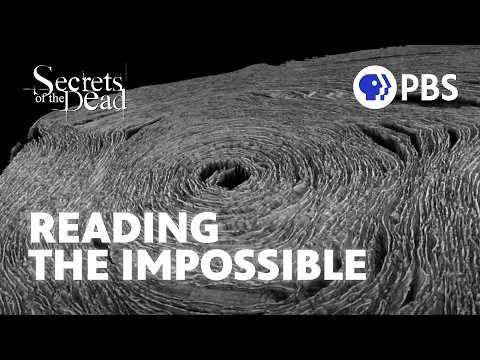
The eruption of Mount Vesuvius in 79 CE turned Herculaneum's papyrus library into brittle black lumps. Physical attempts to unroll the scrolls have destroyed many of them since they were found in 1752. Researchers have now shown a way to read the rest without opening them: lead in the ink.

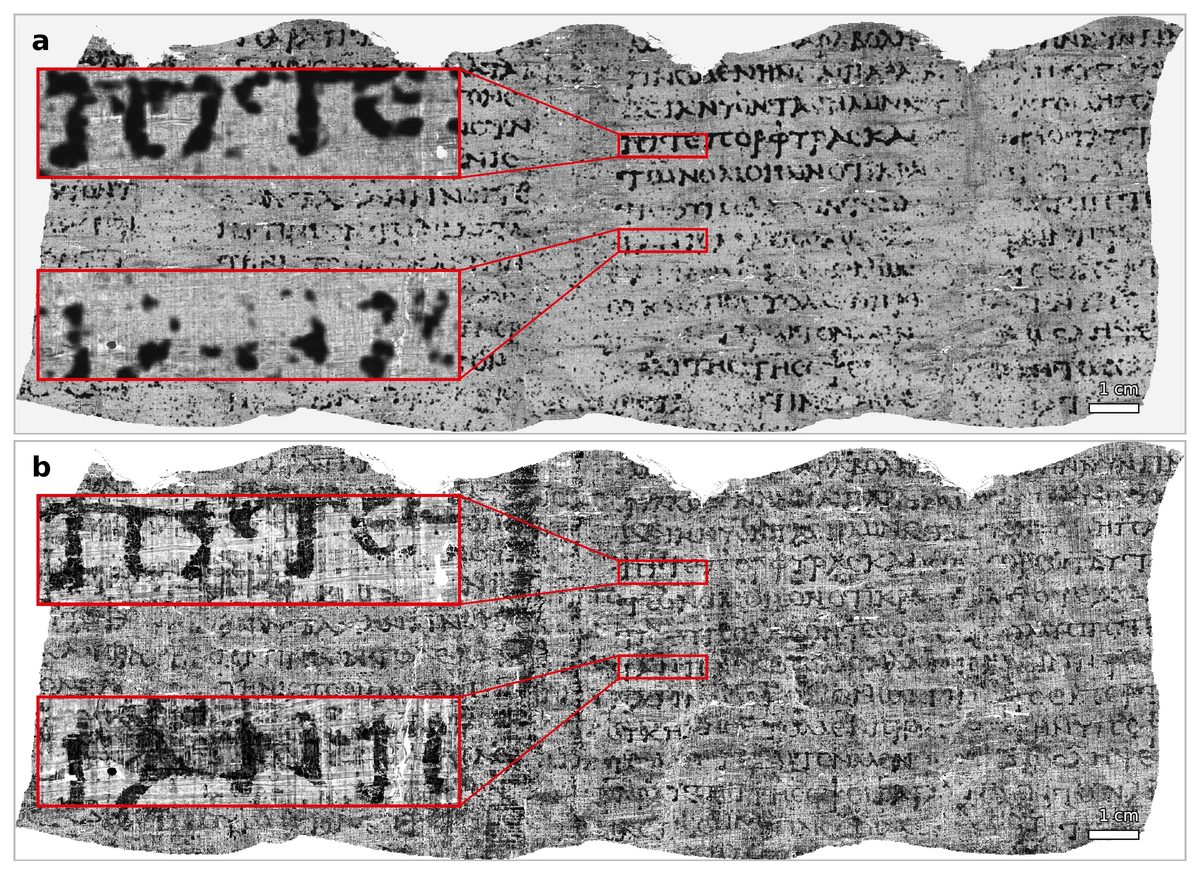
The team wrote on modern papyrus with lead-spiked ink, carbonized it in a kiln, and scanned it with X-ray tomography. The letters stood out clearly, and a handheld X-ray fluorescence scanner detected the lead. That gives the field a cheap triage step to pick which scrolls are worth the cost of synchrotron imaging.

Why it matters

The only intact library from antiquity may finally be readable, potentially recovering lost Greek and Roman texts unseen for 2,000 years.

Questions about this story

Free account needed to ask — your question is kept and asked for you right after sign-up. Answers are public.

No questions yet — be the first to ask.

Key Indicators

25 µg/cm²
Minimum lead concentration detected in burned scroll
Lowest lead level tested was still readable by X-ray CT and handheld XRF.
25x
X-ray contrast of leaded ink vs. charred papyrus
Lead absorbs up to 25 times more X-rays than the carbonized writing surface.
1,000+
Scrolls in the Herculaneum collection
Berkeley News reports more than a thousand carbonized scrolls remain to be read.

Voices

Curated perspectives — historical figures and your fellow readers.

Ever wondered what historical figures would say about today's headlines?

Sign up to generate historical perspectives on this story.

People Involved

Organizations Involved

Timeline

August 79 September 2026

3 events Latest: September 16th, 2026 · 1 week ago
  1. Study proves leaded-ink scrolls stay readable after carbonization

    Latest Research

    PLOS ONE paper shows model scrolls with leaded ink are readable by X-ray CT; handheld XRF can spot the lead.

  2. Scrolls discovered at the Villa of the Papyri

    Historical

    Workers unearth carbonized scrolls; decades of physical unrolling attempts destroy much of the collection.

  3. Vesuvius eruption carbonizes Herculaneum's library

    Historical

    Mount Vesuvius buries the town, baking the only intact ancient library's papyrus scrolls into carbonized husks.

Scenarios

1

Lead screening yields first fully read Herculaneum scroll

Possible Resolves by Q3 2027

Discussed by: Study authors and the Vesuvius Challenge community

The team proposes triaging the collection with handheld XRF and sending lead-positive scrolls to a synchrotron for X-ray CT. Machine-learning software would virtually unroll the scans, as it did for the partial read in earlier prize work. If the workflow holds on real scrolls, the first complete text from the collection could be published within a year or two.

2

Technique extends to scrolls written in lead-free ink

Possible Resolves by Q2 2028

Discussed by: Vito Mocella, quoted in Chemical & Engineering News

Mocella's earlier XRF work found metals other than lead in Herculaneum fragments. Researchers could tune X-ray scanning and detection algorithms for those elements, making scrolls without lead readable too. That would broaden the technique beyond the subset of the collection that used leaded ink.

3

Real-world damage blocks the technique

Unlikely Resolves by Q3 2027

Discussed by: Vito Mocella, quoted in Chemical & Engineering News

Lab scrolls were baked evenly in a kiln. The real scrolls were shattered, crushed, and distorted by ash and pressure, which makes virtual unrolling algorithms fail on actual damage patterns. The technique could work in principle but stall when applied to the damaged collection.

Historical Context

3 moments from history that rhyme with this story — and how they unfolded.

1752-1800s

Earlier Herculaneum unrolling attempts (1752-early 1800s)

After the scrolls were discovered, workers and scholars tried to unroll them by hand and with a purpose-built machine. Most attempts tore or crushed the carbonized papyrus into black dust, destroying the very texts they sought. Italian authorities eventually halted the destructive efforts.

Then

Officials stopped physical unrolling; the surviving scrolls sat unread for two centuries.

Now

The episode established that the scrolls cannot be opened mechanically, making non-destructive imaging the only viable path.

Why this matters now

It explains why the new X-ray route matters: a screening method that never touches the scrolls avoids the destruction that physical unrolling caused.

1998-2008

Archimedes Palimpsest (1998-2008)

A 13th-century prayer book turned out to hide the only copy of works by Archimedes, scrubbed away and overwritten. Teams at Stanford and other labs used X-ray fluorescence and other imaging to render the erased Greek text visible beneath the later writing.

Then

Researchers recovered previously lost Archimedes treatises, including the Method, known only from fragments.

Now

Established X-ray-based imaging as the standard tool for recovering text that the naked eye cannot see.

Why this matters now

The same X-ray fluorescence principle is now proposed for Herculaneum: detect text hidden by damage or layering without touching the artifact.

2023-2024

Vesuvius Challenge machine reading (2023-2024)

A prize competition offered rewards for machine-learning software that could virtually unroll carbonized scrolls from synchrotron X-ray scans. Winners partially read a charred scroll, recovering passages of Greek text for the first time from the intact collection.

Then

Demonstrated that virtual unrolling of carbonized scrolls works, at least for part of one roll.

Now

Created the algorithmic foundation the new lead-detection study builds on, and a testbed community for applying it.

Why this matters now

The new study adds a screening layer on top of this prize work, identifying which of the remaining scrolls are most likely to be readable.

Sources

(6)