



Pull to refresh
Logo
Pompeii eruption gives scientists a sharper clock for Earth's past

Pompeii eruption gives scientists a sharper clock for Earth's past

New Capabilities

Argon-argon dating calibrated against the 79 CE Vesuvius eruption is now twice as precise

7 days ago: Argon-argon dating breakthrough published

Overview

Updated 1 hour ago

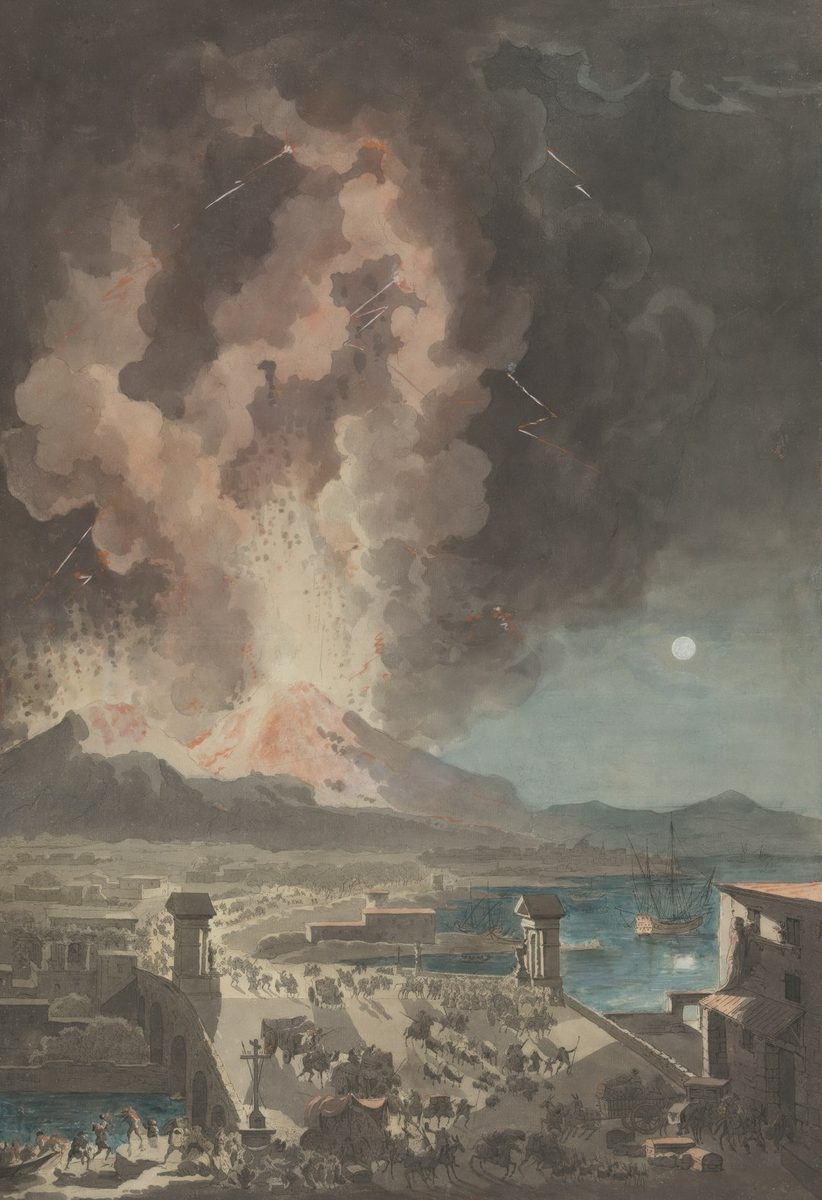
A team of geochronologists used the historically documented eruption of Mount Vesuvius in 79 CE to sharpen argon-argon dating, one of geology's most versatile clocks. The method now dates the eruption to within 13 years of the day Pliny the Younger recorded nearly 2,000 years ago.

The work doubles the precision of the potassium-40 decay constant that underpins the method. Geologists can now attach more reliable dates to volcanic eruptions, asteroid impacts, and extinctions across Earth's history, and radiocarbon dating gains a stronger calibration anchor.

Why it matters

Sharper argon-argon dating means more reliable timelines for volcanic hazards, extinctions, and climate events — and a stronger check on radiocarbon dates.

Questions about this story

Free account needed to ask — your question is kept and asked for you right after sign-up. Answers are public.

No questions yet — be the first to ask.

Key Indicators

0.7%
Precision of argon-argon date
Relative uncertainty of the 79 CE Vesuvius eruption date
0.4%
Accuracy of argon-argon date
How close the measurement came to the historically documented age
1,938 ± 13 years
Argon-argon age of eruption
Measured age before analysis in 2025; historical age is 1,946 years
12.044B years
Revised potassium-40 half-life
Twice as precise as the previous value from nuclear physics

Voices

Curated perspectives — historical figures and your fellow readers.

Ever wondered what historical figures would say about today's headlines?

Sign up to generate historical perspectives on this story.

People Involved

Organizations Involved

Timeline

August 79 September 2026

2 events Latest: 7 days ago
  1. Argon-argon dating breakthrough published

    Latest Scientific publication

    Study reports 0.7% precision dating of the eruption, improving the potassium-40 decay constant.

  2. Vesuvius erupts, burying Pompeii

    Natural disaster

    Mount Vesuvius erupts, burying Pompeii and Herculaneum. Pliny the Younger documents the event.

Scenarios

1

Argon-argon dates enter the radiocarbon calibration curve

Possible Resolves by End of 2028

Discussed by: The study authors and the radiocarbon community

The improved decay constant and demonstrated precision make argon-argon dating a stronger anchor for calibrating radiocarbon dates, especially for the 10,000-55,000 year range where tree-ring records end. The IntCal working group could incorporate argon-argon dates from volcanic deposits containing charred wood.

2

New potassium-40 decay constant becomes standard

Likely Resolves by End of 2028

Discussed by: Geochronology community

The revised decay constant, a half-life of 12.044 billion years, is adopted by geochronology labs and incorporated into standard dating software. This shifts all argon-argon dates slightly and improves their accuracy across geologic time.

3

Method applied to other historically-dated eruptions

Possible Resolves by End of 2028

Discussed by: The research team

The technique is applied to other eruptions with historical records to further test the method and refine it. This could include other Mediterranean eruptions or more recent events with documented dates.

Historical Context

3 moments from history that rhyme with this story — and how they unfolded.

1960s-1970s

Radiocarbon calibration with tree rings (1960s-1970s)

Hans Suess and others used bristlecone pine tree rings to show that radiocarbon dates needed calibration. The tree rings provided known-age samples that revealed how atmospheric carbon-14 levels had varied over time.

Then

The first calibration curves were created, correcting radiocarbon dates.

Now

Calibration became standard practice, and the IntCal curve is now updated regularly.

Why this matters now

Like the Vesuvius benchmark, tree-ring calibration used known-age materials to improve a dating method's accuracy.

20th-21st century

Thera (Santorini) eruption dating debate (20th-21st century)

The date of the Minoan eruption of Santorini has been debated for decades. Archaeologists favored around 1500 BCE based on Egyptian chronology, while radiocarbon dating suggested around 1600 BCE.

Then

The debate persisted for decades without resolution.

Now

Improved dating methods have narrowed the range but not fully resolved the dispute.

Why this matters now

Shows how dating precision directly affects archaeological and geological interpretation.

1950s

Potassium-argon dating development (1950s)

Potassium-argon dating was developed in the 1950s, allowing geologists to date rocks from thousands to billions of years old. The method measures the decay of potassium-40 to argon-40.

Then

The method opened new possibilities for dating volcanic rocks.

Now

It became one of the most widely used geochronology methods, refined over decades.

Why this matters now

The Vesuvius study is the latest refinement of this method, improving its precision for young samples.

Sources

(7)