
Quantum operations run 1,000 times faster with new error-cutting method
New CapabilitiesChalmers researchers collapse thousands of control cycles into one, reducing the window for errors in bosonic quantum codes.
Today: Speedup announced publiclyNew here? Follow stories to track developments over time. Create a free account to get updates when stories you care about change.
Overview
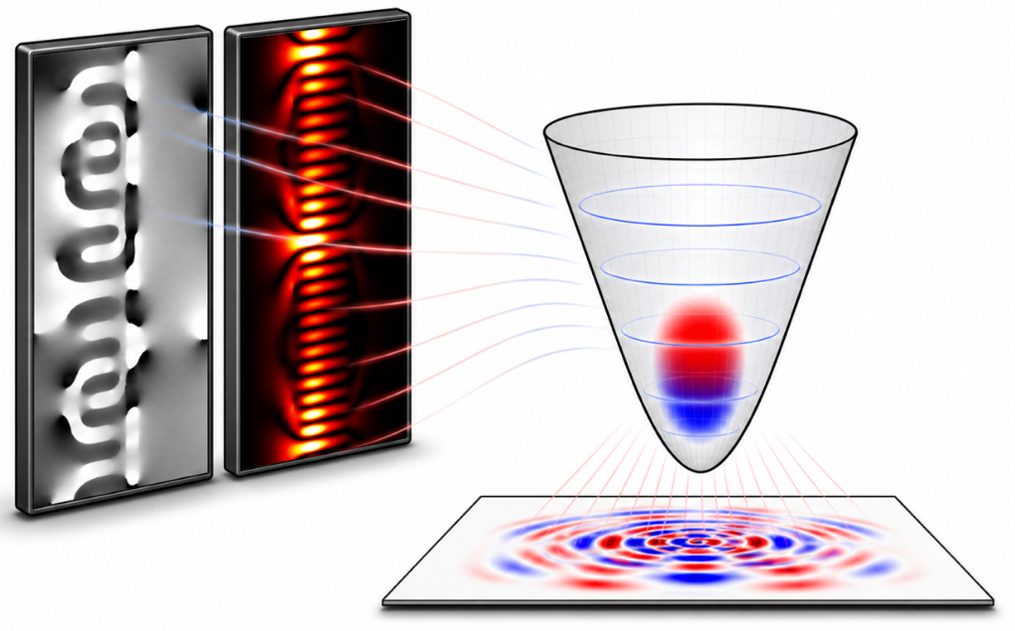
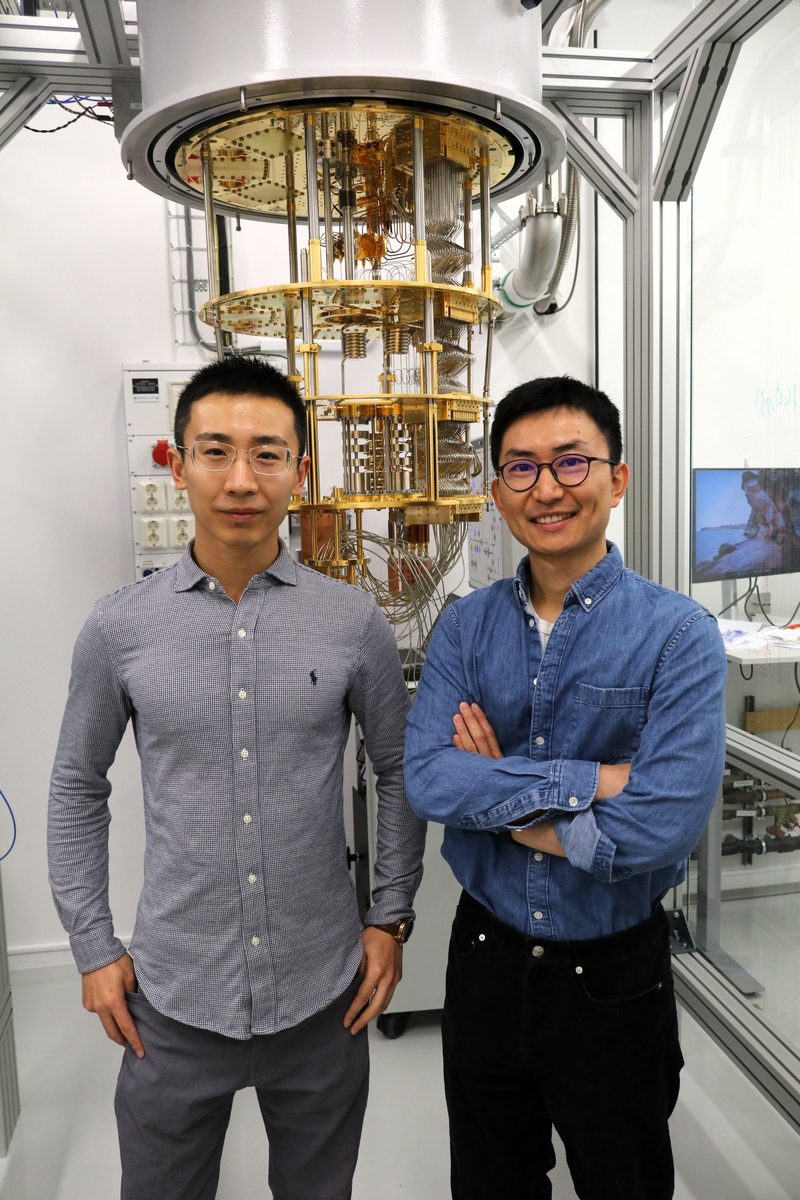
Updated 1 hour agoQuantum computers leak information: the longer an operation runs, the more time stray electrical noise, heat, or cosmic radiation have to corrupt fragile qubits. Researchers at Chalmers University of Technology in Sweden have found a way to run a broad range of operations more than 1,000 times faster, cutting thousands of repeated control steps down to a single cycle.
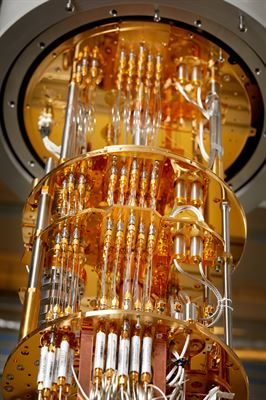
The method, published in Physical Review Letters, uses 'quantum lattice gates' to manipulate bosonic quantum codes in a single driving period. That shrinks the window in which errors can accumulate, a central obstacle to fault-tolerant machines. Chalmers is building a 100-qubit superconducting computer and says the technique works on existing hardware.
Why it matters
If the speedup holds in hardware, quantum computers move closer to fixing their own errors and running real workloads instead of small demonstrations.
Questions about this story
Free account needed to ask — your question is kept and asked for you right after sign-up. Answers are public.
No questions yet — be the first to ask.
Key Indicators
Voices
Curated perspectives — historical figures and your fellow readers.
Play
Exploring all sides of a story is often best achieved with Play.
Higher or Lower
A number from this story, against one from elsewhere in the news — guess which is bigger, then keep the chain going. 5 rounds, 3 strikes; a miss costs a strike and resets your streak.
Keyboard: ↓/L lower · ↑/H higher
0 points — sign up to put that on the leaderboard.
Connections
Sixteen names from the news. Find the four hidden groups of four. Four mistakes max.
Sign up to keep a daily streak — a new puzzle lands every day.
Exit debate?
Your progress in this debate will be lost.
- 1 Two AI personas square off on this story.
- 2 You predict who'll win each round — correct picks earn XP.
- 3 One crossfire question is yours to fire. Pick it carefully.
Couldn't generate a topic
Select Your Champions
Choose one persona for each side of the debate
DEBATE TOPIC
Choose personas with different perspectives for a more dynamic debate.
Select debater for this side:
No debate personas available right now.
Select debater for this side:
No debate personas available right now.
Who's Got This Round?
Make your prediction before the referee scores
The referee scores both sides on
Round Results
Set the Crossfire
Pick the question both personas must answer in the final round
Debate Oracle! You called every round!
Sharp Instincts! You know your debaters!
The Coin Flip Strategist! Perfectly balanced!
The Contrarian! Bold predictions!
Inverse Genius! Try betting the opposite next time!
XP Breakdown
Prediction History
People Involved
Organizations Involved
Swedish technical university in Gothenburg developing a 100-qubit superconducting quantum computer.
Chinese university in Tianjin, collaborating on the quantum lattice gate theory.
American Physical Society journal that published the single-period Floquet control paper.
Timeline
January 2026 September 2026
-
Speedup announced publicly
Today ResearchChalmers announces that quantum operations on bosonic codes can run more than 1,000 times faster using single-period control with quantum lattice gates.
-
Paper accepted after revisions
PublicationPhysical Review Letters accepts the study following an April revision.
-
Study submitted to Physical Review Letters
PublicationThe team's paper on single-period Floquet control is received by the journal.
Historical Context
3 moments from history that rhyme with this story — and how they unfolded.
Shor's algorithm (1994–2001)
Mathematician Peter Shor proved a quantum computer could factor large numbers exponentially faster than classical machines. The algorithm existed only on paper for seven years, until IBM ran it on a 7-qubit machine in 2001 to factor the number 15.
Showed quantum advantage was mathematically possible but physically unproven.
Became the template for a quantum algorithm awaiting hardware maturity.
Like the Chalmers result, Shor's work was a theoretical proposal whose real-world value depended on later experimental confirmation.
First superconducting qubits (1999–2007)
Scientists at Yale and NEC built the first superconducting qubits, using the same circuit technology now applied to error correction. It took years of materials and control improvements to make them workable.
Established superconducting circuits as a workable qubit platform.
The platform now hosts most fault-tolerance research, including Chalmers' 100-qubit project.
Chalmers' new method is designed specifically for this platform, showing superconducting hardware remains the center of gravity for quantum error correction.
Google's Willow chip (December 2024)
Google announced Willow, a superconducting chip that for the first time pushed quantum error correction below threshold: adding qubits made errors drop instead of rise.
Demonstrated below-threshold error correction on superconducting hardware.
Reinforced superconducting circuits as a leading path to fault-tolerant machines.
Willow attacked error rates; the Chalmers method attacks operation speed, a separate bottleneck on the same road to fault tolerance.
