Anchor

Scotland's first commercial wind farm recycled 99.9% of its decommissioned turbines
Built WorldRepowered Hagshaw Hill now puts out five times more power from 14 turbines instead of 26
Yesterday: 99.9% recycling rate circulates widelyNew here? Follow stories to track developments over time. Create a free account to get updates when stories you care about change.
Overview
Updated 1 hour agoScottishPower says 99.9% of the materials from Scotland's first commercial wind farm were recycled or reused when it was decommissioned. The 26 turbines at Hagshaw Hill in South Lanarkshire, turning since 1995, came down in 2023 and were replaced by 14 larger machines.
An independent report by engineering firm Mott MacDonald found 79.5% of materials were recycled and 20.4% reused. Even the composite blades—historically wind's hardest waste problem—were shredded and granulated into construction polymer by Northern Ireland's Plaswire, which substitutes for concrete, timber, and virgin plastics.
Why it matters
If this recycling rate scales across the UK's aging wind fleet, blade waste stops being a reason to delay repowering or building new capacity.
Questions about this story
Free account needed to ask — your question is kept and asked for you right after sign-up. Answers are public.
No questions yet — be the first to ask.
Key Indicators
99.9%
Combined recycling and reuse rate
79.5% recycled, 20.4% reused across 26 decommissioned turbines, per Mott MacDonald.
26
Turbines decommissioned
Original 600 kW machines, operational since 1995, removed in 2023.
14
Replacement turbines
Repowered farm generates 79 MW, five times the old output.
657
Materials in EMR case study
24-turbine subset reported at 97% recycled in a late-2024 industry presentation.
57,000
Homes powered by repowered farm
Community benefit fund now about £400,000 a year, 26 times the old level.
Related Media
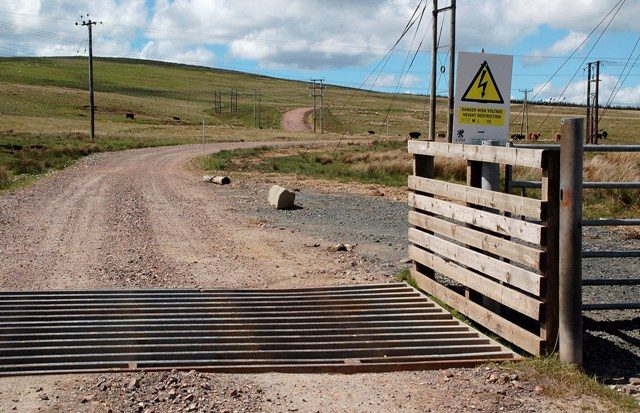
Entering Hagshaw Hill Wind Farm Site - geograph.org.uk - 1320206
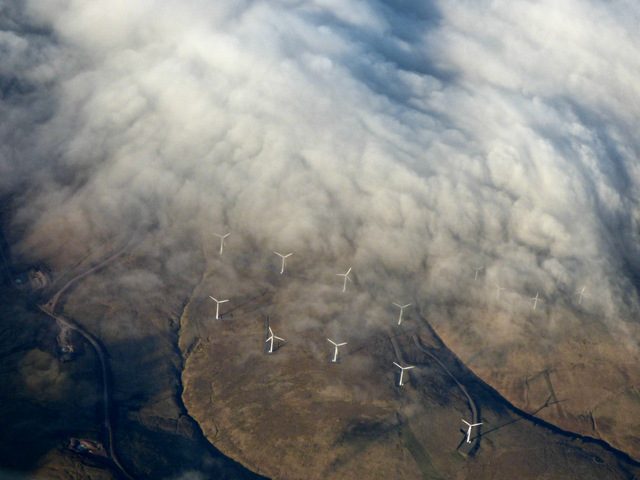
Hagshaw Hill wind farm - geograph.org.uk - 4879459
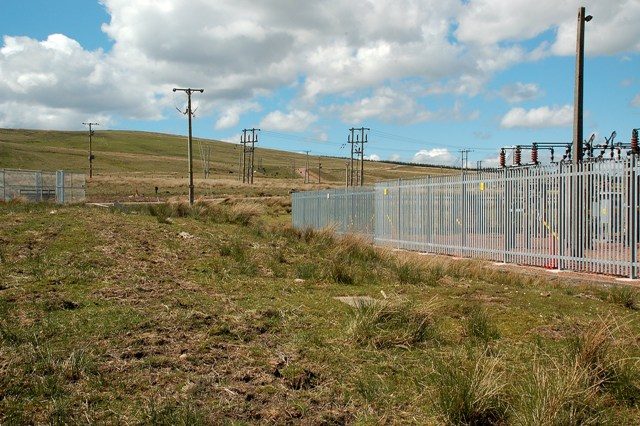
Hagshaw Hill Wind Farm - geograph.org.uk - 1320300
14 views
8:55
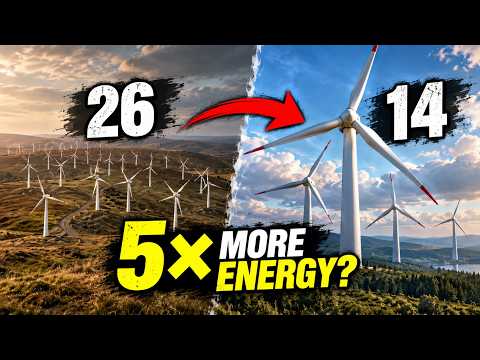
How Can 14 Wind Turbines Produce 5× More Energy Than 26?
STRATEGIC FRONT
Images from Openverse under Creative Commons licenses. Videos from YouTube.
Voices
Curated perspectives — historical figures and your fellow readers.
Play
Exploring all sides of a story is often best achieved with Play.
Most of these play right now — no account needed. Sign up to save scores, keep a streak, and unlock Debate and Predict.
Log in
Sign Up
Higher or Lower
A number from this story, against one from elsewhere in the news — guess which is bigger, then keep the chain going. 5 rounds, 3 strikes; a miss costs a strike and resets your streak.
Example
Anchor
EU tariff revenue
$52B
Big for this kind of number
Mystery
Pentagon AI contract
?
Round 1
Streak: 0
Mystery
?
Keyboard: ↓/L lower · ↑/H higher
0 pts
Best streak: 0 · Rounds: 0
0 points — sign up to put that on the leaderboard.
Now try on this story
Connections
Sixteen names from the news. Find the four hidden groups of four. Four mistakes max.
Loading today's puzzle…
0/4 groups
Mistakes
Sign up to keep a daily streak — a new puzzle lands every day.
Now try on this story
Exit debate?
Your progress in this debate will be lost.
How it works
- 1 Two AI personas square off on this story.
- 2 You predict who'll win each round — correct picks earn XP.
- 3 One crossfire question is yours to fire. Pick it carefully.
Couldn't generate a topic
Select Your Champions
Choose one persona for each side of the debate
DEBATE TOPIC
Choose personas with different perspectives for a more dynamic debate.
SIDE A (PRO)
Select debater for this side:
No debate personas available right now.
SIDE B (CON)
Select debater for this side:
No debate personas available right now.
VS
Get ready to make your prediction...
Round of
Claim
Evidence
Stakes
Crossfire Answer
Closing Statement
Claim
Evidence
Stakes
Crossfire Answer
Closing Statement
Your Crossfire Question
Generating arguments...
Who's Got This Round?
Make your prediction before the referee scores
The referee scores both sides on
Correct predictions earn +20 XP
· Press 1 or 2 to pick
Evidence
40%
Logic
30%
Detail
20%
Style
10%
Round Results
Your Pick
Not this time
(%)
Overall Score
/10
Your Pick
Not this time
(%)
Overall Score
/10
Set the Crossfire
Pick the question both personas must answer in the final round
Crafting crossfire questions...
Choosing a question earns +10 XP crossfire bonus
🏆
Total XP Earned
Cred Change
Predictions
Debate Oracle! You called every round!
Sharp Instincts! You know your debaters!
The Coin Flip Strategist! Perfectly balanced!
The Contrarian! Bold predictions!
Inverse Genius! Try betting the opposite next time!
XP Breakdown
Base completion
+20 XP
Rounds played ( rounds x 5 XP)
+ XP
Correct predictions ( correct x 20 XP)
+ XP
Crossfire bonus
+10 XP
Accuracy
%
Prediction History
Round
You picked:
✓
✗
Now try on this story
Keep debating to level up your credibility and unlock achievements
People Involved
Organizations Involved
ScottishPower Renewables
Renewable energy developer
Owner and operator of Hagshaw Hill; source of the 99.9% claim
Iberdrola's UK renewables division, which built, decommissioned, and repowered Hagshaw Hill.
Plaswire
Polymer recycler
Recycled all Hagshaw Hill blades into construction material
Northern Ireland recycler that converts turbine blades into RX Polymer for construction.
Mott MacDonald
Engineering consultancy
Compiled the independent decommissioning report
Engineering, management, and development consultancy that audited the Hagshaw decommissioning.
Iberdrola
Utility
Parent company of ScottishPower Renewables
Spanish utility that owns ScottishPower and its renewables division.
Timeline
1995 September 2026
7 events
Latest: Yesterday
Tap a bar to jump to that date
-
99.9% recycling rate circulates widely
Latest AnnouncementThe result spreads as a rebuttal to wind's blade-waste criticism, topping Reddit's uplifting news.
-
Circular Online reports 99.9% figure
ReportTrades outlet notes the Mott MacDonald report has not been publicly released and details are thin.
-
Repowering completed
Milestone14 new turbines come online, generating 79 MW—five times the original output.
-
EMR presents recycling case study
ReportEuropean Metal Recycling describes a 24-turbine, 657-tonne subset at 97% recycled and 3% reused.
-
Original turbines dismantled
DecommissioningAll 26 aging machines are removed to make way for repowering.
-
Twenty additional turbines added
ExpansionThe site grows beyond its original 26 machines.
-
Hagshaw Hill opens as Scotland's first commercial wind farm
Milestone26 turbines, each rated 600 kW, begin generating a combined 15.6 MW.
Historical Context
3 moments from history that rhyme with this story — and how they unfolded.
2000
EU End-of-Life Vehicles Directive (2000)
European law required automakers to take back and recycle cars, mandating rising recovery rates and banning landfilling of shredder residue.
Then
Recycling rates climbed above 80% and a dedicated infrastructure of dismantlers and shredders emerged.
Now
The directive built a self-sustaining recycling industry for a complex product class.
Why this matters now
It shows how regulation, not just economics, can scale recycling for hard-to-process products—a potential parallel for wind blades.
2020
Casper, Wyoming blade landfill (2020)
Thousands of decommissioned turbine blades were buried in a landfill near Casper, Wyoming. Photos of the blade pit became the global symbol of wind's waste problem.
Then
The images fueled criticism that wind turbines cannot be recycled.
Now
The attention pushed manufacturers to announce blade-recycling goals and researchers to develop composite-recovery methods.
Why this matters now
Hagshaw Hill offers a working counterexample: a full farm decommissioned with blades converted into construction polymer, not buried.
2023
Ørsted-Plaswire blade recycling pilot (2023)
Danish offshore wind giant Ørsted piloted Plaswire's process, cleaning, shredding, and granulating blades into RX Polymer for construction products.
Then
The pilot validated the polymer route and led to commercial contracts, including Hagshaw Hill.
Now
It established a template for blade recycling that other farm operators could adopt in repowering.
Why this matters now
Hagshaw Hill is the first full-farm application of the process Ørsted helped prove out.
Sources
(10)Related Stories
South Island's largest wind farm opens in New Zealand
Built World
Updated Yesterday
Ørsted finishes major construction on 920 MW Taiwan offshore wind farms
Built World
Updated 6 days ago
First monopile installed at OranjeWind offshore wind farm
Built World
Updated Sep 2
Borkum Riffgrund 3 zero-subsidy offshore wind farm enters commercial operation in Germany
Built World
Updated Sep 1
Hydrostor's Silver City compressed-air storage plant clears final regulatory hurdle in Australia
Built World
Updated 6 days ago
UK ends subsidies for small-scale biomass plants, putting poultry-litter power stations at risk
Rule Changes
Updated Yesterday