



Pull to refresh
Logo
Securitize buys River One to lend against tokenized assets

Securitize buys River One to lend against tokenized assets

Money Moves

The NYSE-listed tokenization platform adds warehouse financing, aiming at a private asset-backed lending market that KKR puts at $6 trillion

Overview

Updated 1 hour ago

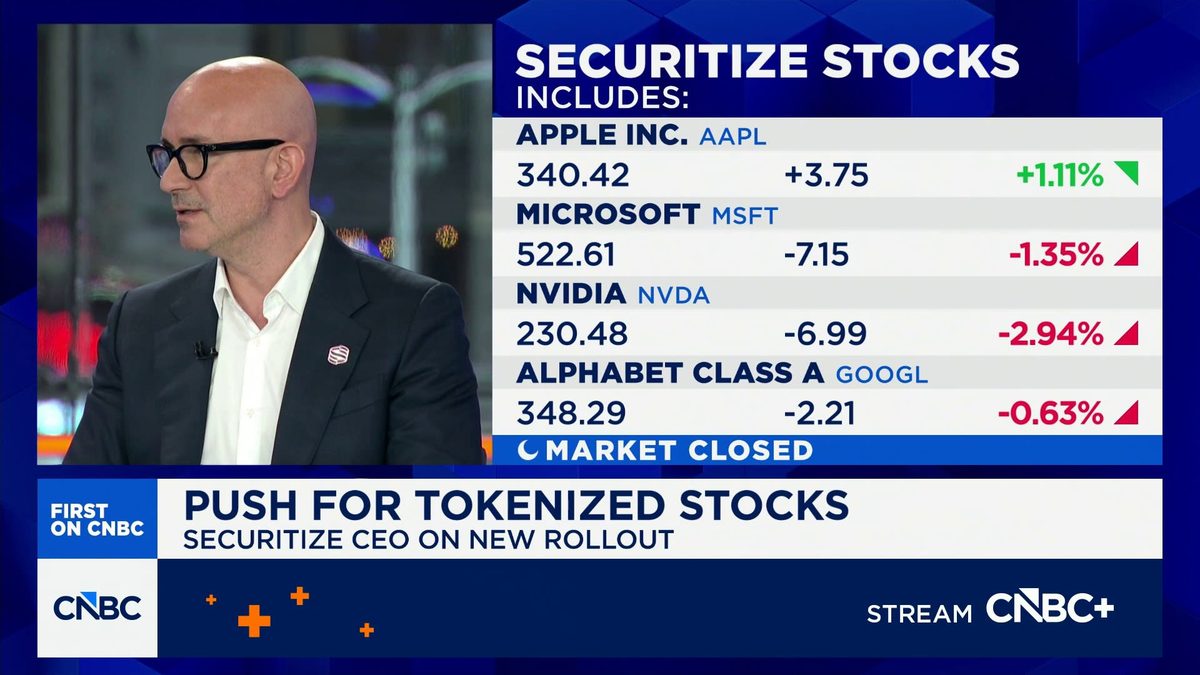
Securitize, which listed on the New York Stock Exchange in July, agreed on November 9 to buy River One, a New York startup that builds software for warehouse lending. Warehouse lending is the plumbing under asset-backed finance: a lender borrows against a pool of loans or receivables, then uses that cash to write more loans.

The deal would move Securitize from issuing and servicing tokenized funds into lending against the assets inside them. Terms were not disclosed. Both sides expect to close in the fourth quarter of 2026.

Why it matters

If warehouse lending moves onchain, stablecoin holders become lenders to small businesses, and credit risk lands in a market with thin public disclosure.

Questions about this story

Free account needed to ask — your question is kept and asked for you right after sign-up. Answers are public.

No questions yet — be the first to ask.

Key Indicators

$6T
Global private asset-backed finance market
KKR estimate based on data as of March 31, 2024, covering assets originated and held by non-banks.
$321B
Global stablecoin market
Securitize cites this as the pool of digital capital River One's technology would connect to lending.
$5.0B
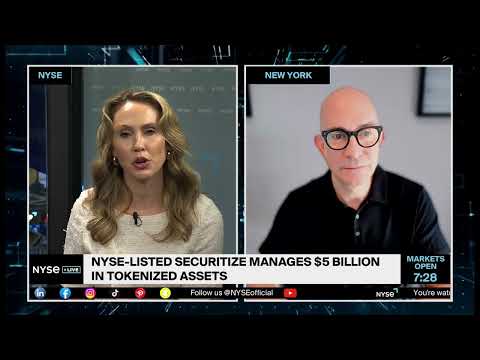
Average tokenized assets on Securitize's platform, Q3 2026
Up 39% year over year, a record for the company.
$18.6M
Securitize Q3 2026 revenue
Up 13% from a year earlier, the company's second-highest quarter.
$66.3M
Securitize Q3 2026 net loss
About $60 million of it was mostly non-cash charges tied to the July listing.
11%
After-hours share move
SECZ rose to $7.71 after the announcement, having closed at $6.97.

Voices

Curated perspectives — historical figures and your fellow readers.

Sign up to generate historical perspectives on this story.

People Involved

Organizations Involved

Timeline

2025 November 2026

5 events Latest: Yesterday
Tap a bar to jump to that date
  1. Securitize reports third-quarter results

    Latest Earnings

    Revenue of $18.6 million beat expectations; net loss of $66.3 million was mostly non-cash listing charges.

  2. Securitize agrees to acquire River One

    Acquisition

    Definitive agreement adds warehouse financing to Securitize's tokenization business; terms undisclosed.

  3. Shares rise 11% after hours

    Market reaction

    SECZ climbed to $7.71 in after-hours trading after closing near flat at $6.97.

  4. Securitize lists on the NYSE

    Public listing

    The company goes public with roughly $400 million earmarked for acquisitions that widen its platform.

  5. River One founded in New York

    Company founding

    Braham Mehta and co-founders build software for warehouse credit facilities, incubated by Framework Ventures.

Scenarios

1

Deal closes in the fourth quarter as announced

Likely Resolves by End of 2026

Discussed by: Securitize's own guidance in the November 9 press release

Both boards have signed, and the only stated conditions are customary closing items. If nothing surfaces in diligence, Securitize absorbs River One's team and software before the end of 2026 and begins pitching warehouse facilities to its existing tokenized-fund clients.

2

Closing slips into 2027

Possible Resolves by Q1 2027

Discussed by: Standard risk language in Securitize's own forward-looking statements

The company's filing lists the possibility that closing conditions are not satisfied and that the transaction is delayed. Integration of an early-stage company's technology into a newly public firm's reporting and controls is the usual place for slippage. A delay would push any revenue contribution past the first quarter of 2027.

3

First stablecoin-funded warehouse facility goes live

Uncertain Resolves by Q2 2027

Discussed by: River One's own account of its pipeline and the Securitize press release

The acquisition only matters commercially if capital shows up. River One says it is developing relationships with stablecoin capital providers, and its deals are settled in fiat but powered by USD Coin and Tether. A named facility, with a disclosed size and collateral pool, would be the first public proof the model works at institutional scale.

4

Deal is terminated before closing

Unlikely Resolves by End of 2026

Discussed by: No party has suggested this; it is the tail risk in the filing's cautionary language

Termination would require a failed closing condition, a financing problem at Securitize, or a discovery in diligence. The company raised money in July and the target is small, so the realistic trigger is a regulatory or contractual obstacle rather than cash.

Historical Context

3 moments from history that rhyme with this story — and how they unfolded.

2004-2008

Asset-backed securities boom and collapse (2004-2008)

Banks and non-bank lenders funded mortgages and consumer loans through warehouse lines, bundled the loans into securities, and held them in special purpose vehicles designed to be bankruptcy-remote. When housing prices fell, the collateral behind those structures lost value faster than the monitoring systems could register.

Then

Warehouse lenders pulled lines, securitization markets froze, and firms dependent on rolling short-term funding failed.

Now

Risk-retention rules, rating agency reform and far heavier disclosure requirements for securitizers.

Why this matters now

River One's product is the modern version of that pipeline, with stablecoins as the funding source. The structure is the same; the question is whether the monitoring is better.

March 2024

BlackRock tokenized money market fund (2024)

BlackRock launched a tokenized money market fund on a public blockchain, with Securitize handling transfer agency and tokenization. It was the clearest signal that large asset managers would put fund shares onchain rather than just experiment.

Then

Tokenized Treasury products became a real category, and Securitize gained a marquee client.

Now

Tokenization moved from pilot projects toward a settlement layer for institutional cash.

Why this matters now

Securitize's existing business tokenizes funds. River One extends that from holding tokenized cash to lending against real assets, a much riskier step.

2022

Onchain credit defaults (2022)

Crypto lenders that had promised institutional-grade credit discipline ran into borrower defaults as prices fell and funding tightened. Maple Finance, later a River One backer, was among the platforms whose loans went bad.

Then

Lenders wrote down loan books, some pools wound down, and depositors absorbed losses.

Now

Onchain credit desks rebuilt around collateral monitoring and bankruptcy-remote structures, the features River One now advertises.

Why this matters now

It explains why River One's pitch emphasizes special purpose vehicles and reporting. The people funding this market remember 2022.

Sources

(6)