
Pull to refresh
Logo
Sequoia backs AI holding company Sequence as it buys up service businesses

Sequoia backs AI holding company Sequence as it buys up service businesses

Money Moves

The one-year-old firm agreed in September to take insurance broker Baldwin private with Michael Dell's family office in a $7.7 billion deal.

Overview

Updated 1 hour ago

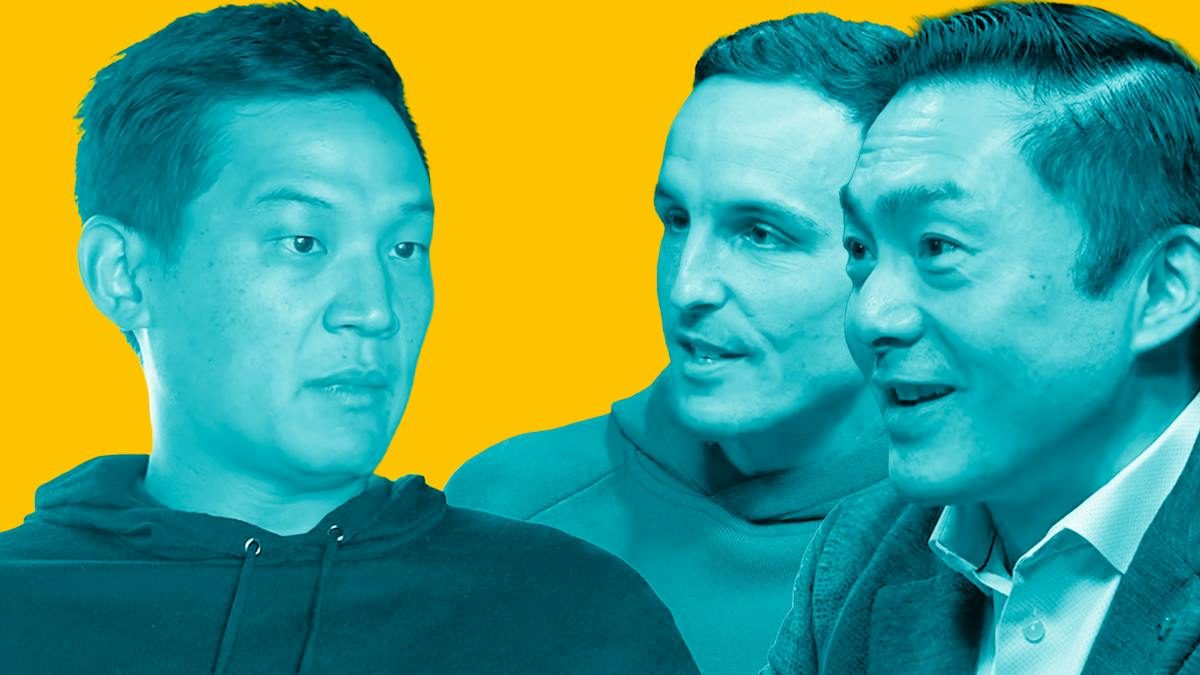
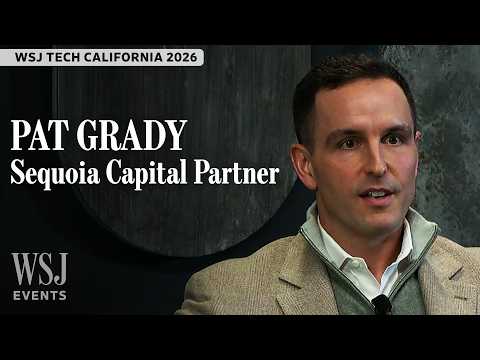
Sequoia Capital is putting hundreds of millions of dollars into Sequence Holdings, a company founded in 2025 that buys established service businesses and rebuilds how they work around AI. It is the second known Sequoia bet on this kind of buyer, after a fund partner's own holding company.

The premise: AI models are widely available, so the model is not the scarce asset. Owning a business with existing customers, the authority to change its staff's workflows, and capital that does not have to be returned on a fund clock is. Sequence says it will buy one large company a year, embed engineers, and hold indefinitely. Two months ago it and Michael Dell's family office agreed to buy insurance broker Baldwin for $7.7 billion.

Why it matters

If the model works, AI's biggest profits come from owning insurance brokers and loan processors, not from selling them software.

Questions about this story

Free account needed to ask — your question is kept and asked for you right after sign-up. Answers are public.

No questions yet — be the first to ask.

Key Indicators

$7.7B
Baldwin take-private enterprise value
About $4.6 billion of equity plus $3.1 billion of assumed or refinanced net debt.
88%
Premium to Baldwin's unaffected share price
Measured against the June 17, 2026 close, before reports the company was exploring a sale.
20x
Enterprise value to Baldwin's trailing adjusted earnings
Based on roughly $396 million of trailing-twelve-month adjusted EBITDA.
$75M
Sequence's disclosed funding before Sequoia
Raised from 8VC, Lux Capital, Conviction and others.
4x
Return multiple investors expect from these holding companies
Closer to private equity math than the roughly 10x venture capital targets, according to industry participants.

Voices

Curated perspectives — historical figures and your fellow readers.

Sign up to generate historical perspectives on this story.

People Involved

Organizations Involved

Timeline

2024 November 2026

6 events Latest: Yesterday
Tap a bar to jump to that date
  1. Sequoia agrees to invest hundreds of millions in Sequence

    Latest Investment

    People familiar with the matter say the money will let Sequence pursue more acquisitions. Both companies declined to comment.

  2. Thrive Holdings agrees to buy ADT for $15.3 billion

    Acquisition

    The largest acquisition yet by a venture-backed AI holding company, covering debt.

  3. Baldwin agrees to go private for $7.7 billion

    Acquisition

    Sequence and DFO Management offer $32.50 a share in cash, an 88% premium. Piper Sandler is lead financial adviser to the buyers.

  4. Baldwin rolls out Claude across the firm

    Technology

    The insurance brokerage deploys Anthropic's model company-wide, meaning AI work was already under way before the sale.

  5. Sequence Holdings and Thrive Holdings are founded

    Company formation

    Sequence raises at least $75 million from 8VC, Lux Capital and Conviction. Thrive Holdings draws money from Altimeter, D1 Capital and SoftBank.

  6. General Catalyst backs holding company Long Lake

    Investment

    An early test of the model: a venture firm funding a vehicle built to buy whole companies rather than minority stakes.

Scenarios

1

Baldwin deal closes in the first quarter of 2027

Likely Resolves by Q1 2027

Discussed by: The Baldwin Group's deal announcement and Reuters

The agreement has no financing condition, which removes the most common reason take-privates slip. It still needs a shareholder vote and regulatory clearance. If it closes on schedule, Sequence gets its first large operating platform and the model moves from pitch to practice.

2

Sequence announces a second majority acquisition within a year

Possible Resolves by Nov 11, 2027

Discussed by: People familiar with the Sequoia investment, as reported by The Information

The stated purpose of the Sequoia money is more deals. Sequence says it completes one major acquisition a year, so the test of whether the capital converts into ownership is a single announcement, not a spree.

3

Another venture firm funds a rival AI holding vehicle

Possible Resolves by Q2 2027

Discussed by: Reported comparisons across Sequoia, General Catalyst, Thrive and others

Four firms are already in this category. A fifth entry, or a second vehicle from an existing one, would show the structure is spreading rather than staying a side project for a few partners.

Historical Context

3 moments from history that rhyme with this story — and how they unfolded.

1965-1985

Berkshire Hathaway shifts from textiles to owned operating businesses (1965-1985)

Warren Buffett's partnership took control of a failing New England textile maker in 1965. The mills kept losing money, and the capital they tied up went instead into an insurer, National Indemnity, in 1967 and the candy maker See's Candies in 1972. The textile operations closed in 1985.

Then

Buffett kept a declining business alive for two decades while directing its cash into better ones.

Now

Berkshire became the standard example of permanent capital buying whole companies and holding them indefinitely, with no fund deadline forcing a sale.

Why this matters now

Sequence is selling the same structural pitch: capital that never has to be returned, attached to operating businesses. The difference is what it claims to change inside them.

1960s

The 1960s conglomerate wave

Companies such as ITT, Gulf+Western and Litton Industries grew by buying unrelated businesses, using high stock prices as currency. Investors initially rewarded the growth in earnings per share.

Then

The acquisitions produced reported growth that was hard to compare across very different businesses.

Now

The stocks fell out of favor in the 1970s, and many of the combinations were later broken up. Acquisition-driven holding companies have traded at a discount to their parts ever since.

Why this matters now

The discount is the risk Sequence, Thrive and Long Lake have to beat. Their argument is that AI changes the operations of each business, not just the accounting.

October 1988 - February 1989

KKR's buyout of RJR Nabisco (1988)

A bidding contest for the tobacco and food company ended with Kohlberg Kravis Roberts winning at roughly $25 billion, then the largest leveraged buyout on record. The deal was financed mostly with debt and paid off by selling divisions and cutting costs.

Then

The company was broken up to service the debt, and the fees and borrowing became the story as much as the operating results.

Now

The buyout defined private equity's reputation for financial engineering on a five-to-seven-year clock.

Why this matters now

Sequence's founders explicitly separate themselves from this playbook: one deal a year, engineers inside the business, and no plan to sell. Whether that distinction holds up under an actual turnaround is the open question.

Sources

(8)