


Pull to refresh
Logo
FDA clears first AI-powered MRI-derived breast cancer recurrence risk tool

FDA clears first AI-powered MRI-derived breast cancer recurrence risk tool

New Capabilities

SimBioSys's TumorSight Risk gives five- and ten-year recurrence estimates from a routine breast MRI, before surgery

Today: FDA clears TumorSight Risk

Overview

Updated 1 hour ago

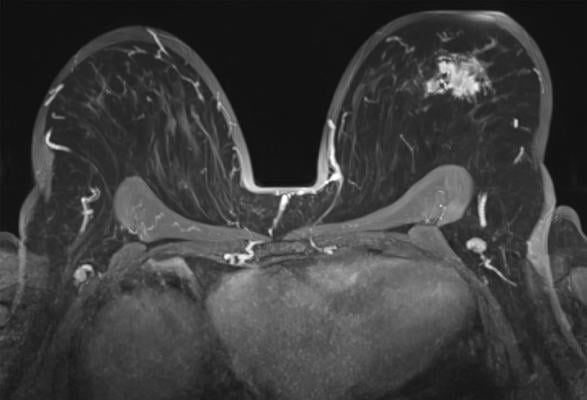
The Food and Drug Administration cleared the first AI-powered tool that estimates breast cancer recurrence risk from an MRI a patient already has. SimBioSys's TumorSight Risk turns routine breast MRI, pathology, and clinical data into a five- and ten-year recurrence estimate, available before surgery.

The tool targets hormone receptor-positive, HER2-negative Stage I-IIIA breast cancer, about 75% of US cases. It's designed to complement genomic tests like Oncotype DX, which require tissue shipment and can take weeks. It also serves patient groups where genomic testing has fewer validated options.

Why it matters

For women with early-stage breast cancer, this could mean faster, cheaper recurrence risk insight that helps decide on chemotherapy or extended endocrine therapy.

Questions about this story

Free account needed to ask — your question is kept and asked for you right after sign-up. Answers are public.

No questions yet — be the first to ask.

Key Indicators

2,129
Patients in validation study
Multi-institutional study from Mayo Clinic, Emory, Stanford, and Mercy Medical Cedar Rapids.
3.3x
Recurrence risk, high vs. low
High-risk patients had 3.3-fold greater recurrence risk than low-risk patients.
22%
Risk increase per 10-point score rise
Each 10-point increase in the 0-100 score raised relative recurrence risk by 22%.
97%
Negative predictive value at 5 years
97% of patients classified low-risk remained cancer-free at five years.
75%
Share of US breast cancers targeted
HR+, HER2-negative early-stage disease is about 75% of US breast cancers.

Voices

Curated perspectives — historical figures and your fellow readers.

Ever wondered what historical figures would say about today's headlines?

Sign up to generate historical perspectives on this story.

People Involved

Organizations Involved

Timeline

2023 October 2026

4 events Latest: Today
Tap a bar to jump to that date
  1. FDA clears TumorSight Risk

    Today Regulatory

    FDA grants 510(k) clearance, making it the first AI-powered MRI-derived recurrence risk tool for breast cancer.

  2. SimBioSys files 510(k) for TumorSight Risk

    Regulatory

    Company submits application K260023 to the FDA for the MRI-derived recurrence risk tool.

  3. Validation study presented at ASCO

    Research

    Results from 2,129 patients across four institutions shown at the ASCO Annual Meeting.

  4. FDA clears TumorSight Viz

    Regulatory

    SimBioSys's first FDA clearance, the 3D tumor visualization platform that TumorSight Risk builds on.

Scenarios

1

TumorSight Risk becomes a standard pre-surgery tool

Likely Resolves by End of 2027

Discussed by: SimBioSys leadership and breast oncologists quoted in coverage

Major cancer centers adopt the tool for pre-surgery treatment planning. It becomes a routine complement to genomic testing, particularly for patients where genomic assays are less validated, such as premenopausal and lymph node-positive women.

2

Reimbursement and cost barriers slow adoption

Possible Resolves by End of 2027

Discussed by: Healthcare analysts and oncologists concerned about added cost

Without clear insurance coverage, hospitals may be slow to adopt. The tool adds a new cost in a care pathway already using genomic tests, and its clinical utility beyond existing methods will need to be demonstrated in practice.

3

Competing MRI-based recurrence tools reach the market

Possible Resolves by End of 2027

Discussed by: Industry observers tracking AI/ML FDA clearances

Rivals file 510(k)s for similar MRI-derived prognostic tools, eroding TumorSight Risk's first-mover advantage. The FDA's growing comfort with AI prognostic tools, shown by clearances like ArteraAI Prostate, makes this path more likely.

Historical Context

2 moments from history that rhyme with this story — and how they unfolded.

2004

Oncotype DX (2004)

Genomic Health launched Oncotype DX, a test that analyzes the expression of 21 genes in tumor tissue to predict breast cancer recurrence and chemotherapy benefit. It was validated through large clinical trials and became a standard of care for early-stage breast cancer.

Then

Oncologists gained a tissue-based recurrence score that helped decide whether chemotherapy was worth its side effects.

Now

Genomic assays became the reference standard for recurrence risk, but they require tissue shipment, cost thousands of dollars, and have fewer validated options for some patient groups.

Why this matters now

TumorSight Risk is designed to complement genomic assays like Oncotype DX with an imaging-based estimate that is faster, cheaper, and available before surgery.

July 2025

ArteraAI Prostate (2025)

The FDA cleared ArteraAI Prostate, the first AI-based prognostic tool in oncology, which analyzes digitized pathology slides to predict treatment outcomes for prostate cancer patients.

Then

The clearance established a regulatory path for AI prognostic tools that combine imaging analysis with clinical data.

Now

It signaled the FDA's willingness to clear AI tools that inform treatment decisions, paving the way for similar tools in other cancers.

Why this matters now

ArteraAI Prostate set the regulatory precedent that TumorSight Risk followed, and its clearance shows the FDA's growing comfort with AI-based cancer prognosis.

Sources

(5)