



Pull to refresh
Logo
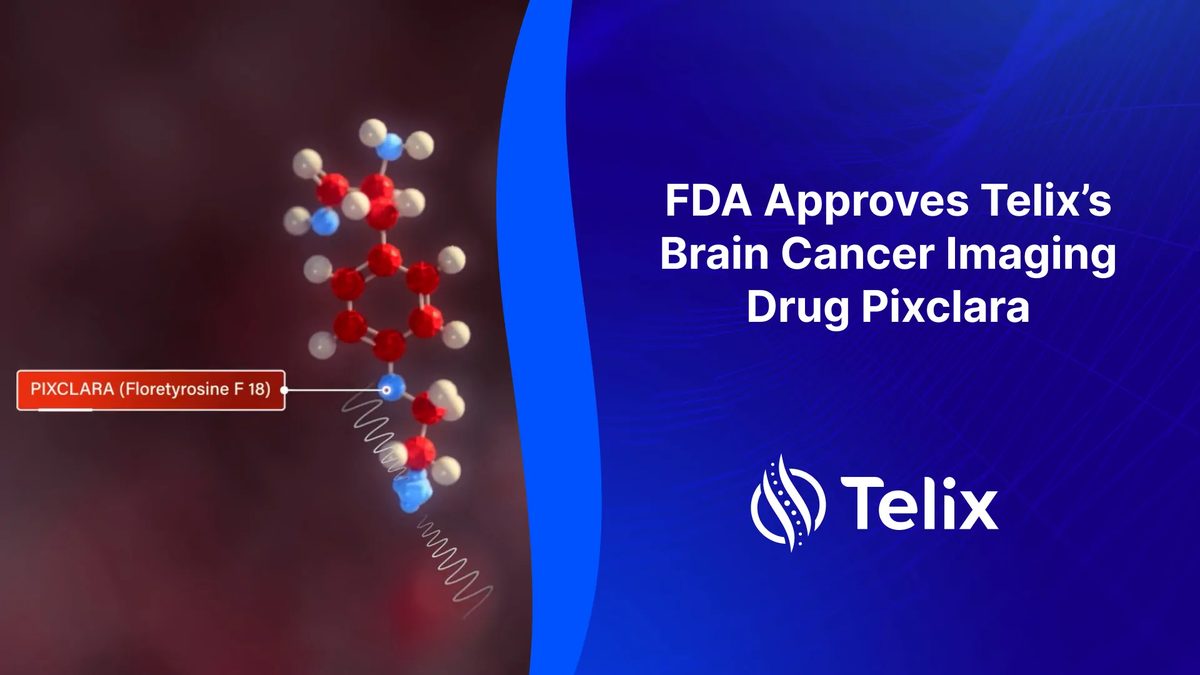
FDA approves Telix's Pixclara, first FET-PET imaging drug for glioma

FDA approves Telix's Pixclara, first FET-PET imaging drug for glioma

New Capabilities

Floretyrosine F 18 tracer helps doctors tell tumor recurrence from post-treatment change in brain cancer patients

Today: FDA approves Pixclara, first FET-PET drug for glioma

Overview

Updated 1 hour ago

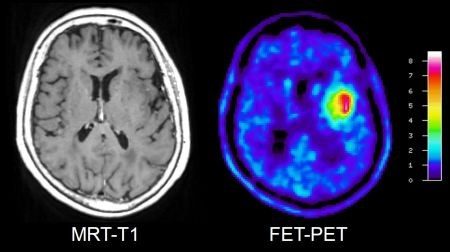
Brain cancer doctors face a maddening problem: after radiation and chemo, standard MRI scans often can't tell whether a suspicious spot is tumor regrowth or treatment-related change. The two scenarios call for opposite treatments. The FDA just approved a test that settles the question.

On September 14, 2026, the agency cleared Telix Pharmaceuticals' Pixclara (floretyrosine F 18), the first FET-PET imaging drug for glioma approved in the US. FET-PET was already routine in Europe and Japan and recommended in NCCN guidelines. American doctors simply had no approved tracer until now.

Why it matters

For thousands of glioma patients a year, the difference between tumor regrowth and post-treatment change decides the next treatment. Pixclara settles it.

Questions about this story

Free account needed to ask — your question is kept and asked for you right after sign-up. Answers are public.

No questions yet — be the first to ask.

Key Indicators

24,000
New US glioma cases per year
Gliomas account for about 80% of all malignant brain tumors.
382
Patients in Pixclara safety evaluation
Included 371 adults and 11 pediatric patients, per FDA labeling.
1 month +
Approved age range
Pixclara is cleared for adults and pediatric patients 1 month of age and older.

Voices

Curated perspectives — historical figures and your fellow readers.

Ever wondered what historical figures would say about today's headlines?

Sign up to generate historical perspectives on this story.

People Involved

Organizations Involved

Timeline

April 2025 September 2026

4 events Latest: Today
Tap a bar to jump to that date
  1. FDA approves Pixclara, first FET-PET drug for glioma

    Today Regulatory

    FDA approves Pixclara (floretyrosine F 18) to differentiate recurrent or progressive glioma from treatment-related change in adults and children 1 month and older.

  2. FDA accepts resubmitted NDA for review

    Regulatory

    FDA accepts the resubmission and assigns a PDUFA goal date of September 11, 2026.

  3. Telix resubmits Pixclara NDA

    Regulatory

    After discussions with the FDA, Telix resubmits the application with additional analyses of existing clinical data.

  4. FDA issues Complete Response Letter for Pixclara

    Regulatory

    FDA declines Telix's original New Drug Application, determining the evidence at that stage didn't provide substantial proof of effectiveness and requesting additional confirmatory data.

Scenarios

1

Pixclara wins Medicare and private payer coverage within a year

Likely Resolves by Sep 14, 2027

Discussed by: Telix management, healthcare reimbursement analysts

NCCN guidelines already recommend FET-PET, and Pixclara holds Orphan Drug and Fast Track designations. The open question is reimbursement: CMS and major private insurers must establish coverage policies before clinics adopt the tracer broadly. A formal coverage determination or a positive local coverage decision would signal the test is becoming standard practice.

2

Companion therapy TLX101-Tx succeeds in pivotal IPAX-BrIGHT trial

Uncertain Resolves by End of 2028

Discussed by: Telix Pharmaceuticals, neuro-oncology trialists

Pixclara is the diagnostic half of a planned theranostics pair. Its partner, iodofalan I-131 (TLX101-Tx), targets the same LAT1 transporter and is being tested in the IPAX-BrIGHT Phase 3 trial for recurrent glioblastoma. A positive top-line readout on overall survival would validate Telix's paired imaging-and-therapy model and expand Pixclara's commercial logic.

3

FDA expands Pixclara to brain metastasis imaging

Possible Resolves by End of 2029

Discussed by: Telix Pharmaceuticals (Phase 3 program)

Telix is running a Phase 3 registrational study evaluating Pixclara for diagnosing brain metastases, a separate and larger patient population than glioma. If the trial reads out positively, Telix would file a supplemental NDA. Approval would roughly triple the addressable imaging population and cement the tracer's role in neuro-oncology.

Historical Context

2 moments from history that rhyme with this story — and how they unfolded.

May 2016

Axumin approval (2016)

The FDA approved Blue Earth Diagnostics' Axumin (fluciclovine F 18), an amino acid PET tracer, for imaging men with suspected prostate cancer recurrence after treatment. Standard scans often missed small recurrences, and no approved agent targeted them.

Then

Axumin quickly became a standard tool for prostate recurrence imaging across US hospitals.

Now

It was later largely superseded by PSMA PET agents (Pylarify, 2021), which proved more sensitive — showing that first-in-class tracers can be displaced by better ones.

Why this matters now

Axumin was the template for an amino acid tracer closing a recurrence-imaging gap in the US. Pixclara follows the same playbook for glioma, and could similarly face future competition from other amino acid agents.

March 2022

PSMA theranostics: Locametz and Pluvicto (2022)

The FDA approved Novartis' Locametz (gallium-68 PSMA-11), a PET imaging agent, and Pluvicto (lutetium-177 PSMA-617), a targeted therapy, for prostate cancer. The pair was approved together — the diagnostic identifying patients who would benefit from the therapy.

Then

Pluvicto became a blockbuster, and the matched diagnostic-therapy model proved commercially viable.

Now

It established theranostics as a major oncology strategy, with imaging guiding treatment decisions in real time.

Why this matters now

Pixclara is the diagnostic half of Telix's planned theranostics pair with TLX101-Tx. The PSMA precedent shows how approving the imaging agent first can build the infrastructure for the therapy that follows.

Sources

(5)