
Pull to refresh
Logo
Indonesian ferry capsizes in Java Sea, leaving more than 100 missing

Indonesian ferry capsizes in Java Sea, leaving more than 100 missing

Built World

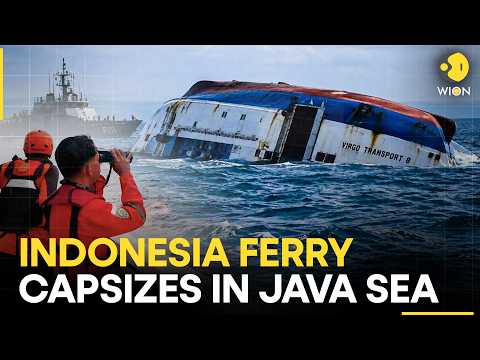
Virgo Transport 8 went down in stormy seas between Java and Borneo; six are dead and rescuers have not been able to board the half-submerged hull.

Today: Rough seas stall the rescue

Overview

Updated 1 hour ago

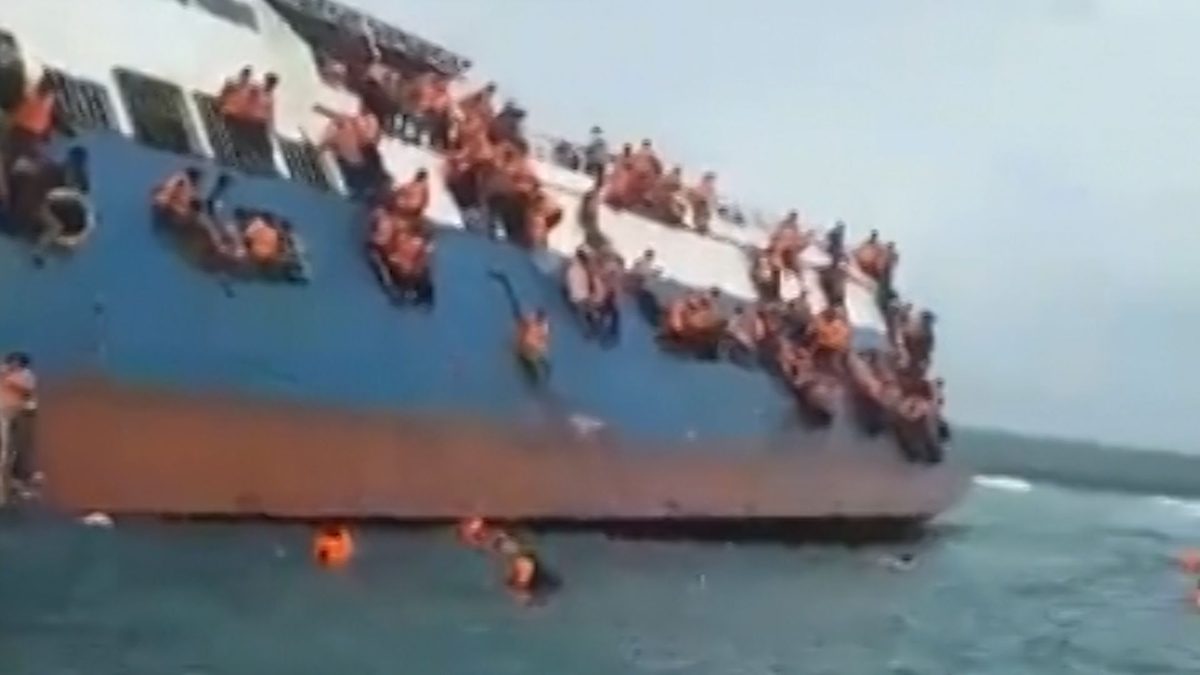
A ferry carrying 243 people capsized in the Java Sea before dawn on Sunday, midway between the islands of Java and Borneo. By Monday evening, rescuers had pulled 108 people from the water and recovered six bodies; 129 remained missing.

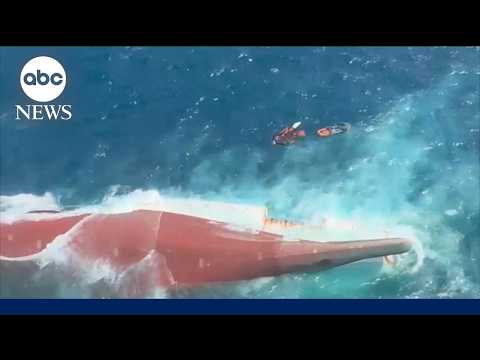
The ship, Virgo Transport 8, lost contact at about 2 a.m. after waves up to three meters slammed its starboard side. It is capsized but has not sunk, which leaves open the possibility that passengers are trapped inside the hull — if weather lets rescuers reach it.

Why it matters

More than half the passengers remain missing, a reminder that Indonesia's island economy depends on ferries that sail through storm season.

Questions about this story

Free account needed to ask — your question is kept and asked for you right after sign-up. Answers are public.

No questions yet — be the first to ask.

Key Indicators

243
People aboard Virgo Transport 8
30 crew, 27 company personnel, 60 passengers, and 126 drivers and assistants, plus 89 vehicles.
129
People missing as of Sept. 14
The figure initially reported at 130 or 140 before settling at 129 as rescue counts were reconciled.
108
People rescued
Pulled from the water by the tugboats and cargo ships that reached the scene first.
622
Rescue personnel deployed
Backed by 17 ships and five helicopters and aircraft, per Basarnas chief Mohammad Syafii.
8,540
Gross tonnage of the ferry
Registered capacity was 500 passengers, so the transport ministry says the ship was not overloaded.

Voices

Curated perspectives — historical figures and your fellow readers.

Ever wondered what historical figures would say about today's headlines?

Sign up to generate historical perspectives on this story.

People Involved

Organizations Involved

Timeline

3 events Latest: Today
  1. Rough seas stall the rescue

    Today Search and rescue

    Basarnas deploys 622 personnel and 17 ships, but high waves prevent teams from boarding the half-submerged hull. Missing count stands at 129.

  2. Ferry capsizes in the Java Sea

    Disaster

    Ship loses contact after strong waves hit its starboard side. Passing tugboats and a cargo vessel pull 108 people from the water; six bodies recovered.

  3. Ferry departs Surabaya

    Departure

    Virgo Transport 8 leaves Surabaya, East Java, with 243 people and 89 vehicles, bound for Banjarmasin, South Kalimantan.

Scenarios

1

Rescuers find survivors inside the capsized hull

Possible Resolves by Q3 2026

Discussed by: Basarnas officials, who say divers and underwater teams are ready to deploy once weather allows

If waves drop in the coming days, divers may reach passengers trapped in air pockets inside the hull. The ship is listing but intact, which keeps this outcome possible. The window is short — survivors would need air and would face hypothermia as nights pass.

2

Search ends with the missing declared dead

Likely Resolves by Oct 31, 2026

Discussed by: Reuters and local Indonesian outlets reporting on standard recovery protocol

Weather has already stalled the rescue once. If conditions do not improve within a week, agencies typically scale down to body recovery and declare the remaining missing dead. The confirmed death toll would rise well above six as the hull is eventually entered and searched.

3

National Transportation Safety Committee publishes a cause

Possible Resolves by End of 2026

Discussed by: Indonesia's transport ministry, which said it is examining natural, technical, and human factors

Authorities have said the ship was not overloaded, holding capacity for 500 passengers. Investigators will scrutinize the captain's decision to sail into a storm, the ship's maintenance record, and the forecast. The committee's final reports take months to years to complete.

Historical Context

3 moments from history that rhyme with this story — and how they unfolded.

January 1981

Tampomas II sinking (1981)

The passenger ferry Tampomas II caught fire and sank in the Java Sea, killing nearly 600 people by some estimates. The ship burned for days while rescue attempts were hindered by the same rough conditions now slowing this rescue.

Then

Hundreds of bodies were never recovered from the Java Sea.

Now

The disaster became a reference point for Indonesia's recurring ferry safety failures, though enforcement remained lax.

Why this matters now

It happened in the same body of water, in similar weather, and is the standard Indonesian officials cite for the region's worst maritime losses.

June 2018

KM Sinar Bangun sinking (2018)

A ferry capsized on Lake Toba in North Sumatra with about 200 people aboard, killing at least 167. The vessel was severely overloaded, far beyond its registered capacity.

Then

A criminal investigation led to charges of negligence against the captain and crew.

Now

Officials pledged tighter enforcement of passenger limits, a promise that has not prevented subsequent losses.

Why this matters now

It is the most recent high-profile Indonesian ferry disaster and the benchmark for how overloading and lax inspection combine with bad weather to kill.

September 2024

KM Lestari Maju capsizing (2024)

A wooden passenger vessel capsized off South Sulawesi in bad weather, killing dozens. Some passengers were among the missing for days as rescue teams battled heavy seas.

Then

Survivors described passengers without life jackets in the water as the ship went down.

Now

The toll reinforced a pattern: Indonesian ferries routinely sail into weather that their operators know is dangerous.

Why this matters now

It shows the same failure mode two years earlier — a ship departing on schedule into a storm, with passengers paying the price.

Sources

(9)