Anchor

Voters must opt in to receive a mail ballot; a 2025 law also adds ID-number verification.
2 days ago: State alert: opt in by 2029New here? Follow stories to track developments over time. Create a free account to get updates when stories you care about change.
Overview
Updated 2 hours agoUtah will stop automatically mailing ballots to every active registered voter in 2029. About 95% of Utahns now vote by mail, and under a 2025 law they'll need to opt in to keep receiving a ballot.
The change is part of HB300, which also requires voters to write the last four digits of their state ID on ballot envelopes starting in 2026. County clerks have until 2029 to build the opt-in system. Those who opt in must renew every eight years; voters who don't sign up can still vote in person.
Why it matters
If Utah voters don't opt in by 2029, most will lose the mail ballot they've relied on for years.
Questions about this story
Free account needed to ask — your question is kept and asked for you right after sign-up. Answers are public.
No questions yet — be the first to ask.
Key Indicators
95%
Utah voters who vote by mail
About 95% of Utah voters currently use the automatically mailed ballot.
2029
Year automatic mail voting ends
Voters must opt in by Jan. 1, 2029 to keep receiving a mail ballot.
8 years
Mail-ballot opt-in renewal period
Voters who opt in must renew their mail-ballot choice every eight years.
Related Media
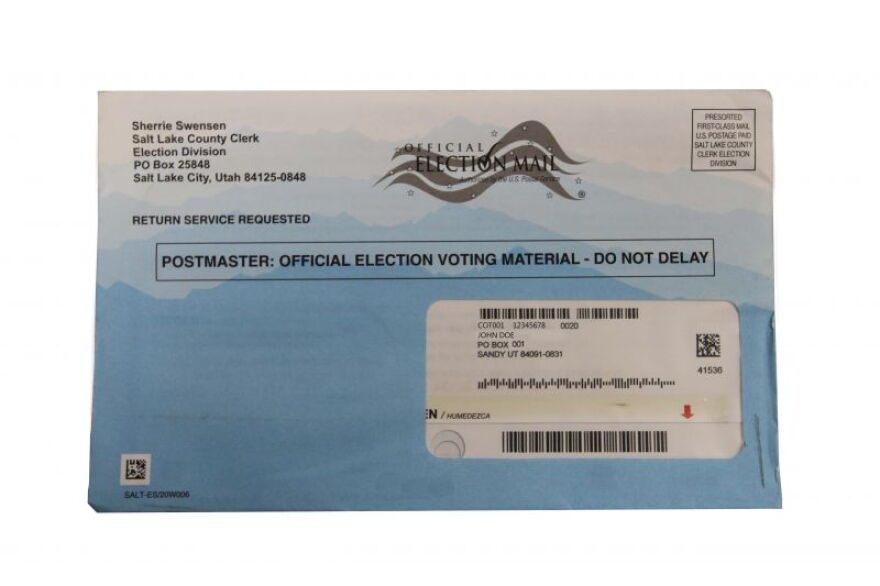
Utah Counties Embrace Mail-in Voting | Utah Public Radio
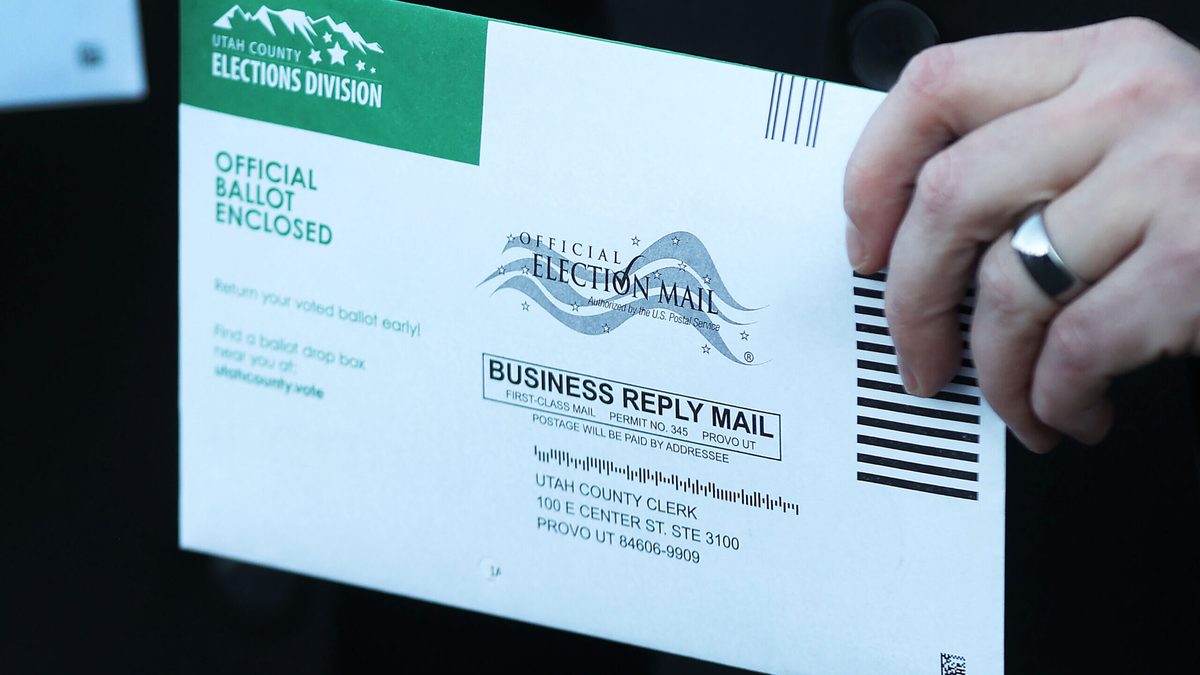
Mail-in voting legislation passes the house

A breathtaking view of Salt Lake City's skyline illuminated at night, featuring the Utah State Capitol.
456 views
9:21
How will changes to mail-in voting impact elections?
KUTV 2 News Salt Lake City
660 views
2:36
House bill seeks to tweak Utah's vote-by-mail system
FOX 13 News Utah
190 views
2:14
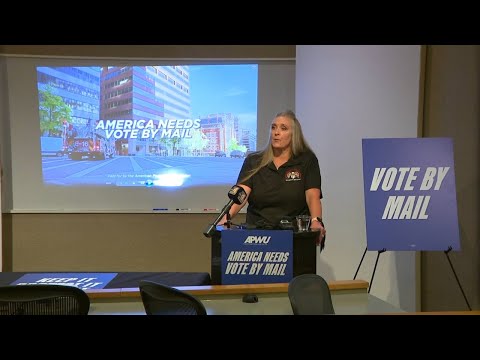
Postal workers union push for voting by mail in Utah campaign
FOX 13 News Utah
Images from Openverse under Creative Commons licenses. Videos from YouTube.
Voices
Curated perspectives — historical figures and your fellow readers.
Play
Exploring all sides of a story is often best achieved with Play.
Most of these play right now — no account needed. Sign up to save scores, keep a streak, and unlock Debate and Predict.
Log in
Sign Up
Higher or Lower
A number from this story, against one from elsewhere in the news — guess which is bigger, then keep the chain going. 5 rounds, 3 strikes; a miss costs a strike and resets your streak.
Example
Anchor
EU tariff revenue
$52B
Big for this kind of number
Mystery
Pentagon AI contract
?
Round 1
Streak: 0
Mystery
?
Keyboard: ↓/L lower · ↑/H higher
0 pts
Best streak: 0 · Rounds: 0
0 points — sign up to put that on the leaderboard.
Now try on this story
Connections
Sixteen names from the news. Find the four hidden groups of four. Four mistakes max.
Loading today's puzzle…
0/4 groups
Mistakes
Sign up to keep a daily streak — a new puzzle lands every day.
Now try on this story
Exit debate?
Your progress in this debate will be lost.
How it works
- 1 Two AI personas square off on this story.
- 2 You predict who'll win each round — correct picks earn XP.
- 3 One crossfire question is yours to fire. Pick it carefully.
Couldn't generate a topic
Select Your Champions
Choose one persona for each side of the debate
DEBATE TOPIC
Choose personas with different perspectives for a more dynamic debate.
SIDE A (PRO)
Select debater for this side:
No debate personas available right now.
SIDE B (CON)
Select debater for this side:
No debate personas available right now.
VS
Get ready to make your prediction...
Round of
Claim
Evidence
Stakes
Crossfire Answer
Closing Statement
Claim
Evidence
Stakes
Crossfire Answer
Closing Statement
Your Crossfire Question
Generating arguments...
Who's Got This Round?
Make your prediction before the referee scores
The referee scores both sides on
Correct predictions earn +20 XP
· Press 1 or 2 to pick
Evidence
40%
Logic
30%
Detail
20%
Style
10%
Round Results
Your Pick
Not this time
(%)
Overall Score
/10
Your Pick
Not this time
(%)
Overall Score
/10
Set the Crossfire
Pick the question both personas must answer in the final round
Crafting crossfire questions...
Choosing a question earns +10 XP crossfire bonus
🏆
Total XP Earned
Cred Change
Predictions
Debate Oracle! You called every round!
Sharp Instincts! You know your debaters!
The Coin Flip Strategist! Perfectly balanced!
The Contrarian! Bold predictions!
Inverse Genius! Try betting the opposite next time!
XP Breakdown
Base completion
+20 XP
Rounds played ( rounds x 5 XP)
+ XP
Correct predictions ( correct x 20 XP)
+ XP
Crossfire bonus
+10 XP
Accuracy
%
Prediction History
Round
You picked:
✓
✗
Now try on this story
Keep debating to level up your credibility and unlock achievements
People Involved
MM
Mike McKell
Utah state senator (R-Spanish Fork)
Shepherded the final version of HB300 through the Senate
Jefferson Burton
Utah state representative (R-Salem)
Original House sponsor of HB300
Ricky Hatch
Weber County Clerk/Auditor
Raised implementation concerns about HB300
Nate Blouin
Utah state senator (D-Salt Lake City)
Opposed HB300
Deidre Henderson
Utah lieutenant governor
Oversees Utah elections; issued the 2026 opt-in alert
Organizations Involved
Utah Legislature
State Legislature
Passed HB300 in March 2025
The Republican-controlled body that passed HB300.
Utah Lieutenant Governor's Office
State election authority
Oversees elections; published the 2026 opt-in alert
Utah's top election official, responsible for voter registration and election administration.
Timeline
March 2025 January 2029
4 events
Latest: 2 days ago
Tap a bar to jump to that date
-
Automatic mail voting ends
Upcoming DeadlineVoters must have a state ID and opt in to receive a mail ballot. In-person voters must show ID.
-
State alert: opt in by 2029
Latest Public NoticeThe Salt Lake Tribune reports that about 95% of Utah voters rely on automatically mailed ballots. Voters must opt in by 2029 to keep receiving them.
-
ID-number requirement takes effect
Rule ChangeVoters with a state ID must write the last four digits on mail ballot return envelopes. Signature verification remains for voters without an ID number.
-
Utah Legislature passes HB300
LegislationThe House and Senate approve a bill phasing out automatic mail voting by 2029 and adding ID requirements. The bill heads to Gov. Spencer Cox.
Historical Context
3 moments from history that rhyme with this story — and how they unfolded.
November 1998
Oregon Measure 60 (1998)
Oregon voters approved Measure 60, making Oregon the first state to conduct all elections by mail. The state began sending every registered voter a ballot and closed most polling places.
Then
Turnout rose in the 2000 election, and other Western states adopted mail voting.
Now
Automatic mail voting became a standard method across the region.
Why this matters now
Utah's current system grew out of the same expansion. The 2025 law reverses that direction by making mail voting opt-in.
2013-2018
Kansas proof-of-citizenship law (2013)
Kansas required new voters to show documents proving U.S. citizenship. The state suspended more than 30,000 registrations that didn't match its records.
Then
Thousands of voters were blocked or delayed from voting.
Now
Courts struck down the requirement, and Kansas returned to the federal form.
Why this matters now
It shows how adding documentation steps to voting can create barriers, even when the goal is security. Utah's ID-number and opt-in rules add similar steps.
May 2021
Florida SB 90 (2021)
Florida's Republican legislature passed a law restricting mail voting. It required voters to request a mail ballot for each election, added ID-number requirements, and limited drop boxes.
Then
Mail-ballot requests fell sharply in the 2022 election.
Now
The law became a model for other Republican states after the 2020 election.
Why this matters now
Utah's law uses similar tools: ID numbers on envelopes and a new request requirement. Florida shows how such rules can reduce mail voting even when in-person voting remains available.
Sources
(4)Related Stories
Federal judge vacates injunction blocking USPS mail-ballot rule
Rule Changes
Updated 7 days ago
Supreme Court upholds counting of mail ballots that arrive after Election Day
Rule Changes
Updated Jun 29
Court fight over Trump's federal voter list
Rule Changes
Updated Aug 25
Congress debates federal citizenship proof requirements for voter registration
Rule Changes
Updated May 27
Colorado requires a permit and training to buy many semiautomatic guns
Rule Changes
Updated Aug 2
Federal fight for state voter rolls
Rule Changes
Updated May 23