Anchor

Federal judge vacates injunction blocking USPS mail-ballot rule
Rule ChangesSupreme Court stay paves the way for the rule before midterms; states file a new challenge
Yesterday: Talwani vacates injunction; states file new lawsuitNew here? Follow stories to track developments over time. Create a free account to get updates when stories you care about change.
Overview
Updated 46 minutes agoA federal judge in Boston cleared the last legal block on President Trump's mail-ballot rule Wednesday. The U.S. Postal Service can now enforce new ballot requirements before the November 3 midterms.
The now-final USPS rule requires states to submit mail voters' names and addresses to a federal database and use standardized envelopes with unique barcodes. Ballots that fail verification would not be accepted for delivery. Democratic states filed a new lawsuit the same day, and Judge Indira Talwani left open the chance of a new injunction.
The ruling came two days after the Supreme Court stayed a similar injunction in a related case on ripeness and standing grounds. Talwani said she was "compelled" by that decision, even as she noted the plaintiffs had arguments that might persuade the Supreme Court to reach a different result later.
Why it matters
States must submit voter data and adopt federal barcoded envelopes within weeks, or the Postal Service will not deliver their mail ballots.
Questions about this story
Free account needed to ask — your question is kept and asked for you right after sign-up. Answers are public.
No questions yet — be the first to ask.
Key Indicators
69
Days until November 3 midterm election
From August 26, 2026. States have little time to adapt mail-ballot systems.
2
Injunctions cleared for USPS rule
Supreme Court stayed one; district judge vacated the other.
Related Media
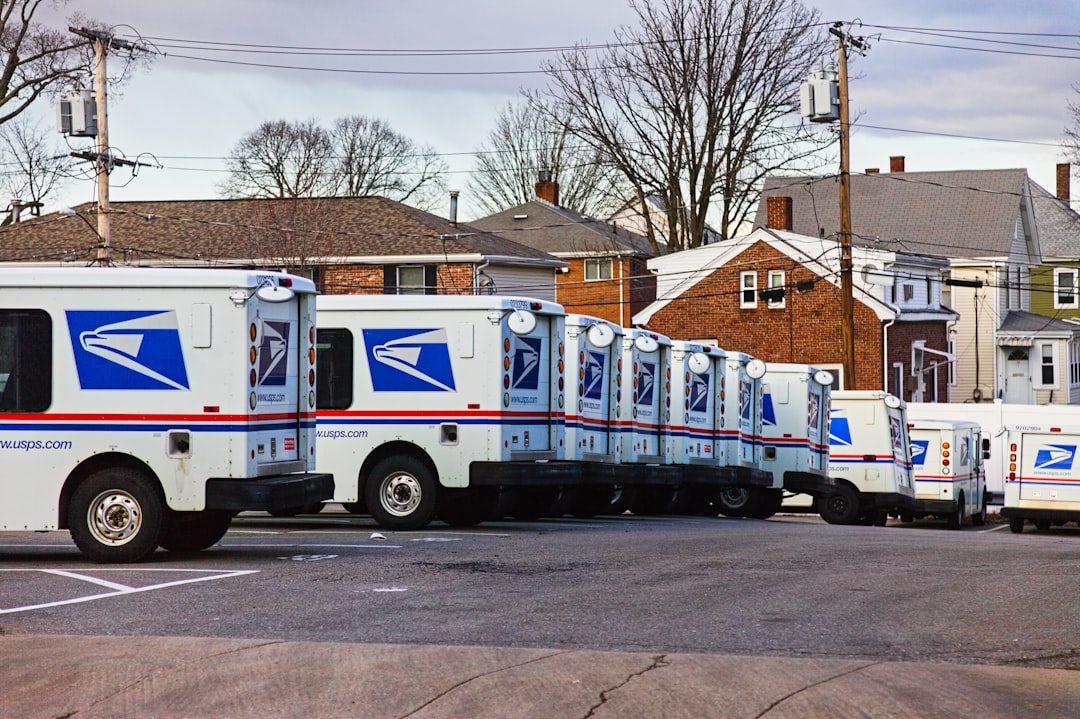
United States Postal Service mail vans lined up at the Waltham, Massachusetts mail handling facility this winter. I previously incorrectly identified these vehicles as Grumman LLVs; this was pointed out to me several months after posting this image. There are two LLVs in this image; one at the end of the line of vehicles facing to the left, and one in the back with square taillights. The majority of these vehicles are Ford FFVs, a more modern delivery vehicle.
Detailed view of the United States Postal Service logo on a blue background, showcasing texture.
Side panel view of a United States Postal Service mail truck emphasizing its logo.
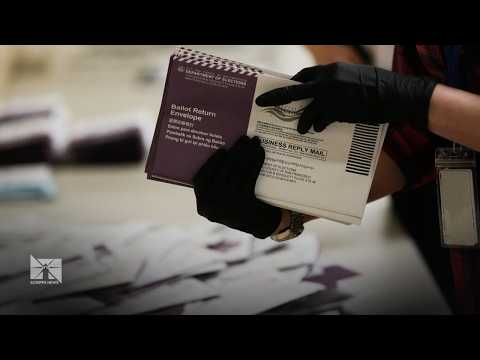
8.2K views
3:56
Supreme Court ruling sets up a midterm battle over mail-in voting
Scripps News
2.6K views
1:47
Supreme Court Boosts Trump's Mail-In Voting Crackdown
Firstpost
Images from Openverse under Creative Commons licenses. Videos from YouTube.
Voices
Curated perspectives — historical figures and your fellow readers.
Play
Exploring all sides of a story is often best achieved with Play.
Most of these play right now — no account needed. Sign up to save scores, keep a streak, and unlock Debate and Predict.
Log in
Sign Up
Higher or Lower
A number from this story, against one from elsewhere in the news — guess which is bigger, then keep the chain going. 5 rounds, 3 strikes; a miss costs a strike and resets your streak.
Example
Anchor
EU tariff revenue
$52B
Big for this kind of number
Mystery
Pentagon AI contract
?
Round 1
Streak: 0
Mystery
?
Keyboard: ↓/L lower · ↑/H higher
0 pts
Best streak: 0 · Rounds: 0
0 points — sign up to put that on the leaderboard.
Now try on this story
Connections
Sixteen names from the news. Find the four hidden groups of four. Four mistakes max.
Loading today's puzzle…
0/4 groups
Mistakes
Sign up to keep a daily streak — a new puzzle lands every day.
Now try on this story
Exit debate?
Your progress in this debate will be lost.
How it works
- 1 Two AI personas square off on this story.
- 2 You predict who'll win each round — correct picks earn XP.
- 3 One crossfire question is yours to fire. Pick it carefully.
Couldn't generate a topic
Select Your Champions
Choose one persona for each side of the debate
DEBATE TOPIC
Choose personas with different perspectives for a more dynamic debate.
SIDE A (PRO)
Select debater for this side:
No debate personas available right now.
SIDE B (CON)
Select debater for this side:
No debate personas available right now.
VS
Get ready to make your prediction...
Round of
Claim
Evidence
Stakes
Crossfire Answer
Closing Statement
Claim
Evidence
Stakes
Crossfire Answer
Closing Statement
Your Crossfire Question
Generating arguments...
Who's Got This Round?
Make your prediction before the referee scores
The referee scores both sides on
Correct predictions earn +20 XP
· Press 1 or 2 to pick
Evidence
40%
Logic
30%
Detail
20%
Style
10%
Round Results
Your Pick
Not this time
(%)
Overall Score
/10
Your Pick
Not this time
(%)
Overall Score
/10
Set the Crossfire
Pick the question both personas must answer in the final round
Crafting crossfire questions...
Choosing a question earns +10 XP crossfire bonus
🏆
Total XP Earned
Cred Change
Predictions
Debate Oracle! You called every round!
Sharp Instincts! You know your debaters!
The Coin Flip Strategist! Perfectly balanced!
The Contrarian! Bold predictions!
Inverse Genius! Try betting the opposite next time!
XP Breakdown
Base completion
+20 XP
Rounds played ( rounds x 5 XP)
+ XP
Correct predictions ( correct x 20 XP)
+ XP
Crossfire bonus
+10 XP
Accuracy
%
Prediction History
Round
You picked:
✓
✗
Now try on this story
Keep debating to level up your credibility and unlock achievements
People Involved
Organizations Involved
United States Postal Service
Federal Agency
Implementing Section 3 of Executive Order 14399
Published final rule on ballot mail handling on August 21, 2026, requiring states to submit voter data and use standardized envelopes.
U.S. Supreme Court
Federal Judiciary
Stayed injunction in California v. Trump on August 24, 2026
Granted the government's emergency stay application on ripeness and standing grounds.
League of Women Voters of Massachusetts
Nonprofit voting rights organization
Plaintiff in League of Women Voters v. Trump
Nonpartisan organization that secured the preliminary injunction on August 11, later vacated.
Timeline
June 2026 August 2026
6 events
Latest: Yesterday
Tap a bar to jump to that date
-
Talwani vacates injunction; states file new lawsuit
Latest LegalJudge vacates League injunction after Supreme Court stay. Coalition of states files new challenge to final rule.
-
Talwani finds USPS violated injunction
LegalJudge rules USPS violated the injunction by publishing the final rule, but imposes no sanction.
-
Supreme Court stays injunction
LegalPer curiam order stays California injunction on ripeness and standing grounds. No mention of the final rule.
-
USPS publishes final rule despite injunction
RegulatoryPostal Service files final rule with the Federal Register, effective immediately, while injunctions are in place.
-
Talwani grants League of Women Voters injunction
LegalNationwide preliminary injunction issued against USPS enforcement of Section 3 for the 2026 election.
-
First injunction issued in California v. Trump
LegalDistrict court grants nationwide injunction blocking Section 3 of the executive order.
Historical Context
3 moments from history that rhyme with this story — and how they unfolded.
December 2000
Bush v. Gore (2000)
The Supreme Court intervened in Florida's vote recount in December 2000, effectively deciding the presidential election. The Court's 5-4 ruling halted the recount and cited the time pressure of the approaching certification deadline.
Then
The recount stopped, and George W. Bush won Florida's electoral votes by 537 ballots.
Now
Showed courts will act quickly on election procedures under extreme time pressure, sometimes without full merits review.
Why this matters now
The current case follows a similar pattern: emergency applications, stays, and time pressure weeks before an election. The Supreme Court's August 24 stay was per curiam, decided without full briefing.
July-October 2020
DeJoy-era USPS changes (2020)
Postmaster General Louis DeJoy implemented operational changes in summer 2020 that slowed mail delivery. States sued, and a federal judge ordered USPS to reverse some changes before the November 2020 election, which saw record mail-in voting during COVID.
Then
Operational changes were reversed or paused before the 2020 election.
Now
Established that courts will scrutinize USPS operational changes affecting mail ballots near elections.
Why this matters now
The same agency, USPS, is again changing mail-ballot handling under a new rule, and courts are again being asked to intervene close to an election.
April-November 2020
Trump campaign mail-voting lawsuits (2020)
Trump's campaign and allies sued Nevada, Pennsylvania, and other states over mail-ballot rules, arguing they invited fraud. Courts mostly rejected the suits, and the Biden administration later argued the litigation had no basis.
Then
Most challenges failed; mail voting expanded significantly in the 2020 election.
Now
The current executive order is a different approach to the same goal: tightening mail-ballot rules through executive action and agency rulemaking rather than litigation.
Why this matters now
The executive order and USPS final rule represent a shift from litigating against state mail-ballot rules to imposing federal requirements directly through agency action.
Sources
(10)Related Stories
Court fight over Trump's federal voter list
Rule Changes
Updated 2 days ago
Supreme Court upholds counting of mail ballots that arrive after Election Day
Rule Changes
Updated Jun 29
House revolt against Trump’s federal union crackdown
Rule Changes
Updated Aug 8
Federal rules trump state malpractice barriers
Rule Changes
Updated May 22
Texas mid-decade redistricting battle
Rule Changes
Updated May 31
Court blocks Trump plan to keep FBI headquarters in Washington
Rule Changes
Updated Aug 18