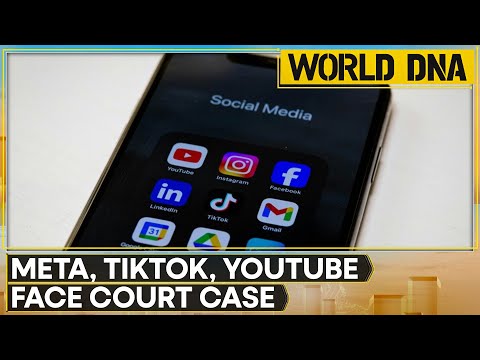
The Los Angeles bellwether trial testing whether social media platforms can be held liable for addictive design features is now in active proceedings, with opening statements delivered February 9 and key executive testimony underway. Mark Zuckerberg testified for nearly eight hours on February 18, defending Instagram against claims that the company deliberately designed features to addict children while knowing the harms. Internal documents presented in court showed Instagram aimed to increase daily user time to 46 minutes by 2026 and that roughly 4 million users were under 13—about 30% of all 10- to 12-year-olds in the U.S. at the time—despite the company's public policy prohibiting users under 13. The trial, which began jury selection January 27, represents the first time major tech companies face a jury over allegations their products harm children's mental health.
The stakes remain enormous: a verdict against the platforms could expose them to billions in damages across over 1,000 pending lawsuits and force fundamental changes to features like infinite scroll, autoplay, and algorithmic recommendations. Two defendants—Snap and TikTok—settled before trial for undisclosed terms, leaving Meta and YouTube as the remaining defendants. The trial is expected to conclude in coming weeks, with the outcome serving as a bellwether for thousands of similar cases and potentially reshaping how courts balance Section 230 protections against product liability claims based on design features rather than user-generated content.

Images from Openverse under Creative Commons licenses.
Videos from YouTube.
Interactive
Exploring all sides of a story is often best achieved with
Play.
Ayn Rand
(1905-1982) ·Cold War · philosophy
Fictional AI pastiche — not real quote.
"The collectivists have found a new villain: the entrepreneur who built a product so compelling that millions *chose* to use it — yet the state, that perpetual guardian of men deemed too weak to govern their own minds, now demands billions in tribute for the crime of success. Note well that the parents who handed children these devices escape all scrutiny, for individual responsibility is the one doctrine no courtroom in our age dares put on trial."
0% found this insightful
Andrew Mellon
(1855-1937) ·Progressive Era · finance
Fictional AI pastiche — not real quote.
"Capital always finds ingenious methods to capture attention, though I confess the infinite scroll strikes me as rather less productive than the infinite compound interest I once championed. Perhaps these platforms might consider that sustainable enterprise requires customers with sufficient mental vigor to actually purchase one's products—addiction, after all, tends to diminish a man's earning capacity."
0% found this insightful
Ever wondered what historical figures would say about today's headlines?
Sign up to generate historical perspectives on this story.
Click a figure to generate their perspective on this story
Debate Arena
Two rounds, two personas, one winner. You set the crossfire.
Choose Your Battle
Watch two AI personas debate this story using real evidence
Make predictions and set the crossfire to earn XP and cred
Select Your Champions
Choose one persona for each side of the debate
DEBATE TOPIC
SIDE A (PRO)
Select debater for this side:
✓
SIDE B (CON)
Select debater for this side:
✓
Choose personas with different perspectives for a more dynamic debate
VS
Get ready to make your prediction...
Round of
Claim
Evidence
Stakes
Crossfire Answer
Closing Statement
Claim
Evidence
Stakes
Crossfire Answer
Closing Statement
Your Crossfire Question
Generating arguments...
Who's Got This Round?
Make your prediction before the referee scores
Correct predictions earn +20 XP
Evidence
40%
Logic
30%
Detail
20%
Style
10%
Round Results
Your Pick!
+20 XP
Your Pick
Not this time
Evidence (40%)
Logic (30%)
Detail (20%)
Style (10%)
Overall Score
/10
Your Pick!
+20 XP
Your Pick
Not this time
Evidence (40%)
Logic (30%)
Detail (20%)
Style (10%)
Overall Score
/10
Set the Crossfire
Pick the question both personas must answer in the final round
Crafting crossfire questions...
Choosing a question earns +10 XP crossfire bonus
🏆
Total XP Earned
Cred Change
Predictions
Debate Oracle! You called every round!
Sharp Instincts! You know your debaters!
The Coin Flip Strategist! Perfectly balanced!
The Contrarian! Bold predictions!
Inverse Genius! Try betting the opposite next time!
XP Breakdown
Base completion+20 XP
Rounds played ( rounds x 5 XP)
+ XP
Correct predictions ( correct x 20 XP)
+ XP
Crossfire bonus+10 XP
Accuracy
%
Prediction History
Round
You picked:
✓✗
Keep debating to level up your credibility and unlock achievements
Who Said What?
WHO SAID WHAT?
Can you match the quotes to the right people?
Rounds
People
Score:
Round /
streak
-- ?
Score:
Round /
streak
Next Up
Round
of
points
Correct
Best Streak
Time Bonus
People Involved
Mark Zuckerberg
Chief Executive Officer, Meta Platforms (Testified at trial February 18; expected to remain under cross-examination)
Adam Mosseri
Head of Instagram (Testified at trial February 10)
Frances Haugen
Former Facebook Product Manager, Whistleblower (Key figure in triggering litigation wave)
W. Mark Lanier
Lead Plaintiff's Attorney (Representing plaintiff K.G.M. at trial)
Carolyn B. Kuhl
Los Angeles Superior Court Judge (Presiding over coordinated California state cases)
Organizations Involved
ME
Meta Platforms
Public Technology Company
Status: Lead defendant in bellwether trial
Owner of Instagram and Facebook, the primary targets of youth mental health litigation.
BY
ByteDance / TikTok
Technology Company
Status: Settled with plaintiff K.G.M. on eve of trial for undisclosed terms
Chinese-owned short-video platform facing addiction claims alongside separate national security scrutiny.
GO
Google / YouTube
Technology Company
Status: Defendant in bellwether trial
Video platform accused of using autoplay and recommendations to maximize youth engagement.
SN
Snap Inc.
Technology Company
Status: Settled with plaintiff K.G.M. before trial
Snapchat's parent company, first major defendant to settle youth addiction claims.
Timeline
Zuckerberg Testifies Nearly Eight Hours
Legal
Meta CEO Mark Zuckerberg testifies for extended period in Los Angeles Superior Court, defending Instagram against addiction claims. Internal documents presented show Instagram targeted under-13 users and aimed for 46 minutes daily engagement by 2026. Zuckerberg acknowledges roughly 4 million Instagram users were under 13 but maintains the company's policy prohibits users under 13. Judge Kuhl issues dramatic warning against using Meta AI glasses in courtroom due to facial recognition concerns.
Adam Mosseri Testifies at Trial
Legal
Instagram head Adam Mosseri takes the witness stand in the bellwether trial, facing questioning about platform design and youth safety measures.
Opening Statements in Bellwether Trial
Legal
Plaintiffs' attorney Mark Lanier and defense teams deliver opening arguments in Los Angeles County Superior Court. Lanier presents internal documents showing Instagram's aggressive efforts to target children under 13 despite public age restrictions. Judge Kuhl admonishes jury not to discuss case with therapists.
Bellwether Trial Begins
Legal
Jury selection starts in first U.S. trial testing whether social media companies can be held liable for addictive design features.
TikTok Settles on Eve of Trial
Legal
ByteDance's TikTok reaches undisclosed settlement with plaintiff K.G.M. on the day jury selection begins, following Snap's settlement one week earlier and leaving Meta and YouTube as remaining defendants.
Snap Settles Days Before Trial
Legal
Snapchat parent company reaches undisclosed settlement with plaintiff K.G.M., exiting the bellwether trial.
Summary Judgment Denied
Legal
Judge Kuhl rejects Meta, TikTok, and YouTube motions to dismiss, ruling claims about design features can go to jury.
Judge Allows Expert Testimony on Harm
Legal
Judge Kuhl permits 10 of 11 plaintiffs' experts to testify at trial, rejecting defense challenges to their methodology.
Zuckerberg Apologizes at Senate Hearing
Congressional
Meta CEO stands to apologize to families of harmed children after Senator Lindsey Graham says he has 'blood on his hands.'
41 States Sue Meta
Legal
Coalition of state attorneys general files federal complaint alleging Meta 'designed and deployed harmful features' that addict children.
California Judge Allows Cases to Proceed
Legal
Judge Carolyn Kuhl issues 89-page ruling permitting design-based claims while striking content-based claims under Section 230.
Seattle Schools File Pioneering Lawsuit
Legal
Seattle Public Schools becomes first school district to sue social media companies, alleging platforms 'exploited the vulnerable brains of youth.'
Federal MDL Established
Legal
Judicial Panel on Multidistrict Litigation consolidates social media addiction lawsuits before Judge Yvonne Gonzalez Rogers in Northern District of California.
Instagram Head Faces Senate Grilling
Congressional
Adam Mosseri testifies about teen safety; senators call Instagram's voluntary measures 'too little, too late.'
Haugen Testifies Before Congress
Congressional
Whistleblower Frances Haugen tells Senate that Facebook 'harms children, sows division and undermines democracy' while prioritizing profit.
Facebook Files Begin Publication
Disclosure
Wall Street Journal publishes first article from Frances Haugen's leaked documents, revealing Facebook knew Instagram harmed teen mental health.
Scenarios
1
Plaintiff Wins, Triggers Settlement Wave
Discussed by: Legal analysts at Bloomberg Law, Fortune, and mass tort specialists
A jury finds for K.G.M. and awards substantial damages, establishing precedent that design features can create liability independent of content. Remaining defendants face pressure to settle thousands of pending cases, potentially totaling billions. Platforms implement major changes to features like infinite scroll and algorithmic recommendations for minors, similar to tobacco industry reforms after the Master Settlement Agreement.
2
Defense Prevails, Litigation Stalls
Discussed by: Section 230 scholars including Eric Goldman, tech industry analysts
Jury finds insufficient evidence of causation between platform design and plaintiff's mental health issues. Defense successfully argues that parental supervision, pre-existing conditions, or other factors caused harm. Verdict weakens leverage for settlement negotiations in remaining cases and emboldens platforms to fight rather than settle.
3
Mixed Verdict Leads to Regulatory Push
Discussed by: Congressional staff, state attorneys general offices, child safety advocates
Trial produces a split outcome—perhaps finding liability for some features but not others, or awarding modest damages. Neither side claims clear victory. Congress uses trial evidence to advance Kids Online Safety Act or similar legislation, shifting the battle from courtrooms to Capitol Hill.
4
Mass Settlements Before Remaining Trials
Discussed by: Mass tort attorneys, insurance analysts, Courthouse News Service
Following Snap's pre-trial settlement, remaining defendants negotiate global resolutions to avoid prolonged litigation uncertainty. Settlement funds flow to plaintiffs and potentially to youth mental health programs, but platforms avoid admissions of wrongdoing and preserve core product features with modest modifications.
5
Zuckerberg's Testimony Damages Meta's Public Image Without Affecting Verdict
Discussed by: Political science professors, tech policy analysts, public opinion researchers
Zuckerberg's extended courtroom appearance and defensive testimony further erode public trust in Meta leadership, complicating the company's political influence efforts in California and nationally. Even if Meta prevails on the merits, the reputational damage from jury exposure to internal documents and the CEO's testimony could accelerate regulatory action and legislative efforts to restrict platform design practices, similar to post-tobacco litigation reforms.
Historical Context
Big Tobacco Litigation and Master Settlement Agreement (1994-1998)
May 1994 - November 1998
What Happened
Mississippi Attorney General Mike Moore filed the first state lawsuit against tobacco companies in May 1994, accusing them of hiding what they knew about addiction and health harms. Internal documents revealed executives had long known cigarettes caused cancer and were deliberately designed to maximize nicotine delivery. By 1997, 40 states had joined the litigation.
Outcome
Short Term
In November 1998, the four largest tobacco companies agreed to pay $206 billion over 25 years to 46 states—the largest civil litigation settlement in U.S. history.
Long Term
The settlement banned youth-targeted advertising, eliminated billboards and cartoon mascots, and required disclosure of internal documents. U.S. cigarette consumption dropped 50% between 1998 and 2019. Teen smoking fell from 36% in 1997 to 6% in 2019.
Why It's Relevant Today
Plaintiffs' attorneys from the tobacco litigation, including firms Lieff Cabraser and Motley Rice, now represent social media plaintiffs. The legal theory—that companies knew their products caused addiction and harm but concealed evidence—mirrors the current claims against Meta, TikTok, and YouTube.
Opioid Manufacturer Litigation (2017-2021)
2017 - 2021
What Happened
Over 3,000 state and local governments sued opioid manufacturers and distributors, alleging they fueled the addiction crisis through aggressive marketing while knowing the drugs' dangers. The first bellwether trial, scheduled for October 2019 in Ohio, prompted last-minute settlements totaling $260 million from Teva, McKesson, Cardinal Health, and AmerisourceBergen.
Outcome
Short Term
Defendants consistently chose to settle rather than face juries. Johnson & Johnson, the three major distributors, and consulting firm McKinsey reached settlements exceeding $50 billion combined.
Long Term
Settlement funds were directed to addiction treatment and prevention programs. The litigation established that companies can face massive liability for product harms even without manufacturing defects—marketing and distribution practices alone created exposure.
Why It's Relevant Today
The opioid MDL demonstrated how bellwether trials function as settlement catalysts. Defendants settled the Ohio case hours before opening statements. Social media companies may calculate similarly that trial risk outweighs settlement costs—Snap's pre-trial exit suggests this dynamic is already operating.
Lead Paint Litigation (1987-2014)
1987 - 2014
What Happened
Cities and states sued lead paint manufacturers for decades of childhood lead poisoning, arguing companies knew lead was toxic but continued marketing to families. Unlike tobacco, these cases produced mixed results: Rhode Island won a $2.4 billion verdict in 2006, but it was overturned on appeal. California ultimately secured a $1.15 billion judgment in 2014.
Outcome
Short Term
Legal victories were inconsistent. Courts struggled with causation questions: which manufacturer's paint was in which building decades later?
Long Term
Despite limited courtroom success, the litigation kept public attention on lead hazards and supported broader regulatory action. Lead paint was eventually banned, and remediation programs expanded.
Why It's Relevant Today
Lead paint litigation shows that product liability cases with diffuse causation face significant legal hurdles. Social media defendants will argue, like paint manufacturers did, that isolating their product's specific contribution to harm among many factors is impossible. The mixed outcomes also demonstrate that even unsuccessful trials can drive policy change.