
Pull to refresh
Logo
ITC finds solar imports from India, Indonesia, Laos injured US manufacturers

ITC finds solar imports from India, Indonesia, Laos injured US manufacturers

Rule Changes

Antidumping and countervailing duty orders expected as early as Nov 2

4 days ago: ITC finds imports injured US manufacturers

Overview

Updated 1 hour ago

The US International Trade Commission voted October 14 that solar cells from India, Indonesia, and Laos injured American manufacturers, clearing the way for final tariffs. Imports from the three countries grew from about 731 million watts in 2022 to more than 6 billion watts in 2024, with Laos going from zero to nearly 1.9 billion watts.

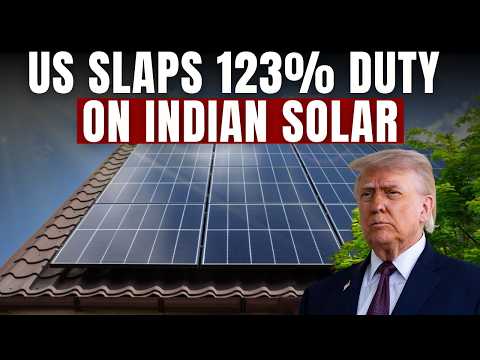
The Commerce Department will now issue final antidumping and countervailing duty orders as early as November 2. The rates run to 123% dumping and 126% subsidy for India, 94% and up to 174% for Indonesia, and 65% and over 82% for Laos. Analysts call them prohibitive, effectively closing the three countries as supply sources for US solar projects.

Why it matters

The duties are steep enough to shut India, Indonesia, and Laos out of the US solar market, raising costs for American solar project builders.

Questions about this story

Free account needed to ask — your question is kept and asked for you right after sign-up. Answers are public.

No questions yet — be the first to ask.

Key Indicators

$1.54B
Combined 2024 cell imports
Value of solar cells imported from India, Indonesia, and Laos in 2024.
123.04%
India dumping margin
Final antidumping rate applied to all Indian producers.
126.09%
India countervailing rate
Final subsidy duty for Indian producers.
6.01B
2024 cell import volume
Watts of solar cells imported from the three countries in 2024.
1.9B
Laos 2024 imports
Laos shipped no cells to the US in 2022; by 2024 it shipped nearly 1.9 billion watts.

Voices

Curated perspectives — historical figures and your fellow readers.

Ever wondered what historical figures would say about today's headlines?

Sign up to generate historical perspectives on this story.

People Involved

Organizations Involved

Timeline

September 2026 December 2026

5 events Latest: 4 days ago
Tap a bar to jump to that date
  1. Section 232 polysilicon tariff takes effect

    Upcoming Policy

    Section 232 tariff on polysilicon goes into effect, layered on existing duties.

Scenarios

1

Commerce finalizes Solar IV duties Nov 2, barring all three countries

Likely Resolves by Nov 10, 2026

Discussed by: Tim Brightbill and other case analysts expect the orders by early November

With the ITC's affirmative injury finding, Commerce will issue final antidumping and countervailing duty orders. The rates make continued imports from all three countries uneconomic, so US module makers must rely on cells from elsewhere. The orders close the Solar IV case and require cash deposits on every future entry.

2

Section 232 polysilicon tariff raises costs across the US solar market

Likely Resolves by Dec 15, 2026

Discussed by: Tim Brightbill ('too early to tell' if it ends the need for more petitions); pv magazine

On Dec 4, a Section 232 tariff on polysilicon takes effect, stacked on top of the Solar IV duties. New Section 232 minimum price floors already set entry prices of $21 per kilogram for polysilicon, $100 per kilogram for ingots and wafers, $0.22 per watt for cells, and $0.38 per watt for modules. Whether these structural rules replace future trade petitions is an open question.

3

South Korean and African cells become the next solar trade target

Possible Resolves by Q1 2027

Discussed by: Clean Energy Counsel; American Manufacturers for Energy Resilience petition

US module assemblers have already shifted cell sourcing to South Korea, the Philippines, Kenya, Nigeria, and Ethiopia. A separate petition from the coalition American Manufacturers for Energy Resilience targets South Korean suppliers, and Commerce has opened a circumvention inquiry into Ethiopian-assembled products. The Solar IV resolution may simply move the fight to the next low-cost source.

Historical Context

2 moments from history that rhyme with this story — and how they unfolded.

2012-2018

US-China solar trade war (2012 onward)

In 2012 the US imposed antidumping and countervailing duties on Chinese-made solar cells. Several follow-up reviews kept the duties in place, making direct exports from China uneconomic.

Then

Chinese manufacturers moved production to Southeast Asia to keep selling to US buyers.

Now

Those relocated plants later became targets of circumvention cases, and production moved again, to India, Indonesia, and Laos.

Why this matters now

The Solar IV case targets exactly those relocated Chinese-owned factories, the third wave of supply after two earlier rounds of US duties.

2022-2024

Southeast Asia circumvention investigation (2022-2024)

After Chinese firms shifted cell output to Cambodia, Malaysia, Thailand, and Vietnam, US officials found the companies were still evading the China duties and imposed new ones. A temporary tariff exemption froze US solar development for months.

Then

Chinese-owned companies opened new plants in India, Indonesia, and Laos.

Now

Those suppliers are now the subject of the Solar IV case.

Why this matters now

As Brightbill put it, the new orders formally close off the route companies used to get around earlier trade cases.

Sources

(10)