Anchor

De Beers pauses South Africa's largest diamond mine as lab-grown gems reset the market
Money MovesVenetia's two-year shutdown puts 40% of the country's diamond output and thousands of jobs in limbo while Anglo American tries to sell the struggling company
2 days ago: WSJ reports diamond mine closures leave South Africans with few alternativesNew here? Follow stories to track developments over time. Create a free account to get updates when stories you care about change.
Overview
Updated 1 hour agoDe Beers is pausing production at Venetia, South Africa's largest diamond mine, for two years. The mine accounts for 40% of the country's diamond output and employs about 4,400 people, but every carat it sold last year fetched $66 while extraction cost $110.
The shutdown is one of several closures rippling through South Africa's diamond belt. Petra Diamonds is restructuring its Finsch and Cullinan mines, putting about 1,800 more jobs at risk. Lab-grown stones took more than 45% of American engagement-ring purchases and cost roughly 80% less than natural ones, so De Beers' parent Anglo American has cut the company's carrying value from $12.75 billion to $2.3 billion and is now selling it to a consortium led by former De Beers chief Gareth Penny.
Why it matters
Lab-grown diamonds reset the price of natural stones, forcing South Africa's biggest mine to close and threatening thousands of jobs in communities with few alternatives.
Questions about this story
Free account needed to ask — your question is kept and asked for you right after sign-up. Answers are public.
No questions yet — be the first to ask.
Key Indicators
$2.3B
De Beers carrying value
Down from $12.75 billion in 2011; Anglo American has written down the brand three times in 3.5 years.
$105
Average rough diamond price per carat, H1 2026
Anglo American reported a 32% decline from the same period a year earlier.
45%
Lab-grown share of US engagement-ring purchases
Up from near zero a decade earlier; lab-grown retail prices fell 74% between 2020 and 2024.
4,400
Workers at Venetia mine
1,134 permanent employees plus 80 Johannesburg sorting-facility staff face retrenchment; most live in municipalities with few other employers.
Related Media
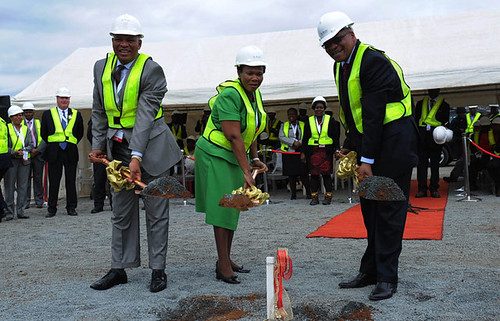
Launch of the construction phase of De Beers Venetia underground diamond mine, 22 Oct 2013
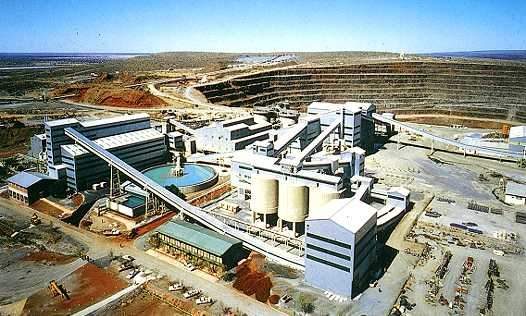
Finsch Diamond Mine, North Cape Province, South Africa
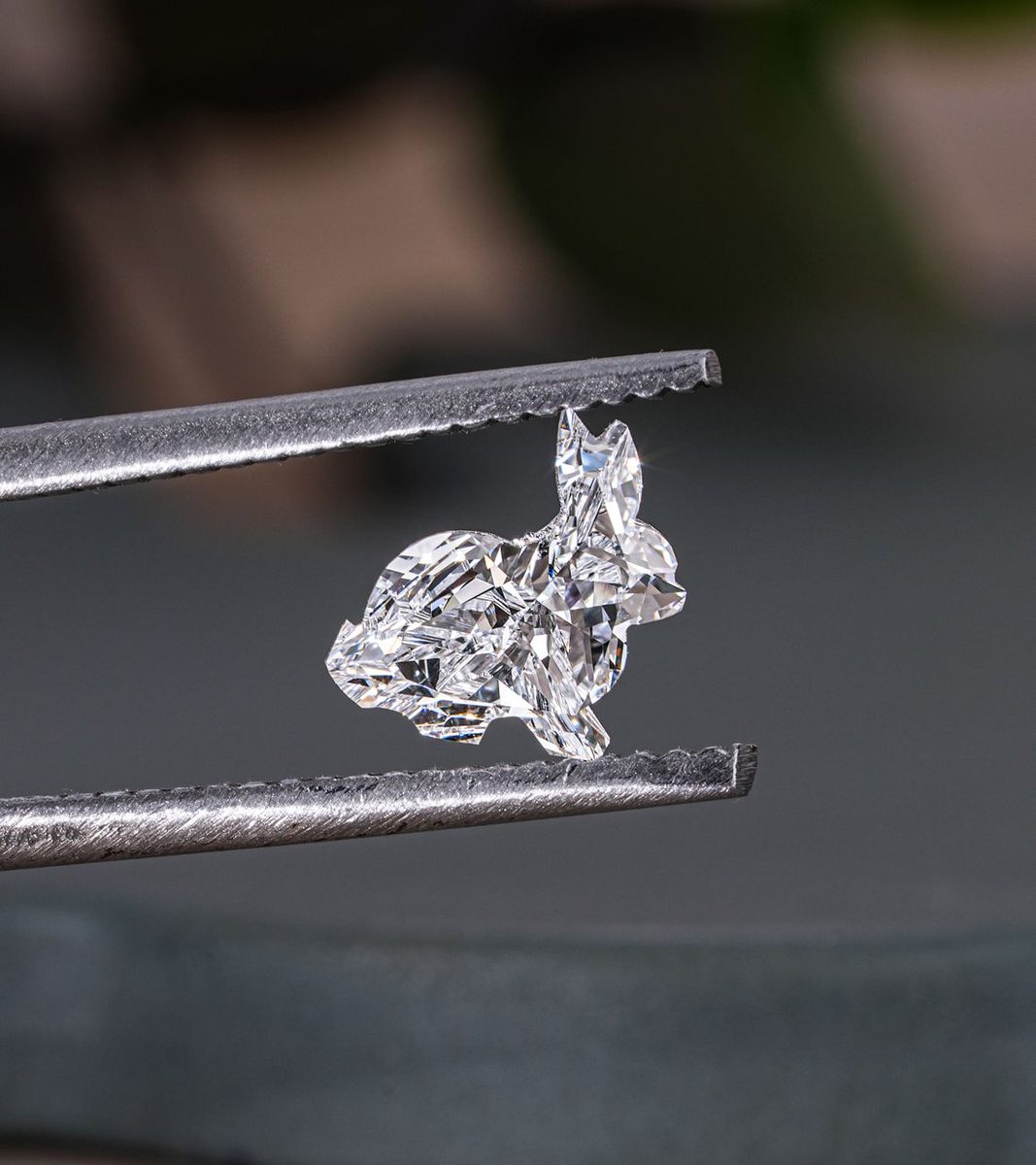
Close-up of a sparkling rabbit-shaped lab-grown diamond held by tweezers in Surat.
813 views
7:18
De Beers to pause Venetia mine for two years
BNN Bloomberg

7.3K views
4:41
De Beers' Venetia mine pauses production
SABC News
3.8K views
2:22
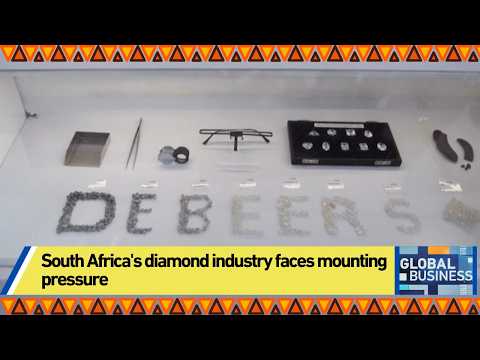
South Africa's diamond industry faces mounting pressure
CGTN Africa
Images from Openverse under Creative Commons licenses. Videos from YouTube.
Voices
Curated perspectives — historical figures and your fellow readers.
Play
Exploring all sides of a story is often best achieved with Play.
Most of these play right now — no account needed. Sign up to save scores, keep a streak, and unlock Debate and Predict.
Log in
Sign Up
Higher or Lower
A number from this story, against one from elsewhere in the news — guess which is bigger, then keep the chain going. 5 rounds, 3 strikes; a miss costs a strike and resets your streak.
Example
Anchor
EU tariff revenue
$52B
Big for this kind of number
Mystery
Pentagon AI contract
?
Round 1
Streak: 0
Mystery
?
Keyboard: ↓/L lower · ↑/H higher
0 pts
Best streak: 0 · Rounds: 0
0 points — sign up to put that on the leaderboard.
Now try on this story
Connections
Sixteen names from the news. Find the four hidden groups of four. Four mistakes max.
Loading today's puzzle…
0/4 groups
Mistakes
Sign up to keep a daily streak — a new puzzle lands every day.
Now try on this story
Exit debate?
Your progress in this debate will be lost.
How it works
- 1 Two AI personas square off on this story.
- 2 You predict who'll win each round — correct picks earn XP.
- 3 One crossfire question is yours to fire. Pick it carefully.
Couldn't generate a topic
Select Your Champions
Choose one persona for each side of the debate
DEBATE TOPIC
Choose personas with different perspectives for a more dynamic debate.
SIDE A (PRO)
Select debater for this side:
No debate personas available right now.
SIDE B (CON)
Select debater for this side:
No debate personas available right now.
VS
Get ready to make your prediction...
Round of
Claim
Evidence
Stakes
Crossfire Answer
Closing Statement
Claim
Evidence
Stakes
Crossfire Answer
Closing Statement
Your Crossfire Question
Generating arguments...
Who's Got This Round?
Make your prediction before the referee scores
The referee scores both sides on
Correct predictions earn +20 XP
· Press 1 or 2 to pick
Evidence
40%
Logic
30%
Detail
20%
Style
10%
Round Results
Your Pick
Not this time
(%)
Overall Score
/10
Your Pick
Not this time
(%)
Overall Score
/10
Set the Crossfire
Pick the question both personas must answer in the final round
Crafting crossfire questions...
Choosing a question earns +10 XP crossfire bonus
🏆
Total XP Earned
Cred Change
Predictions
Debate Oracle! You called every round!
Sharp Instincts! You know your debaters!
The Coin Flip Strategist! Perfectly balanced!
The Contrarian! Bold predictions!
Inverse Genius! Try betting the opposite next time!
XP Breakdown
Base completion
+20 XP
Rounds played ( rounds x 5 XP)
+ XP
Correct predictions ( correct x 20 XP)
+ XP
Crossfire bonus
+10 XP
Accuracy
%
Prediction History
Round
You picked:
✓
✗
Now try on this story
Keep debating to level up your credibility and unlock achievements
People Involved
Gareth Penny
Former De Beers managing director; leads consortium bidding for the company
Preferred bidder to acquire De Beers from Anglo American
JM
Jackie Mapiloko
De Beers spokesperson
Confirmed section 189 retrenchment consultations had begun
WV
Willie Venter
Deputy secretary general, Solidarity trade union
Warned of job losses in areas with few alternatives
NR
Nico van Rooyen
Divisional manager for minerals sector, United Association of South Africa (Uasa)
Argues the diamond industry still has a future
Organizations Involved
De Beers
Diamond mining company
Pausing production at Venetia for two years; being sold by Anglo American
Diamond mining company, majority-owned by Anglo American, that once controlled about 90% of world rough supply.
Anglo American
Mining conglomerate
Selling De Beers; has written down its value three times
London-based mining giant and majority owner of De Beers.
Petra Diamonds
Diamond mining company
Restructuring Finsch and Cullinan mines
Operator of South Africa's Finsch and Cullinan diamond mines, both now facing closure or restructuring.
National Union of Mineworkers (NUM)
Trade union
Flagged 1,200+ employees affected by Venetia shutdown
South Africa's largest mining union, representing workers at De Beers and Petra Diamonds.
Timeline
May 2024 September 2026
7 events
Latest: 2 days ago
Tap a bar to jump to that date
-
WSJ reports diamond mine closures leave South Africans with few alternatives
Latest Media CoverageWeak sales and lab-grown stones endanger livelihoods of thousands of De Beers mine workers.
-
Union reveals 1,200+ jobs at risk across diamond sector
LaborNUM flags 1,134 Venetia staff and 80 sorting-facility workers; Petra's Finsch and Cullinan put 1,779 more jobs on the line.
-
Retrenchment consultations begin at De Beers
LaborSection 189 consultations start; job numbers not yet determined.
-
De Beers announces two-year production pause at Venetia
Corporate AnnouncementCites weak trading conditions and high costs; plans continued investment in underground infrastructure during the pause.
-
Botswana confirms preferred bidder for De Beers
Merger/AcquisitionConsortium led by former De Beers MD Gareth Penny selected as Anglo's preferred buyer.
-
Anglo American writes De Beers down to $2.3 billion
FinancialThird impairment in 3.5 years; carrying value falls 82% from the 2011 peak of $12.75 billion.
-
Anglo American announces intent to exit De Beers
Corporate StrategyAnglo American publicly declared it would sell its majority stake in the diamond company.
Historical Context
2 moments from history that rhyme with this story — and how they unfolded.
November 2020
Rio Tinto closes Australia's Argyle mine (2020)
After 37 years, Rio Tinto shut Argyle in Western Australia, the world's largest source of pink diamonds. The mine was depleted, not unprofitable, and its closure removed a major supply source from the market.
Then
Argyle pink diamonds became scarce, and their auction prices rose sharply after closure.
Now
Proved that removing a major supply source can support prices — the opposite of what De Beers faces, where demand has shifted to an unlimited lab-grown alternative.
Why this matters now
When a diamond mine closes, the market can absorb the loss. The difference here is that demand isn't returning to natural stones — it has moved to synthetic ones.
1930s
De Beers stockpiles during the Great Depression (1930s)
With diamond demand collapsed, De Beers chairman Ernest Oppenheimer halted sales and stockpiled rough stones rather than cut prices. The company controlled about 90% of world supply, so it could set the terms.
Then
Diamond prices held through the Depression, and the stockpile sold profitably after World War II.
Now
The episode cemented De Beers as the global price-setter for rough diamonds for five decades.
Why this matters now
De Beers today controls roughly a third of supply, and lab-grown producers are outside any cartel. The lever that protected prices in the 1930s no longer exists.
Sources
(9)Related Stories
Volkswagen board approves plan doubling job cuts to 100,000
Money Moves
Updated 10 hours ago
Dutch central bank moves 86 tonnes of gold out of US and Canada citing geopolitical unrest
Money Moves
Updated Yesterday
Dejana Truck files one-day furlough notice for Baltimore workers
Money Moves
Updated Aug 28
Crypto industry contraction deepens in 2026
Money Moves
Updated May 31
ADNOC buys Shell's South Africa fuel network
Money Moves
Updated Jul 8
Congo's conflict mineral crisis
Force in Play
Updated May 26