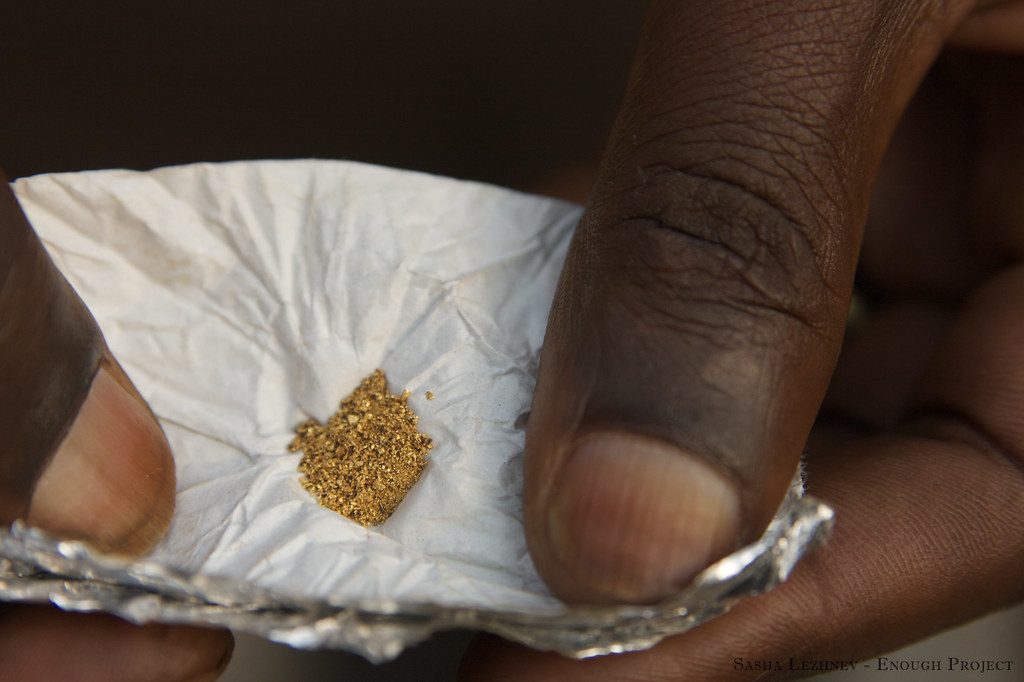
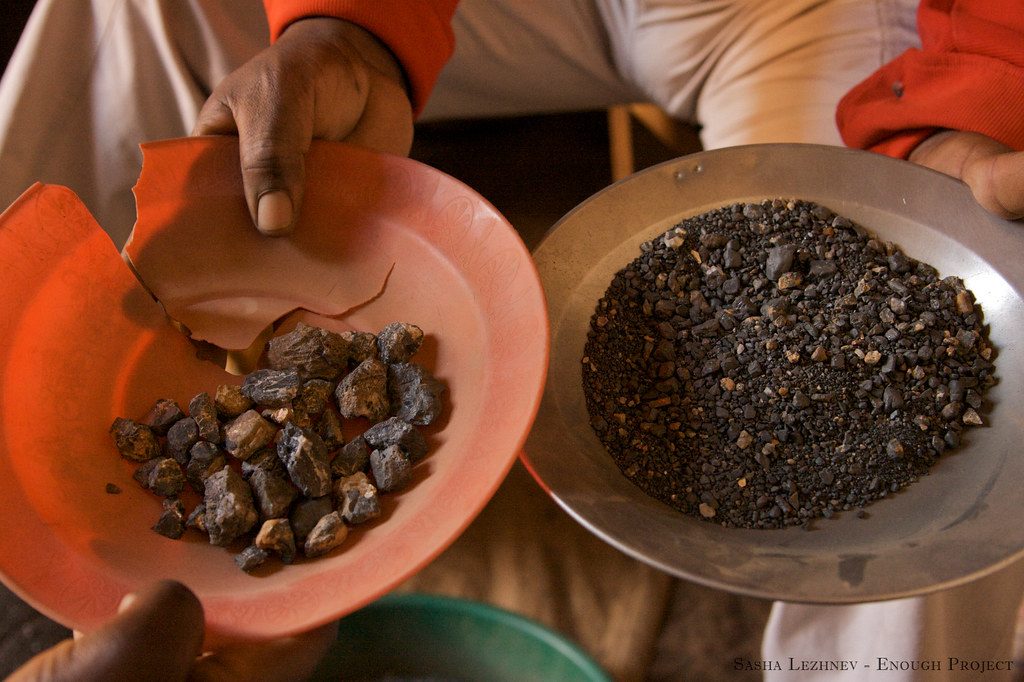
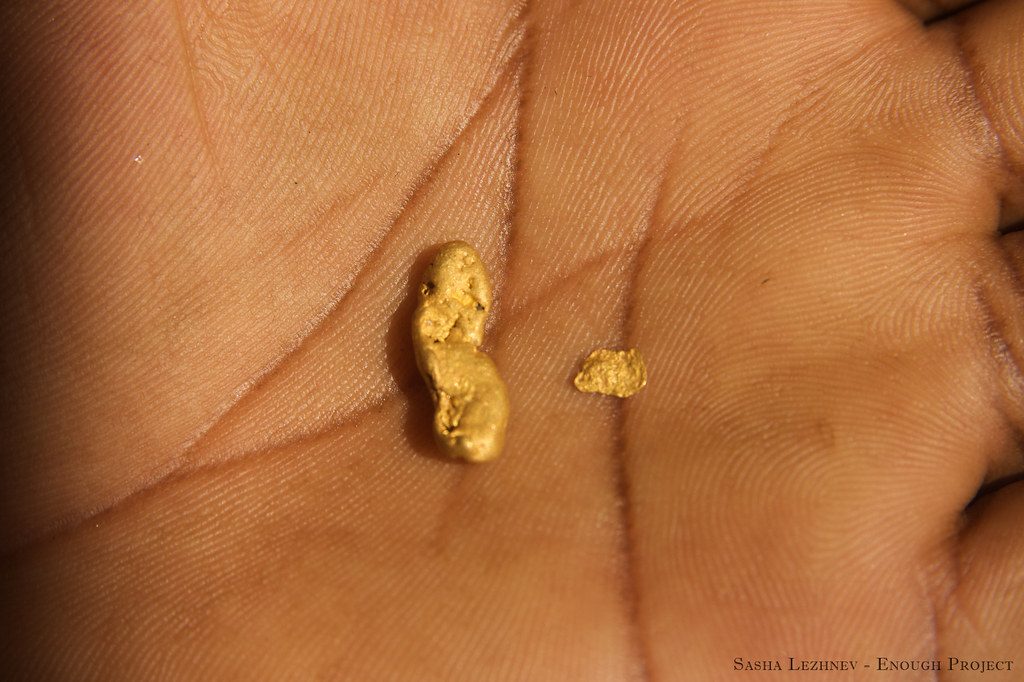
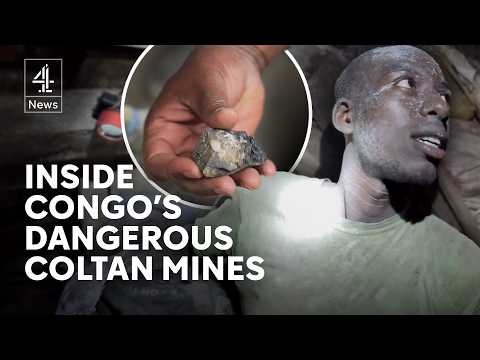
A landslide at the Rubaya coltan mine in eastern Democratic Republic of Congo killed more than 400 people on January 29, 2026—miners, children, and market workers buried when rain-soaked tunnels collapsed. The mine, controlled by the Rwanda-backed M23 rebel group since May 2024, supplies roughly 15% of the world's coltan, which becomes tantalum capacitors in smartphones and aircraft engines worldwide. M23 extracts an estimated $800,000 monthly by taxing every gram of ore.
This was the second deadly collapse at Rubaya in seven months, following at least 12 deaths in June 2025. The disasters show lethal conditions at artisanal mines lacking safety infrastructure amid global electronics demand.
More than 7 million Congolese are displaced by decades of conflict over these minerals. M23 has held Goma since January 2025 despite multiple failed peace agreements, including recent Doha talks that renewed ceasefire commitments on February 2, 2026.
Questions about this story
Free account needed to ask — your question is kept and asked for you right after sign-up. Answers are public.
No questions yet — be the first to ask.
Key Indicators
400+
Dead in Rubaya collapse
Death toll confirmed February 2, 2026, up from initial 200+ estimate; includes miners, children, market workers
15%
Global coltan supply
Share of world coltan production from the Rubaya mine alone
$800K
Monthly rebel revenue
Estimated M23 earnings from taxing coltan trade at Rubaya since May 2024
7M+
Displaced Congolese
People forced from homes by decades of conflict in eastern DRC
Images from Openverse under Creative Commons licenses.
Videos from YouTube.
Voices
Curated perspectives — historical figures and your fellow readers.
Sojourner Truth
(1797-1883) ·Abolitionist · politics
Fictional AI pastiche — not real quote.
"They tell me this coltan makes their fancy machines run smooth, but I ask you—whose blood greases those gears? Two hundred souls crushed for the metal in your pocket while the world calls it progress, just like they called my chains commerce. Some things change their name but keep their nature."
0% found this insightful
Ever wondered what historical figures would say about today's headlines?
Sign up to generate historical perspectives on this story.
18 events
Latest: February 2nd, 2026 · 8 months ago
Showing 8 of 18
JK to step
Tap a bar to jump to that date
Jump to
February 2026
Death Toll at Rubaya Rises to 400+
LatestDisaster
Rescue efforts confirm over 400 dead from January 29 landslide; M23 halts mining and orders relocations, but reopens site despite missing miners.
DRC and M23 Sign Ceasefire Monitoring Terms
Diplomatic
Parties agree on terms of reference for ceasefire oversight under Doha Framework; Qatar mediates with UN, AU, US observers; commitment renewed to November 2025 peace deal.
January 2026
M23 Claims Kisangani Airport Drone Attack
Military
AFC/M23 admits targeting DRC army drone command center at Kisangani airport between Jan 31-Feb 1; no casualties reported; DRC blames M23 and Rwanda.
Rubaya Mine Collapse Kills 200+
Disaster
Landslide during rainy season collapses tunnels at the M23-controlled coltan mine. Victims include miners, children, and market workers. M23-appointed governor temporarily halts mining and orders relocations.
December 2025
Washington Accords Signed
Diplomatic
Tshisekedi and Kagame formally sign peace agreement at White House ceremony. Fighting resumes the next day. Critics note M23 was excluded from the deal.
June 2025
First Rubaya Mine Collapse Kills 12-21
Disaster
Landslide at the M23-controlled coltan mine kills at least 12 people, with some reports claiming over 20 dead. Local sources suggest far higher casualties.
DRC-Rwanda Preliminary Peace Deal in Washington
Diplomatic
Trump administration brokers agreement pledging Rwandan troop withdrawal within 90 days and a joint security mechanism. M23 rejects the ceasefire.
January 2025
M23 Captures Goma
Military
Rebels take full control of North Kivu's capital after days of fighting. WHO reports 900 bodies recovered from streets, thousands injured. UN estimates 500-1,000 Rwandan troops assisted the assault.
DRC Cuts Diplomatic Ties with Rwanda
Diplomatic
As M23 enters Goma, the Congolese government orders Rwanda to cease all diplomatic activities and recalls its own diplomats from Kigali.
M23 Takes Minova, Cuts Supply Lines to Goma
Military
Capture of port town Minova severs supply routes to Goma's 1-2 million residents. Approximately 400,000 people are displaced in three weeks of fighting.
M23 Captures Masisi Mining Hub
Military
Rebels seize Masisi, a gold and coltan mining center, tightening their grip on North Kivu's mineral wealth.
December 2024
DRC Files Criminal Charges Against Apple
Legal
Congolese government files complaints in France and Belgium accusing Apple of using conflict minerals laundered through Rwanda. Apple orders suppliers to stop sourcing from DRC and Rwanda.
May 2024
M23 Seizes Rubaya Coltan Mines
Military
Rebels capture the town of Rubaya and its mines, which produce an estimated 15% of global coltan. UN reports they begin earning $800,000 monthly from taxing the trade.
March 2022
M23 Resurgence Begins
Military
After nearly a decade dormant, M23 launches new offensive in North Kivu, attacking villages in Rutshuru Territory.
September 2020
Kamituga Gold Mine Collapse Kills 50+
Disaster
Torrential rains cause artisanal gold mine to collapse in South Kivu, killing at least 50 miners. The disaster highlights endemic safety failures in unregulated mining.
November 2013
M23 Defeated by UN-Backed Forces
Military
After US and UK suspend aid to Rwanda over its M23 support, a rare UN offensive brigade helps Congolese army defeat the rebels. Fighters flee to Rwanda and Uganda.
November 2012
M23 Briefly Captures Goma
Military
Rebels seize North Kivu's provincial capital. International pressure and military response force withdrawal within days.
April 2012
M23 Formed in Eastern Congo
Conflict Origin
Former CNDP fighters break from Congolese army, claiming government violated 2009 peace accord. The new rebel group takes its name from the March 23 agreement date.
Scenarios
1
M23 Consolidates Control, Mining Continues Under Rebel Rule
Likely
Discussed by: International Crisis Group, Atlantic Council analysts
The most likely near-term outcome. M23 maintains control over Rubaya and other mining sites while peace agreements repeatedly collapse. The rebels impose a veneer of order—as seen in the mining halt and relocation orders after this collapse—while continuing to profit from coltan exports laundered through Rwanda. International demand for tantalum keeps prices high, and supply chain regulations prove ineffective at stopping the flow. Artisanal miners return to dangerous tunnels because they have no alternatives.
2
International Pressure Forces Supply Chain Accountability
Possible
Discussed by: Global Witness, Business and Human Rights Centre, DRC government lawyers
Legal actions against major tech companies gain traction, forcing genuine supply chain reforms. The DRC's criminal complaints against Apple, combined with UN documentation of smuggling routes, create enough reputational and legal risk that electronics manufacturers demand verified conflict-free sourcing. This scenario requires sustained pressure from multiple jurisdictions—EU conflict minerals regulations, US Securities and Exchange Commission enforcement, and successful litigation in Belgium or France.
3
Regional War Draws In Neighboring Powers
Possible
Discussed by: Africa Center for Strategic Studies, UN Security Council observers
The conflict escalates beyond M23 versus DRC. Burundian troops already operate in South Kivu; Angola has signaled willingness to intervene. If M23 continues pushing toward Kinshasa as its leaders have declared, or if Rwanda's troop presence (estimated at 12,000 by March 2025) expands further, neighboring states may be drawn in. The presence of multiple foreign militaries operating in mineral-rich territory raises the specter of a broader Great Lakes war.
4
Negotiated Settlement Returns Mines to Government Control
Unlikely
Discussed by: Peace mediators in Luanda and Doha processes
A durable peace agreement that actually includes M23 (unlike the Washington Accords) leads to rebel demobilization and government reassertion over mining areas. This would require addressing Rwanda's stated security concerns about the FDLR, creating economic incentives for ex-combatants, and international guarantees. Previous peace processes have failed because they lacked enforcement mechanisms and excluded key parties.
Historical Context
3 moments from history that rhyme with this story — and how they unfolded.
1 of 3
November 2012
M23's First Capture of Goma (2012)
M23 rebels captured Goma, North Kivu's capital of over one million people, on November 20, 2012. The rapid collapse of government forces shocked the international community. A UN report had just documented that Rwanda created and commanded M23, providing weapons, logistics, and direct troop support.
Then
International pressure intensified. The US and UK suspended military aid to Rwanda. Within 11 days, M23 withdrew from Goma under regional diplomatic pressure.
Now
A rare UN offensive brigade was authorized in 2013, helping defeat M23 militarily by November. Fighters fled to Rwanda and Uganda, where they regrouped for nearly a decade before resurging in 2022.
Why this matters now
The 2012 capture set the template for M23's current operations: seize territory, control mines, generate international headlines. The difference now is that M23 holds Goma with no sign of withdrawal, and the same Rwandan backing that triggered aid suspensions in 2012 has grown to an estimated 12,000 troops.
2 of 3
September 2020
Kamituga Gold Mine Collapse (2020)
Torrential rains caused an artisanal gold mine to collapse in the town of Kamituga in South Kivu province, killing at least 50 miners. Water flooded three tunnels with such force that workers couldn't escape. The mine operated outside the official concession held by Canadian miner Banro Corporation.
Then
A two-day mourning period was declared. Only 18 bodies were initially recovered due to dangerous conditions. Local officials blamed 'soil subsidence caused by torrential rain.'
Now
No structural reforms followed. Artisanal mining continued under the same conditions because an estimated two million Congolese depend on small-scale mining for survival. Collapses remain routine.
Why this matters now
The Kamituga disaster demonstrated the same lethal combination now seen at Rubaya: rainy-season collapses, unengineered tunnels, no drainage or support structures, and workers with no alternatives. Six mining accidents were reported in eastern Congo between 2022-2023 alone. The January 2026 Rubaya collapse killed four times as many people.
3 of 3
July 2010
Dodd-Frank Conflict Minerals Law (2010)
The US Congress passed Section 1502 of the Dodd-Frank Act, requiring publicly traded companies to trace whether tin, tantalum, tungsten, and gold in their products originated from the DRC or neighboring countries. Companies must conduct supply chain due diligence and report findings to the Securities and Exchange Commission.
Then
Major electronics companies began auditing supply chains. Some temporarily avoided Congolese minerals entirely, harming legitimate miners. Industry-funded certification schemes emerged.
Now
Enforcement proved weak. UN investigators document ongoing mineral smuggling through Rwanda, with M23 exporting 150 tonnes of coltan in 2024 alone. Over 58% of manufacturers now claim conflict-free sourcing, but verification remains difficult.
Why this matters now
Dodd-Frank was supposed to cut the link between consumer electronics and armed conflict. Sixteen years later, M23 earns $800,000 monthly from a mine that supplies 15% of global coltan, and that tantalum still reaches smartphones worldwide. The law created reporting requirements but couldn't stop determined smuggling operations.