South Korea deploys $68 billion stabilization package after worst stock crash in history
Money Moves
Iran's closure of the Strait of Hormuz triggered South Korea's worst two-day stock crash in history. The market later climbed above 7,000, but a September spike in oil and bond yields knocked it back below that level.
Iran's closure of the Strait of Hormuz triggered South Korea's worst two-day stock crash in history. The market later climbed above 7,000, but a September spike in oil and bond yields knocked it back below that level.
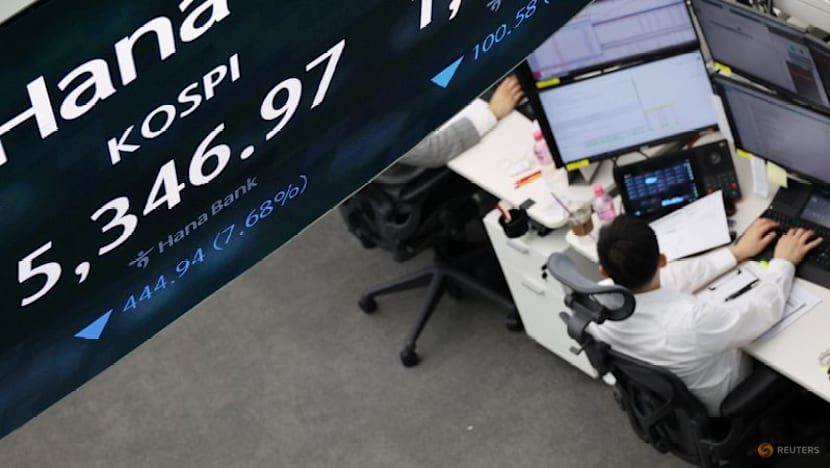
South Korea's stock market was the world's best performer in early 2026, with the KOSPI peaking at 6,347 in late February. When Iran closed the Strait of Hormuz, the passage for roughly two-thirds of the country's crude oil imports, the index crashed 19% in two days, the worst two-day drop in its history.
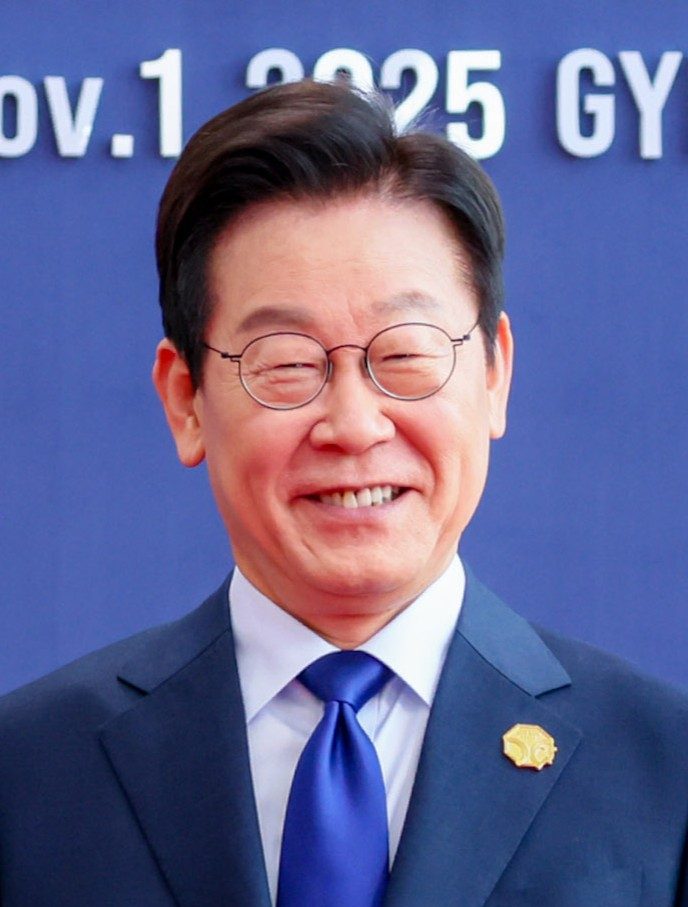
President Lee Jae Myung answered with a 100 trillion won ($68 billion) stabilization package, the largest emergency intervention in South Korean history. A 26.5 trillion won supplementary budget followed, and a diplomatic push secured 273 million barrels of crude oil from Saudi Arabia, Oman, Qatar, and Kazakhstan. The KOSPI later climbed back above 7,000 as chip exports boomed, but on September 12, bond yields above 4% and oil above $100 knocked it down to 6,909.91.
Why it matters
If oil stays above $100, South Korea's pain spreads through global chip and petrochemical supply chains.
Questions about this story
Free account needed to ask — your question is kept and asked for you right after sign-up. Answers are public.
No questions yet — be the first to ask.
Key Indicators
~19%
Two-day KOSPI crash (March 3-4)
The KOSPI fell 7.2% on March 3 and 12.06% on March 4, the steepest two-day drop in the country's history, after Iran closed the Strait of Hormuz.
6,910
KOSPI close (September 12)
The index fell below 7,000 to close at 6,909.91, down 1.76% on the day, as bond yields and oil prices spiked together.
$100+
Brent and WTI crude (September 12)
Both benchmarks topped $100 a barrel on September 12, the first time since the March crisis, as Hormuz disruption risks persisted.
4.01%
Three-year Korean treasury yield (September 12)
The yield closed at 4.014%, the first time above 4% since November 2023, as oil-driven inflation pressure pushed up bond yields.
3.4%
August consumer price inflation
Consumer prices rose 3.4% from a year earlier, intensifying pressure on the Bank of Korea to raise rates even as growth slows.
100T won
Stabilization package ($68B)
The March 5 package remains the largest emergency intervention in South Korean history. A 26.5 trillion won supplementary budget followed on March 31.
19 events
Latest: April 30th, 2026 · 6 months ago
Showing 8 of 19
JK to step
Tap a bar to jump to that date
Jump to
April 2026
Korea marks 60 days of war, weans off Gulf crude and naphtha
LatestEnergy
The first Saudi cargo routed through the Red Sea port of Yanbu arrived April 17. Last year about 63% of Korea's crude imports and 54% of its naphtha shipments passed through Hormuz; alternative routes now carry a growing share.
Oil price relief payments begin under supplementary budget
Policy
The government started disbursing the 10.1 trillion won (about $7.1 billion) oil price relief fund, targeting more than 85% of the supplementary budget for spending by the end of June. Finance Minister Koo Yun-cheol said Seoul was also coordinating safe passage for South Korean vessels through the Strait of Hormuz.
Foreign investors post record March outflows from KOSPI
Market
Overseas investors sold a net 29.8 trillion won ($19.75 billion) of KOSPI shares in March, the largest monthly selloff on record, after selling 21.1 trillion won in February. KOSPI market capitalization fell by roughly 670 trillion won from the end of February.
OECD cuts South Korea's 2026 growth forecast to 1.7%
Economy
The Organization for Economic Cooperation and Development trimmed its 2026 forecast for South Korea from 2.1% to 1.7%, citing the country's vulnerability to the Hormuz closure and the energy price shock.
Seoul secures 273 million barrels of crude oil from alternative suppliers
Energy
Blue House chief of staff Kang Hoon-sik returned from an eight-day trip to Saudi Arabia, Oman, Qatar, and Kazakhstan with pledges for 273 million barrels of crude oil and 2.1 million tons of naphtha, routed around the closed Strait of Hormuz. Saudi Arabia agreed to ship 50 million barrels through Red Sea ports.
FSC buys 2.42 trillion won in corporate bonds and CP in March
Policy
The Financial Services Commission's March purchases were the largest monthly execution since the 2022 Legoland crisis, about 2.7 times the normal pace. It also resumed buying asset-backed securities from non-bank financial institutions for the first time since November 2023.
March 2026
Government proposes 26.5 trillion won supplementary budget
Policy
The extra budget is funded by excess tax revenue from the chip export boom, with no new government debt. It includes 10.1 trillion won for oil price relief, 2.8 trillion won for household support, and 2.6 trillion won for industry and supply chains.
South Korea executes ₩2.5 trillion emergency bond buyback; second tranche scheduled for April 1
Policy
The Financial Services Commission executed an emergency buyback of 2.5 trillion won in government bonds to stabilize domestic financial markets. A second identical buyback was scheduled for April 1, indicating the government's commitment to sustained market support as the Hormuz closure persists.
KOSPI stabilizes above 5,800 as foreign outflows moderate
Market
The KOSPI recovered to approximately 5,800 by mid-March, recouping roughly half its losses from the historic March 3-4 crash. Foreign investor outflows moderated significantly from the peak panic of early March, suggesting some stabilization in sentiment despite the ongoing Hormuz closure.
Brent crude stabilizes around $95-98 per barrel; no Hormuz reopening timeline emerges
Commodity
Oil prices stabilized in the $95-98 per barrel range by mid-March after spiking above $100 in early March. International negotiations over the Strait of Hormuz showed no signs of imminent resolution, with Iran maintaining its closure stance and no clear diplomatic pathway emerging.
South Korea's Financial Services Commission deploys credit lines to prevent corporate defaults
Policy
The FSC activated emergency credit support mechanisms to prevent cascading corporate defaults among exporters and energy-dependent industries. The measures included one-year loan extensions and emergency working capital facilities for affected companies.
President Lee orders $68 billion stabilization package
Policy
At an extraordinary cabinet meeting, President Lee Jae Myung ordered immediate execution of a 100 trillion won financial stabilization package, including 20.3 trillion won in exporter support, corporate tax extensions, and potential fuel price caps. The KOSPI rebounded 9.6%, its best day since October 2008, triggering upside circuit breakers.
"Black Wednesday": KOSPI crashes 12%, worst day in history
Market
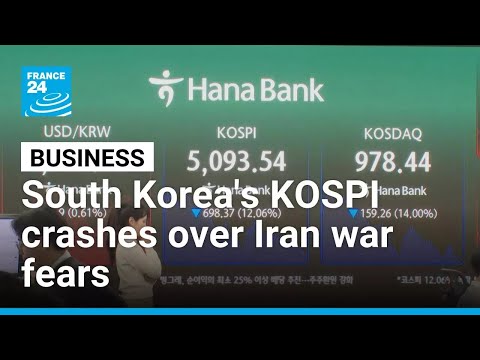
The KOSPI plunged 12.06% to 5,094, surpassing the 12.02% drop after the September 11, 2001 attacks as the worst single session ever. Circuit breakers halted trading on both the KOSPI and KOSDAQ. Foreign investors sold 7.12 trillion won ($5 billion) in a single session. The Financial Services Commission activated the "100 Trillion Won + Alpha" stabilization program.
Won breaches 1,500 per dollar, weakest in 17 years
Currency
The South Korean won fell past 1,500 per dollar for the first time since early 2009 as investors shifted to safe-haven currencies. Authorities intensified foreign exchange market oversight.
"Black Tuesday": KOSPI drops 7.2%
Market
The KOSPI fell 7.2% as the Hormuz closure's implications hit Asian markets. Samsung Electronics and SK Hynix led the decline. Foreign investors accelerated their selling, which had begun nine sessions earlier. Roughly $270 billion in market value was erased.
Iran confirms Strait of Hormuz closure
Geopolitical
A senior Islamic Revolutionary Guard Corps official confirmed the strait was closed and threatened any ship attempting passage. Zero vessels crossed the waterway, which normally carries roughly 20% of the world's daily oil supply.
South Korea readies $70 billion stabilization plan
Policy
Financial authorities began preparing the market stabilization package as oil prices surged 9-13% and shipping traffic through the Strait of Hormuz fell by 70%. President Lee was on a state visit to Singapore.
February 2026
US and Israel strike Iran
Geopolitical
The United States and Israel launched coordinated airstrikes on Iranian military facilities, nuclear sites, and leadership targets. Iran's Supreme Leader Ali Khamenei was killed. Iran's Islamic Revolutionary Guard Corps immediately warned vessels away from the Strait of Hormuz.
KOSPI hits all-time high of 6,347
Market
South Korea's benchmark index peaked at 6,347.41, capping a 12-month surge of over 129% powered by the global artificial intelligence semiconductor boom. Samsung Electronics had gained 216% over the prior year.
Discussed by: Global X strategists, Allianz Global Investors, and market analysts noting historical patterns of rapid recovery after geopolitical shocks
If the Strait of Hormuz reopens within weeks through diplomatic resolution or military escort operations, oil prices retreat toward pre-crisis levels and the KOSPI recovers most of its losses. South Korea's stabilization package functions more as a confidence backstop than active intervention. The 9.6% rebound on March 5 and historical data showing Korean markets typically recover within 30 days after circuit breakers support this outcome. In this scenario, the crisis accelerates Seoul's pre-existing push to diversify energy suppliers away from the Middle East, but the structural vulnerabilities remain.
2
Prolonged Hormuz disruption forces South Korea to burn through stabilization reserves
Possible
Discussed by: Barclays oil analysts forecasting Brent at $100+, Oxford Economics, and Seoul Economic Daily structural analysis
If the Strait of Hormuz remains closed or heavily disrupted for months, oil prices climb past $100 per barrel and South Korea faces a sustained terms-of-trade shock. The 100 trillion won package gets fully deployed to support struggling exporters, prevent corporate defaults, and subsidize fuel costs. The won continues weakening past 1,500 per dollar, and foreign capital outflows intensify. South Korea's semiconductor companies—the engine of the recent market rally—face rising production costs and weakened global demand simultaneously. The government may need additional fiscal measures beyond the current package.
3
Energy crisis triggers broader economic slowdown in South Korea
Unlikely
Discussed by: Morgan Stanley Asia analysts, ING macro research, and Korean economists citing the 1997 crisis pattern of external shock amplifying structural weaknesses
A worst-case scenario where sustained energy disruption combines with continued foreign capital flight and semiconductor sector weakness to push South Korea toward recession. The stabilization fund proves insufficient, and the government faces pressure to seek international support or implement more drastic interventions like capital controls. This would echo elements of the 1997 Asian financial crisis, though South Korea's $400+ billion in foreign reserves provide a much stronger buffer than it had then. Analysts consider this unlikely unless the conflict escalates dramatically or extends for many months.
4
Hormuz closure extends into Q2, forcing Seoul to pursue energy alternatives and additional stimulus
Possible
Discussed by: ING Asia economists, Barclays energy analysts, and Seoul policy advisors
If the Strait of Hormuz remains closed through April and May, South Korea faces a sustained energy supply shock that exhausts the initial stabilization package. The government would likely announce additional fiscal measures, accelerate liquefied natural gas (LNG) procurement from alternative suppliers (Australia, Qatar, US), and potentially implement temporary fuel rationing or price controls. The KOSPI could face renewed downward pressure if corporate earnings guidance deteriorates due to sustained high energy costs. This scenario would mark a structural shift in South Korea's energy strategy, similar to Japan's post-1973 oil shock pivot.
5
Oil above $100 forces Bank of Korea rate hikes and a second market leg down
Possible
Resolves by End of 2026
Discussed by: Seoul Economic Daily, reporting rate pressure ahead of the Federal Reserve and Bank of Japan meetings in September
August inflation at 3.4% and three-year treasury yields above 4% put the Bank of Korea in a bind. If Brent stays above $100, imported energy costs keep pushing prices up, and the BOK may raise rates even though the OECD cut Korea's growth forecast to 1.7%. That combination would likely push the KOSPI below 6,900 and weaken the won further from 1,345.9 per dollar.
6
Chip boom pulls KOSPI back above 7,000 despite the energy shock
Possible
Resolves by End of 2026
Discussed by: Investors watching the index's recovery from 5,094 in March to above 7,000 by September
The KOSPI recovered from the March crash faster than most forecasts expected, powered by semiconductor exports that also funded the government's supplementary budget. If chip earnings hold and oil prices ease, the index could reclaim 7,000. The September 12 break below 7,000 would then be a pullback, not the start of a second crash.
Historical Context
3 moments from history that rhyme with this story — and how they unfolded.
1 of 3
November 1997 - August 2001
South Korea's 1997 IMF Crisis
An external shock—the Asian financial crisis that began in Thailand—exposed South Korea's structural vulnerabilities: over-leveraged conglomerates, short-term foreign debt, and thin foreign reserves. The won collapsed, the KOSPI fell over 40%, and Seoul was forced to request a $58.4 billion bailout from the International Monetary Fund, the World Bank, and individual governments. The period is still remembered in Korea as the "IMF days."
Then
Millions lost jobs. Major conglomerates including Daewoo collapsed. The government implemented painful structural reforms as conditions of IMF lending.
Now
South Korea repaid all IMF loans by 2001 and rebuilt with stronger foreign reserves, now exceeding $400 billion. The crisis permanently changed corporate governance and financial regulation.
Why this matters now
The 2026 crisis echoes 1997's pattern: an external shock amplifying structural vulnerabilities. But South Korea's position is far stronger this time—massive foreign reserves, a more diversified economy, and the ability to deploy a $68 billion domestic stabilization package rather than seeking foreign bailouts.
2 of 3
September 2008 - March 2009
South Korea's 2008 Financial Crisis Response
After Lehman Brothers collapsed, global risk aversion hit South Korea hard. The KOSPI fell over 40% from its 2007 peak. The won depreciated sharply. Foreign investors pulled billions from Korean equities, exploiting the market's high liquidity and foreign ownership—the same "easy to liquidate" pattern playing out in 2026.
Then
The government deployed an $11 billion fiscal stimulus (1.2% of gross domestic product), created a 20 trillion won bank recapitalization fund, and secured a $30 billion currency swap line with the US Federal Reserve.
Now
Recovery was relatively swift, with positive output growth returning by the first quarter of 2009. The crisis was milder than 1997 thanks to stronger reserves and faster intervention.
Why this matters now
The 2026 stabilization package of $68 billion dwarfs the 2008 response, reflecting both the severity of the current shock and South Korea's greater fiscal capacity. The 2008 playbook—bond funds, credit support, currency intervention—is being reused at a much larger scale.
3 of 3
October 1973 - 1975
Japan's 1973 Oil Shock Response
When Arab oil exporters embargoed nations supporting Israel during the Yom Kippur War, Japan—which imported 99.7% of its oil—faced an existential energy crisis. Oil prices quadrupled. Japan's industrial output fell sharply, inflation spiked to 23%, and the Tokyo stock market lost a third of its value. Like South Korea in 2026, Japan's economic miracle had been built on cheap imported energy.
Then
Japan entered its first postwar recession. The government imposed energy conservation mandates, price controls, and emergency fuel rationing.
Now
Japan restructured its entire energy strategy, investing heavily in nuclear power, energy efficiency, and diversified supply chains. Japanese cars became globally dominant partly because manufacturers pivoted to fuel efficiency.
Why this matters now
South Korea's 70% dependence on Middle Eastern oil mirrors Japan's vulnerability in 1973. The crisis may similarly force a strategic rethinking of energy dependence, potentially accelerating nuclear, renewable, and supply diversification investments.