

Pull to refresh
Logo
Spain blocks Archive.today and all its mirrors without a court order

Spain blocks Archive.today and all its mirrors without a court order

Rule Changes

The Ministry of Culture's copyright commission targets a general-purpose web archive used by researchers and journalists

Today: Block covers 98% of Spanish broadband

Overview

Updated 55 minutes ago

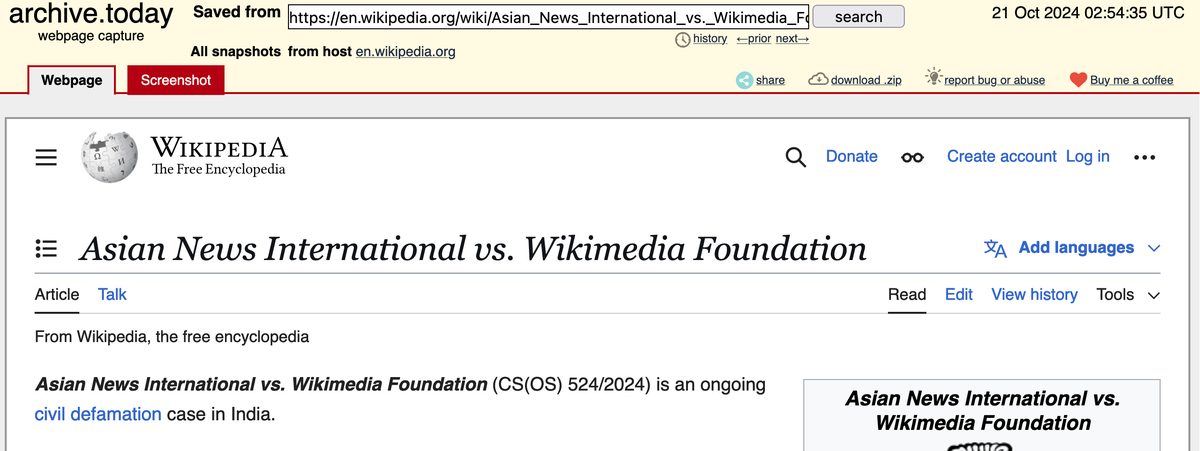
Spain has blocked Archive.today, the free web-archiving service that captures paywalled and deleted pages, across 98% of the country's broadband lines. The order came from an administrative copyright commission, not a court, and it covers all seven of the service's domains: archive.today, archive.is, archive.ph, archive.li, archive.md, archive.fo, and archive.vn.

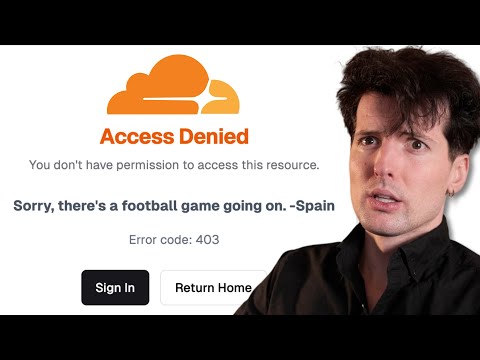
The same mechanism that for years blocked football streams and pirate movie portals has now reached a general-purpose research tool used daily by journalists, academics, and Wikipedia editors. Archive.today is the first web archiver blocked on copyright grounds anywhere.

Why it matters

If a general-purpose web archive counts as piracy, every tool that captures paywalled news is now exposed to the same administrative order.

Questions about this story

Free account needed to ask — your question is kept and asked for you right after sign-up. Answers are public.

No questions yet — be the first to ask.

Key Indicators

7
Archive.today domains blocked
archive.today, archive.is, archive.ph, archive.li, archive.md, archive.fo, and archive.vn all under resolution
98%
Of Spanish broadband lines covered by signatory ISPs
Operators that signed the 2021 anti-piracy protocol apply the block
536
Sites blocked by Spain's copyright commission in 2026
The administrative mechanism has expanded sharply this year, past streaming pirates to archives

Voices

Curated perspectives — historical figures and your fellow readers.

Ever wondered what historical figures would say about today's headlines?

Sign up to generate historical perspectives on this story.

Organizations Involved

Timeline

2011 September 2026

6 events Latest: Today
Tap a bar to jump to that date
  1. Anti-piracy protocol signed

    Agreement

    Ministry of Culture, rights-holder groups, and major ISPs agree to block mirror domains within 24 hours of notification.

  2. Spain passes Ley Sinde

    Legislation

    The Sustainable Economy Act creates an administrative copyright commission able to order site blocks without a court ruling.

Scenarios

1

Spanish court rules the Archive.today block unlawful

Uncertain Resolves by Q2 2027

Discussed by: Legal observers, noting the same administrative circuit LaLiga uses; resolutions can be appealed to Spain's National Court (Audiencia Nacional)

An interested party — a rights group, an ISP, or Archive.today's operators — challenges the resolution as disproportionate, arguing a general-purpose archiving tool is not a pirate service. The commission's earlier rulings have survived challenges, but none targeted a neutral web archive.

2

Block persists; Archive.today stays off Spanish broadband

Likely Resolves by Jan 15, 2027

Discussed by: Bandaancha and vpnlab, noting the Ministry has not announced the decision and users are already routing around it via VPNs, alternate DNS, and Encrypted Client Hello

No legal challenge materializes or succeeds. The block stays on the Ministry's list, Spanish users shift to VPNs and non-ISP DNS resolvers, and the service remains a standard tool for those willing to route around it.

3

The block spreads to other archiving services

Possible Resolves by Q2 2027

Discussed by: diariosocialista and reclaimthenet, pointing to the April 2026 block of Anna's Archive as evidence the protocol now targets knowledge infrastructure

Rights holders file complaints against other general-purpose archives — the Internet Archive's Wayback Machine, a scholarly repository, or a paywall workaround tool. The 2021 protocol's 24-hour mirror-blocking clause makes expansion fast and cheap.

Historical Context

3 moments from history that rhyme with this story — and how they unfolded.

2009-2015

The Pirate Bay across Europe (2009-2015)

After the Pirate Bay's founders were convicted in Sweden in 2009, European states blocked the site via court orders and administrative rulings. Each new block pushed traffic to a mirror or a VPN, and the site never fully disappeared.

Then

The site survived on a constellation of mirrors and proxy domains.

Now

A permanent cat-and-mouse pattern emerged: block a domain, users route around it.

Why this matters now

Spain's 2021 protocol was built explicitly to block mirrors within 24 hours — the lessons of the Pirate Bay wars, now applied to a web archive.

March 2011

Spain's Ley Sinde (2011)

Spain's parliament passed the Sustainable Economy Act, whose provisions let a new Intellectual Property Commission block pirate sites by administrative resolution, with no judge in the loop. That same year, the United States' equivalent bills, SOPA and PIPA, died under public opposition.

Then

The commission began ordering domain blocks in 2012, and has since silenced more than 400 sites.

Now

Spain became one of the few European states where an administrative body can shut off websites without a court ruling.

Why this matters now

Archive.today was blocked by this exact mechanism. No court has reviewed whether an archiving tool violates copyright.

April 2026

Spain blocks Anna's Archive (2026)

The same commission ordered ISPs to block Anna's Archive, an open bibliographic database of scholarly papers, during the 'procedure of safeguard' used against pirate streaming. The move angered academic users who rely on the service for research access.

Then

Anna's Archive became inaccessible on Spanish networks under the administrative order.

Now

It established that the blocking protocol would reach beyond entertainment piracy to knowledge infrastructure.

Why this matters now

Four months before Archive.today, the funnel from streaming pirates to archives was already open.

Sources

(6)