
Pull to refresh
Logo
Daily Brief
Following
Why
State transgender bathroom laws expand amid federal shift

State transgender bathroom laws expand amid federal shift

Rule Changes
By Newzino Staff |

Kansas Becomes the 21st State to Restrict Bathroom Access by Sex Assigned at Birth

January 28th, 2026: Kansas Passes Bathroom Bill with Veto-Proof Majority

Overview

Kansas passed a law requiring individuals to use bathrooms matching their sex assigned at birth in all government buildings, schools, and universities. The January 28, 2026, vote—87-36 in the House and 30-9 in the Senate—exceeded the two-thirds threshold needed to override Democratic Governor Laura Kelly's expected veto. Violations carry escalating penalties: $1,000 civil fine for a second offense and misdemeanor charges for three or more.

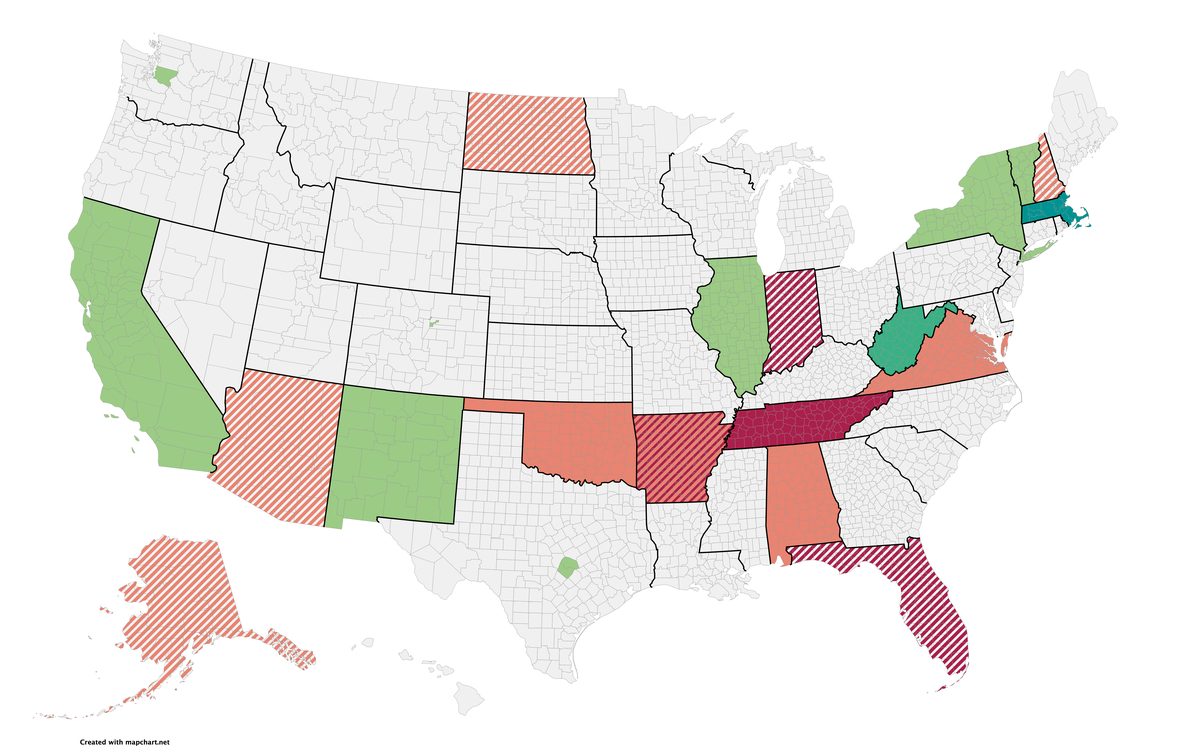
The Kansas bill represents the latest in a wave of state restrictions that have accelerated since the Trump administration's January 2025 executive order defining sex as binary for federal purposes. Twenty states now have similar laws, with Texas implementing the strictest penalties—up to $125,000 per violation—when its law took effect in December 2025. The federal shift has emboldened state legislatures while simultaneously prompting legal challenges under Title VII and state constitutions.

Key Indicators

21
States with bathroom restrictions
Kansas joins 20 other states restricting bathroom access based on sex assigned at birth.
87-36
Kansas House vote
Exceeds two-thirds majority required to override gubernatorial veto.
$1,000
Second-offense penalty
Civil fine for second violation under Kansas law; third offense is a misdemeanor.
6 hours
House floor debate
Democrats proposed multiple amendments to delay passage and establish legal challenge grounds.

Interactive

Exploring all sides of a story is often best achieved with Play.

Ever wondered what historical figures would say about today's headlines?

Sign up to generate historical perspectives on this story.

Sign Up

Debate Arena

Two rounds, two personas, one winner. You set the crossfire.

People Involved

Laura Kelly
Laura Kelly
Governor of Kansas (D) (Expected to veto; legislature has votes to override)
Kris Kobach
Kris Kobach
Kansas Attorney General (R) (Led legal and legislative push for bathroom and ID restrictions)
Brandon Woodard
Brandon Woodard
Kansas House Minority Leader (D) (Led opposition to bathroom bill)

Organizations Involved

Kansas State Legislature
State Legislature
Status: Republican supermajorities in both chambers

Republican supermajorities have enabled veto overrides on transgender-related legislation since 2023.

ACLU of Kansas
ACLU of Kansas
Civil Liberties Organization
Status: Evaluating legal challenges to new law

The ACLU of Kansas has challenged multiple state laws targeting transgender residents, winning a Kansas Court of Appeals ruling in June 2025.

Timeline

  1. Kansas Passes Bathroom Bill with Veto-Proof Majority

    Legislative

    After six hours of debate, House passes SB 244 by 87-36; Senate concurs 30-9. Both exceed two-thirds threshold for veto override.

  2. Bathroom Provisions Added Without Public Hearing

    Legislative

    House Judiciary Committee amends bill to include bathroom restrictions. Uses 'gut and go' procedure to transfer contents to SB 244, bypassing Senate hearing requirement.

  3. Kansas House Introduces HB 2426

    Legislative

    Bill requiring biological sex on driver's licenses introduced on session's first day. Over 200 submit opposition testimony.

  4. Texas Bathroom Law Takes Effect

    Policy

    Texas becomes 20th state with restrictions. Law carries up to $125,000 penalties per violation—the highest in the nation. Enforcement questions remain.

  5. Kobach Urges Special Legislative Session

    Political

    After court losses, Attorney General calls for legislature to convene and explicitly ban gender marker changes on state documents.

  6. Kansas Supreme Court Denies Kobach Appeal

    Legal

    State's highest court refuses to reinstate injunction. Gender marker changes resume October 7.

  7. 19 States Now Have Bathroom Restrictions

    Policy

    Eight states pass or expand bathroom laws during 2025 legislative sessions. Laws vary in scope from schools-only to all government buildings.

  8. Kansas Appeals Court Overturns Gender Marker Injunction

    Legal

    Three-judge panel rules unanimously for transgender intervenors, citing lack of evidence for claimed harms. Orders case reassigned from Judge Watson for 'abuse of discretion.'

  9. Trump Signs Executive Order Defining Sex as Binary

    Federal Policy

    Executive Order 14168 mandates federal agencies recognize only male and female based on birth assignment. Federal employees barred from using bathrooms matching gender identity.

  10. District Court Grants Kobach Temporary Injunction

    Legal

    Shawnee County District Judge Teresa Watson halts gender marker changes on licenses. ACLU appeals.

  11. Kobach Files Lawsuit Over Driver's License Gender Markers

    Legal

    Attorney General Kobach sues Kansas Department of Revenue, arguing SB 180 requires licenses to show sex assigned at birth. Five transgender Kansans intervene as defendants.

  12. Kansas Enacts SB 180 Over Kelly Veto

    Legal

    Legislature overrides Governor Kelly's veto of bill defining sex based on birth assignment. Law takes effect July 1, 2023, but lacks enforcement mechanisms.

Scenarios

1

Kelly Vetoes, Legislature Overrides, Law Takes Effect

Discussed by: Kansas Reflector, KCUR, and legislative analysts noting veto-proof margins in both chambers

Governor Kelly vetoes SB 244 consistent with her record on transgender legislation. The legislature overrides within days, as both chambers exceeded the required two-thirds threshold on initial passage. Kansas becomes the 21st state with bathroom restrictions. Implementation begins immediately in schools, universities, and government buildings. Enforcement questions arise similar to those in Texas.

2

ACLU Files Constitutional Challenge, Seeks Injunction

Discussed by: ACLU of Kansas statements, legal experts citing Title VII precedents and Kansas Constitution protections

Following the law's enactment, the ACLU of Kansas files suit in state court arguing violations of equal protection under the Kansas Constitution. Plaintiffs seek preliminary injunction to halt enforcement. The organization's success in the driver's license case—where appeals judges found 'no evidence beyond mere speculation' of harm—provides a template. However, federal courts have become more hostile to such claims since the Trump administration's executive orders.

3

Federal Courts Create Conflicting Circuit Rulings

Discussed by: Legal scholars tracking Supreme Court's pending review of Trump executive order challenges

State bathroom laws generate federal litigation producing split circuit decisions. Some circuits follow the Fourth Circuit's Grimm precedent protecting transgender students under Title IX; others defer to state authority over facilities. The Supreme Court, which agreed in September 2025 to hear challenges to federal bathroom policy, may eventually address whether state laws violate Title VII or the Equal Protection Clause.

4

Economic Backlash Prompts Business Pressure

Discussed by: Governor Kelly's veto statements citing corporate concerns; analysts comparing to North Carolina HB2 aftermath

Businesses and sports organizations threaten to avoid Kansas, echoing the backlash that cost North Carolina an estimated $3.76 billion after HB2. The NCAA and major employers pressure the state to modify or repeal the law. However, the 2026 landscape differs from 2016: twenty other states have similar laws, federal policy aligns with restrictions, and corporate activism on LGBTQ issues has diminished.

Historical Context

North Carolina HB2 (2016)

March 2016 - March 2017

What Happened

North Carolina passed the first major state bathroom bill requiring use based on birth certificate sex, overriding a Charlotte nondiscrimination ordinance. Governor Pat McCrory championed the law. PayPal canceled a 400-job operations center; the NBA moved the All-Star Game; the NCAA relocated championship games.

Outcome

Short Term

An Associated Press analysis projected $3.76 billion in economic losses over 12 years. McCrory lost his reelection bid to Democrat Roy Cooper by about 10,000 votes.

Long Term

North Carolina partially repealed HB2 in March 2017, removing bathroom restrictions but preserving a moratorium on local nondiscrimination ordinances. The episode became a cautionary tale cited by governors opposing similar bills.

Why It's Relevant Today

Governor Kelly has explicitly cited HB2's economic fallout when vetoing Kansas transgender bills. However, the political calculus has shifted: with 20 states now having similar laws and federal policy aligned with restrictions, businesses face less pressure and more difficulty avoiding affected jurisdictions.

Gavin Grimm v. Gloucester County School Board (2015-2021)

2015 - June 2021

What Happened

Gavin Grimm, a transgender student in Virginia, sued his school district after it barred him from the boys' bathroom. The case reached the Supreme Court's docket in 2017 but was sent back after the Trump administration withdrew federal support. Grimm won in the Fourth Circuit Court of Appeals.

Outcome

Short Term

In June 2021, the Supreme Court declined to hear the school board's appeal, leaving Grimm's victory intact. Only Justices Thomas and Alito would have taken the case.

Long Term

The Fourth, Seventh, and Eleventh Circuits now require schools to allow transgender students to use bathrooms matching their gender identity. However, the lack of Supreme Court ruling means no national precedent exists.

Why It's Relevant Today

The circuit split on transgender bathroom rights remains unresolved. State laws like Kansas's may generate the federal challenge that eventually forces Supreme Court review, particularly given the current Court's composition and pending cases on Trump administration transgender policies.

Kansas SB 180 Implementation (2023-2025)

April 2023 - September 2025

What Happened

Kansas overrode Governor Kelly's veto to enact a law defining sex based on birth assignment, but the law lacked enforcement mechanisms. Attorney General Kobach sued to apply it to driver's licenses. Courts repeatedly ruled against him, finding no evidence of harm from allowing gender marker changes.

Outcome

Short Term

A district court injunction temporarily blocked gender marker changes, but the Kansas Court of Appeals reversed in June 2025, criticizing the lower court for 'abuse of discretion.'

Long Term

The Kansas Supreme Court's September 2025 denial of Kobach's appeal prompted his call for explicit legislation, directly leading to the 2026 bathroom bill.

Why It's Relevant Today

SB 244 represents the legislature's response to Kobach's court losses. By explicitly mandating biological sex on licenses and restricting bathroom access with criminal penalties, lawmakers sought to close interpretive gaps that courts exploited to rule against enforcement of SB 180.

12 Sources: