


Texas moves to screen data centers before they connect to its power grid
Built WorldAfter requests to plug in hit about 474 gigawatts, Texas regulators order an audit of large electricity loads chasing the AI boom
Today: PUCT directs ERCOT on the auditNew here? Follow stories to track developments over time. Create a free account to get updates when stories you care about change.
Overview
Updated 1 hour agoFor years, plugging a big new customer into the Texas power grid ran on a first-come, first-served basis. On August 20, state regulators told the grid operator to screen those customers first.
The trigger is scale. Requests to connect now total about 474 gigawatts, more than five times the grid's record demand, and roughly 90% come from data centers built for artificial-intelligence computing. Most of that power does not exist yet.
Why it matters
Texas closed the open door to its power grid; data centers powering the AI boom must now pass an audit before they can plug in.
Questions about this story
Free account needed to ask — your question is kept and asked for you right after sign-up. Answers are public.
No questions yet — be the first to ask.
Key Indicators
Voices
Curated perspectives — historical figures and your fellow readers.
Play
Exploring all sides of a story is often best achieved with Play.
Higher or Lower
A number from this story, against one from elsewhere in the news — guess which is bigger, then keep the chain going. 5 rounds, 3 strikes; a miss costs a strike and resets your streak.
Keyboard: ↓/L lower · ↑/H higher
0 points — sign up to put that on the leaderboard.
Timeline
Order five events from this story, oldest at top. Each in the right slot scores 1 — neighbours within one slot count too. Your previous result — green ✓ for exact slots, yellow ~ for off by one. Cards now in true chronological order.
Sign up to save your score and track a streak across stories.
Connections
Sixteen names from the news. Find the four hidden groups of four. Four mistakes max.
Sign up to keep a daily streak — a new puzzle lands every day.
Exit debate?
Your progress in this debate will be lost.
- 1 Two AI personas square off on this story.
- 2 You predict who'll win each round — correct picks earn XP.
- 3 One crossfire question is yours to fire. Pick it carefully.
Couldn't generate a topic
Select Your Champions
Choose one persona for each side of the debate
DEBATE TOPIC
Choose personas with different perspectives for a more dynamic debate.
Select debater for this side:
No debate personas available right now.
Select debater for this side:
No debate personas available right now.
Who's Got This Round?
Make your prediction before the referee scores
The referee scores both sides on
Round Results
Set the Crossfire
Pick the question both personas must answer in the final round
Debate Oracle! You called every round!
Sharp Instincts! You know your debaters!
The Coin Flip Strategist! Perfectly balanced!
The Contrarian! Bold predictions!
Inverse Genius! Try betting the opposite next time!
XP Breakdown
Prediction History
People Involved
Organizations Involved
The nonprofit operator that runs the power grid for most of Texas.
The state agency that regulates electric utilities and oversees ERCOT.
Timeline
June 2025 August 2026
-
PUCT directs ERCOT on the audit
Today Regulatory ActionAt its open meeting, the commission takes up ERCOT's good cause exception and gives direction on verification scope, mechanics, and timing for auditing large loads.
-
Texas signals up to 300 projects to review
InvestigationState officials indicate the verification could cover as many as 300 projects, most of them data-center proposals.
-
ERCOT files for a deadline extension
Regulatory FilingERCOT requests a good cause exception to extend Batch Zero deadlines and accommodate the audit, having already suspended the August 7 classification notices.
-
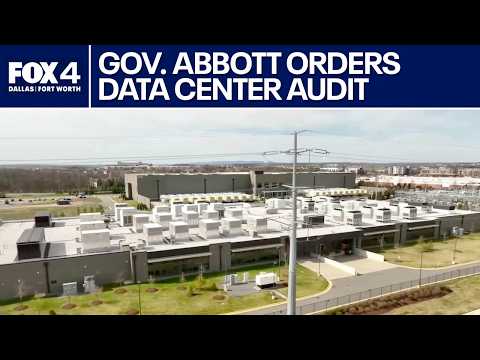
Abbott orders a data-center audit
DirectiveThe governor directs PUCT and ERCOT to verify and audit every data-center project in the queue before any advance. ERCOT pauses Batch Zero the same day.
-
Gleeson letter to the governor
StatementThe PUCT chair outlines steps already taken and warns that new legislation would be needed for broader control of large loads.
-
PUCT approves Batch Zero framework
Rule ChangeRegulators approve ERCOT protocol changes creating a batch study process for connecting large loads, with classification notices expected in August.
-
Abbott signs Senate Bill 6
LegislationThe law expands state oversight of large power users of 75 MW or more, including disclosure of backup generation and possible curtailment during grid emergencies.
Historical Context
3 moments from history that rhyme with this story — and how they unfolded.
Winter Storm Uri and the ERCOT collapse (2021)
A deep freeze knocked out much of Texas power generation. ERCOT ordered rolling blackouts that left millions without heat for days, and hundreds died. The grid came minutes from a much longer, uncontrolled collapse.
The PUCT's chair and ERCOT's CEO resigned, and the legislature passed a package of grid reforms.
Reliability became the dominant test for any grid decision in Texas, giving regulators political cover to act aggressively.
Uri is why Texas officials now treat huge new loads as a reliability question first. The audit reflects a grid still wary of promising power it may not have.
Dominion pauses Virginia data-center hookups (2022)
In Loudoun County, home to the world's densest cluster of data centers, utility Dominion Energy warned it could not connect some new projects because transmission in the area was constrained. The pause rattled the industry.
Dominion accelerated transmission upgrades and connections resumed within months.
It was an early signal that data-center growth could outrun grid capacity, forcing utilities to ration access.
Virginia showed the same collision now hitting Texas, but on a smaller scale. Texas is confronting it before wires are strung, not after.
FERC overhauls the interconnection queue (2023)
Federal regulators issued Order 2023 to fix clogged national queues where speculative projects tied up study resources for years. The rules added deposits and readiness tests to force out projects that would never get built.
Grid operators began restudying queues and imposing stricter entry requirements.
It set a template: use verification and financial commitment to separate real projects from placeholders.
Texas is applying that same logic to demand. The 474 GW figure looks like a queue padded with speculative requests, and the audit is the filter.
