

Pull to refresh
Logo
US hyperscale data centers use as much electricity as Michigan, study finds

US hyperscale data centers use as much electricity as Michigan, study finds

Built World

Harvard researchers estimate 403 large facilities drew 82 terawatt-hours in a year, with no federal requirement to report it

Overview

Updated 1 hour ago

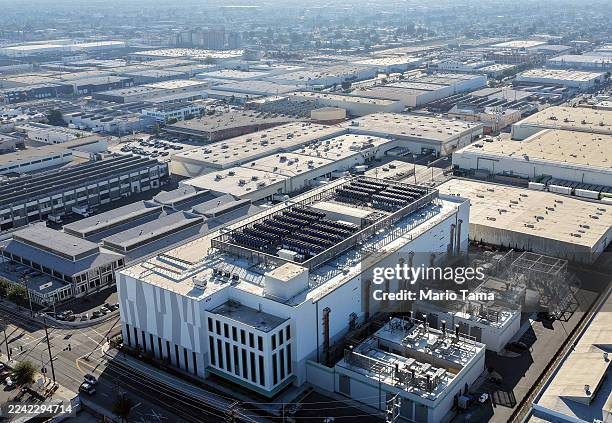
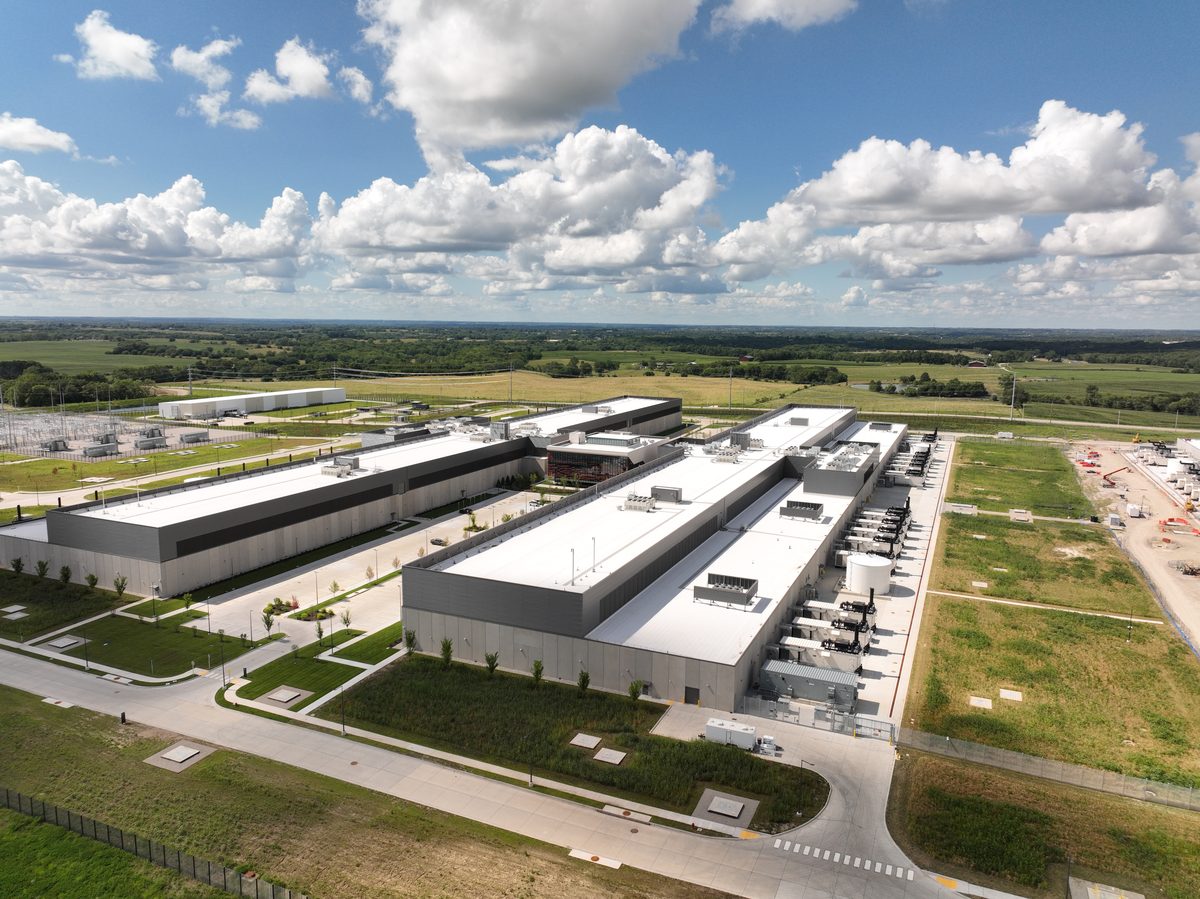
The largest data centers in the United States drew about 82 terawatt-hours of electricity between May 2024 and April 2025. That is close to what the state of Michigan uses in a year, and about 1.8 percent of all US electricity, according to a Harvard-led study published in Nature Sustainability.

No federal agency tracks those facilities separately, so the researchers built the number themselves: a list of 403 operating hyperscale sites from industry research and satellite imagery, modeled consumption, and the fuel mix of each regional grid. They estimate 54 percent of the power came from fossil fuels, producing about 25.7 million tonnes of carbon dioxide, roughly three times the sector's pre-AI-boom level.

Why it matters

No US agency requires data centers to report their power use, so grid planners and regulators work from estimates.

Questions about this story

Free account needed to ask — your question is kept and asked for you right after sign-up. Answers are public.

No questions yet — be the first to ask.

Key Indicators

403
Hyperscale data centers studied
Facilities operating between May 2024 and April 2025, identified from industry research and satellite data.
82 TWh
Estimated annual electricity use
Roughly 1.8 percent of total US electricity consumption; the study's upper bound is 99 TWh.
1.8%
Share of US electricity use
Comparable to the annual consumption of states such as Missouri, Kentucky or New Jersey.
54%
Power attributed to fossil fuels
Share of the electricity the researchers traced to gas and coal generation.
25.7 million t
Estimated annual CO2 emissions
Compared by the researchers to the output of 67 natural gas power plants.

Voices

Curated perspectives — historical figures and your fellow readers.

Ayn Rand

Ayn Rand

(1905-1982) · Cold War · philosophy

Fictional AI pastiche — not real quote.

"To call a triumph of human intellect a crisis is to invert the moral hierarchy of the universe: these data centers are the cathedrals of reason, their power consumption the fuel of mankind’s ascent—and the pathetic statisticians who measure their CO2 merely measure the smoke of their own envy. The only question worth asking is whether Michigan’s production justifies its draw, not whether the minds who build the future should be shackled by the luddites who count their watts. Let them burn every fossil on Earth to power a single new idea; the glory of the creator outweighs the petty statistics of his parasites."

Sign up to generate historical perspectives on this story.

People Involved

Organizations Involved

Timeline

2007 November 2026

6 events Latest: Yesterday
Tap a bar to jump to that date
  1. Harvard study puts 403 hyperscale sites at 82 terawatt-hours

    Latest Research

    The Nature Sustainability paper estimates emissions of 25.7 million tonnes of CO2, about three times pre-AI-boom levels.

  2. Oregon pauses new data center permits

    Policy

    Governor Tina Kotek directs an agency to halt new and expanding data center permits until July 2027.

  3. EIA finishes data center pilot surveys

    Research

    Three pilot surveys across 10 states are complete and feed a possible voluntary national survey.

  4. Preprint tallies 2,132 US data centers

    Research

    A preprint estimates US data centers used over 4 percent of national electricity.

  5. Previous emissions assessment sets the baseline

    Research

    The last industry-wide assessment of data center emissions recorded a fraction of current levels.

  6. Federal lab begins regular industry estimates

    Research

    Lawrence Berkeley National Laboratory starts publishing recurring estimates of data center energy and water use.

Scenarios

1

Congress passes a data center electricity reporting mandate

Possible Resolves by End of 2027

Discussed by: The Verge, citing a bipartisan bill moving through Congress

Legislation requiring operators to disclose facility-level electricity use would replace estimation with reported figures. The study's authors and outside researchers both say the current data gap is the main obstacle to informed grid planning. A bill would need to pass both chambers and be signed, and its scope, whether it covers only hyperscale sites or all data centers, would decide how much of the industry becomes visible.

2

EIA fields a national data center electricity survey

Likely Resolves by Q3 2027

Discussed by: EIA spokesperson Lee Tucker, via WIRED

The agency finished three pilot surveys across 10 states in 2026 and is using them to design a possible voluntary survey of the sector. A voluntary instrument would produce the first official, recurring national figures on data center power use, though participation would depend on operators choosing to answer.

3

More states pause data center permits

Possible Resolves by End of 2027

Discussed by: GeekWire reporting on Oregon's pause and state legislators weighing regulation

Oregon's October 2026 pause runs until July 2027 and gives other states a template. Local ballot measures in November 2026 already limited or blocked projects in some jurisdictions. If a second and third state adopt formal pauses or moratoriums, siting decisions shift from utility commissions and local boards to state legislatures.

4

On-site gas plants scale up behind the meter

Uncertain Resolves by Q2 2029

Discussed by: BloombergNEF and energy researcher Jon Koomey

As many as 189 gigawatts of behind-the-meter generation sit in development queues, much of it earmarked for data centers and much of it gas turbines. These plants bypass the grid and fall outside studies like the Harvard one. BloombergNEF estimated that if the whole queue gets built, US emissions could rise about 10 percent.

Historical Context

3 moments from history that rhyme with this story — and how they unfolded.

2007–present

Lawrence Berkeley National Laboratory data center reports (2007–)

With no federal category for data centers, researchers at Lawrence Berkeley National Laboratory began publishing recurring estimates of the industry's energy and water use. Jon Koomey, involved since 2007, described the reports as an approximation built from whatever data researchers could obtain.

Then

The reports became the standard public reference for how much power servers consumed.

Now

Estimation, rather than measurement, became the default way the public learned about the industry's footprint.

Why this matters now

The Harvard study continues that tradition at facility level, and its authors say the same disclosure gap persists nearly two decades later.

2018

Prior data center emissions assessment (2018)

The last industry-wide assessment of data center emissions, published in 2018, recorded a small fraction of today's total. The Washington Post reported that current emissions are two to three times that level.

Then

The 2018 figure became the benchmark against which later estimates were compared.

Now

Because the assessment relied on modeled data and industry disclosures, nobody could say precisely how much the sector emitted in the years between.

Why this matters now

The growth from that baseline is the clearest measure of what the AI buildout changed, and it rests on estimates rather than reported figures.

November 2024

First national data center census preprint (2024)

A preprint compiled information on 2,132 US data centers operating between September 2023 and August 2024. It estimated they accounted for more than 4 percent of US electricity consumption, with 56 percent from fossil fuels and over 105 million tons of CO2 equivalent.

Then

The paper gave researchers and journalists a facility-level pipeline and visualization tools.

Now

It established that data centers' carbon intensity exceeded the US average, a finding the 2026 study reinforces at the largest sites only.

Why this matters now

The two datasets cover different populations, all data centers versus 403 hyperscale sites, which is why their shares of US electricity differ by more than a factor of two.

Sources

(8)