

Pull to refresh
Logo
Daily Brief
Following
Why
States begin revoking identity documents over gender marker requirements

States begin revoking identity documents over gender marker requirements

Rule Changes
By Newzino Staff |

Kansas becomes the first state to retroactively invalidate driver's licenses and birth certificates previously updated by transgender residents

2 days ago: SB 244 takes effect; licenses invalidated

Overview

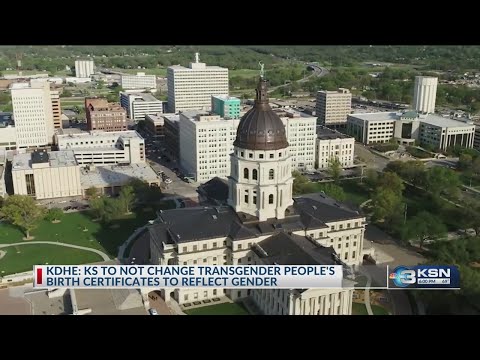
For decades, most U.S. states allowed transgender residents to update the sex listed on their driver's licenses. Kansas just reversed that—not by freezing future changes, but by retroactively invalidating roughly 1,700 licenses and a similar number of birth certificates that had already been updated. The law, published in the Kansas Register on February 26, 2026, took effect immediately with no grace period, meaning affected residents woke up that morning with documents the state now considers invalid.

Key Indicators

~1,700
Driver's licenses invalidated
Licenses previously updated to reflect gender identity, now voided with no grace period
$1,000
Minimum civil damages
Private right of action allows lawsuits against individuals using restrooms that don't match their sex assigned at birth
6 months
Maximum jail time
Penalty for operating a vehicle with a license the state now considers invalid
4
States blocking license changes
Kansas, Florida, Texas, and Tennessee now prohibit gender marker updates on driver's licenses

Interactive

Exploring all sides of a story is often best achieved with Play.

Ever wondered what historical figures would say about today's headlines?

Sign up to generate historical perspectives on this story.

Sign Up

Debate Arena

Two rounds, two personas, one winner. You set the crossfire.

People Involved

Laura Kelly
Laura Kelly
Governor of Kansas (Democrat) (Vetoed SB 244; veto overridden by Republican supermajorities)
Kris Kobach
Kris Kobach
Kansas Attorney General (Republican) (Pursuing enforcement of sex-at-birth definitions across state documents)
Susan Humphries
Susan Humphries
Kansas State Representative (Republican, Wichita); House Judiciary Committee Chair (Sponsored the House substitute version of SB 244)

Organizations Involved

ACLU of Kansas
ACLU of Kansas
Civil liberties advocacy organization
Status: Actively litigating related cases and evaluating legal challenges to SB 244

The ACLU of Kansas has been the primary legal organization challenging Kansas gender marker restrictions, including intervening in the Kansas v. Harper case on behalf of five transgender residents.

Kansas State Legislature
State legislative body
Status: Passed SB 244 with veto-proof supermajorities in both chambers

The Republican-controlled Kansas Legislature has passed two major laws restricting transgender rights in three years, overriding the governor's veto both times.

Timeline

  1. SB 244 takes effect; licenses invalidated

    Enforcement

    The law is published in the Kansas Register, immediately invalidating roughly 1,700 driver's licenses and a similar number of birth certificates. Affected residents must obtain replacement documents or face misdemeanor charges.

  2. Kansas sends surrender letters to affected residents

    Enforcement

    The Kansas Division of Vehicles sends letters to approximately 1,700 residents whose licenses reflect updated gender markers, informing them their documents will become invalid the following day and must be surrendered.

  3. Legislature overrides Kelly's veto

    Legislation

    The House votes 87-37 and the Senate 31-9 to override the governor's veto, setting SB 244 to take effect upon publication in the Kansas Register.

  4. Governor Kelly vetoes SB 244

    Veto

    Governor Laura Kelly vetoes the bill, calling it 'poorly drafted' and warning it will cost taxpayers millions in compliance costs while restricting access to hospital rooms, dormitories, and nursing homes beyond its stated intent.

  5. Kansas Legislature passes SB 244

    Legislation

    The House votes 87-36 and the Senate 30-9 to pass the bill, which invalidates existing gender-updated licenses and birth certificates, restricts bathroom access in public buildings, and creates a private right of action for bathroom violations.

  6. Kansas Republicans add bathroom provisions to SB 244

    Legislation

    The House Judiciary Committee replaces the contents of Senate Bill 244—originally about surety bonds—with gender marker and bathroom restriction provisions, bypassing a public hearing on the new language.

  7. Supreme Court allows Trump passport sex marker policy

    Legal

    The U.S. Supreme Court stays a lower court injunction, allowing the State Department to limit passport sex markers to biological sex at birth while litigation continues.

  8. Kansas appeals court rules against Kobach on licenses

    Legal

    The Kansas Court of Appeals reverses a lower court injunction, finding that Attorney General Kobach was unlikely to prevail on his interpretation that SB 180 requires sex-at-birth on all licenses. The state supreme court later declines review.

  9. Trump signs Executive Order 14168 on sex definitions

    Federal Policy

    President Trump signs an executive order requiring federal agencies to recognize only male and female sex designations based on biology at birth, ending the X marker on passports and requiring sex-at-birth on federal documents.

  10. Texas stops processing license gender marker updates

    Policy

    The Texas Department of Public Safety orders employees to stop updating gender markers on driver's licenses, even when applicants present court orders or amended birth certificates.

  11. Florida bans gender marker changes on driver's licenses

    Policy

    The Florida Department of Highway Safety and Motor Vehicles rescinds a longstanding policy that allowed residents to update gender markers on state-issued licenses, making Florida the first state to block such changes through administrative action.

  12. AG Kobach sues to block license gender marker changes

    Legal

    Attorney General Kris Kobach files Kansas v. Harper, arguing that SB 180 requires all driver's licenses to list sex assigned at birth. The ACLU intervenes on behalf of five transgender Kansans.

  13. Kansas passes SB 180 over governor's veto

    Legislation

    The legislature overrides Governor Kelly's veto of the Women's Bill of Rights, which defines sex in Kansas law as biological sex assigned at birth. The law provides the legal framework that Attorney General Kobach later uses to challenge gender markers on state documents.

Scenarios

1

Federal court blocks Kansas law on constitutional grounds

Discussed by: ACLU of Kansas, Lambda Legal, and constitutional law scholars analyzing due process and equal protection claims

Civil liberties organizations file a federal lawsuit arguing that retroactively invalidating government-issued identity documents without a grace period violates the Fourteenth Amendment's due process and equal protection clauses. A federal judge issues a preliminary injunction, halting enforcement while the case proceeds. This would follow the pattern of earlier successful challenges to state identity document restrictions, though the current federal judiciary has been more receptive to sex-at-birth definitions. The outcome likely depends on whether courts view retroactive document revocation differently from prospective policy changes.

2

More states pass similar retroactive revocation laws

Discussed by: State legislators in Missouri, Oklahoma, and other Republican-led states; Movement Advancement Project tracking state legislation

Kansas serves as a model for other states with Republican supermajorities. Legislators in neighboring and ideologically aligned states introduce bills that go beyond blocking new gender marker changes to requiring the surrender of previously issued documents. The combination of federal executive action on passports and state-level document restrictions creates a situation where transgender residents in affected states hold no government identification matching their gender identity at any level. This scenario becomes more likely if Kansas faces no successful legal challenge.

3

Kansas faces significant economic and institutional consequences

Discussed by: Governor Kelly, Kansas local government leaders, university administrators, business groups citing North Carolina HB2 precedent

The bathroom provisions and private right of action create compliance burdens for public universities, hospitals, and local governments across Kansas. Businesses and sporting organizations reconsider events and investments in the state, echoing the estimated $3.76 billion in losses North Carolina experienced after its 2016 bathroom bill. Municipal leaders have already questioned the millions in costs the law imposes without clear funding. This pressure could lead to legislative amendments narrowing the law's scope, particularly the civil lawsuit provisions.

4

Law stands and becomes the new baseline for state identity document policy

Discussed by: Conservative legal organizations including Alliance Defending Freedom; state attorneys general who supported sex-at-birth definitions

No court blocks the law, and legal challenges either fail or are not filed in time. Affected Kansas residents replace their documents and comply with the new requirements. The retroactive revocation model becomes an accepted part of the state policy landscape, particularly as the federal government moves in the same direction on passports and other federal documents. The law's enforcement normalizes the approach, and the initial disruption fades from public attention.

Historical Context

North Carolina House Bill 2 (2016)

March 2016 - March 2017

What Happened

North Carolina passed House Bill 2, requiring people in government buildings to use bathrooms matching the sex on their birth certificates. Governor Pat McCrory signed it into law in a single-day special session. The bill also preempted local nondiscrimination ordinances, overriding a Charlotte ordinance that had allowed transgender people to use facilities matching their gender identity.

Outcome

Short Term

PayPal canceled a 400-job expansion. The National Basketball Association moved the 2017 All-Star Game from Charlotte. The National Collegiate Athletic Association pulled championship events from the state. The Associated Press estimated total losses at $3.76 billion.

Long Term

The bathroom provision was partially repealed in March 2017. McCrory lost his reelection bid in November 2016, becoming the only sitting North Carolina governor to lose reelection in modern history. The preemption of local anti-discrimination ordinances remained in effect until a sunset clause ended it in December 2020.

Why It's Relevant Today

Kansas SB 244 goes further than North Carolina HB2 by retroactively revoking documents rather than just restricting future access, and by adding a private civil cause of action. The economic fallout from HB2 is the closest available precedent for estimating the consequences Kansas may face, though the national political climate has shifted significantly in the intervening decade.

California Proposition 8 aftermath and document reversals (2008-2013)

November 2008 - June 2013

What Happened

California voters passed Proposition 8 in November 2008, amending the state constitution to ban same-sex marriage five months after the state supreme court had legalized it. Approximately 18,000 same-sex couples had married during that window. The state ultimately allowed those marriages to stand while prohibiting new ones, creating a two-tier system where the legality of a marriage depended on its date.

Outcome

Short Term

Courts ruled the 18,000 existing marriages remained valid despite the ban on new ones. The California Supreme Court upheld both Proposition 8 and the existing marriages in Strauss v. Horton (2009).

Long Term

A federal court struck down Proposition 8 in 2010, and the U.S. Supreme Court effectively ended it in Hollingsworth v. Perry (2013) by declining to hear the appeal on standing grounds. Same-sex marriage resumed in California.

Why It's Relevant Today

The Proposition 8 situation illustrates the legal complexity of retroactively invalidating government-recognized status. California chose not to void existing marriages, establishing a precedent that previously granted government recognition carries weight. Kansas took the opposite approach by retroactively revoking documents, which may face similar legal scrutiny over whether the state can withdraw recognition already given.

Alabama driver's license office closures (2015)

September - October 2015

What Happened

Alabama closed 31 driver's license offices, predominantly in counties with large Black populations, shortly after the state implemented a voter ID law requiring photo identification to vote. The closures meant residents in affected counties had to travel significantly farther to obtain the IDs they now needed to exercise their voting rights.

Outcome

Short Term

The federal Department of Transportation opened a civil rights investigation. Under pressure, Alabama partially reversed the closures by offering limited mobile licensing services.

Long Term

The episode became a widely cited example of how changes to identification requirements can disproportionately burden specific populations, even when the policies are facially neutral.

Why It's Relevant Today

The Alabama case demonstrates how identity document requirements can function as a practical barrier even absent explicit discriminatory intent. Kansas SB 244 similarly places the burden of compliance—obtaining replacement documents, paying fees, traveling to offices—on the affected population, with criminal penalties for noncompliance.

Sources

(12)