Anchor

Treasury triples long-term debt buybacks as yields hit 2007 levels
Money MovesSecretary Scott Bessent escalates buyback program after 30-year yield broke 5.3%
Today: Treasury triples buyback to $6 billion; yields keep risingNew here? Follow stories to track developments over time. Create a free account to get updates when stories you care about change.
Overview
Updated 1 hour agoThe U.S. Treasury will buy up to $6 billion of 10- and 20-year notes Thursday, triple its normal amount. Long-term bond yields have hit levels not seen since before the 2008 financial crisis. This is Bessent's second major escalation in under a month.
The buybacks target a thin, illiquid part of the market where yields have surged on inflation fears, war-driven oil above $100 a barrel, and a national debt that just passed $40 trillion. The 30-year yield kept climbing after the announcement, a sign investors may want more than $6 billion before they change course.
Why it matters
If long-end yields keep climbing, federal borrowing costs rise, mortgage rates follow, and $40 trillion in debt gets more expensive to refinance.
Questions about this story
Free account needed to ask — your question is kept and asked for you right after sign-up. Answers are public.
No questions yet — be the first to ask.
Key Indicators
$6 billion
Buyback cap for Sept 10 operation
Triple the normal $2 billion per operation; targets 10- and 20-year notes.
4.841%
10-year Treasury yield, Sept 9 midday
Hit a 52-week high despite the buyback announcement.
5.307%
30-year Treasury yield, Sept 9
Rose after the announcement; passed the 5.3% level.
$40 trillion
U.S. national debt
Crossed $40 trillion in August, adding to supply pressure at the long end.
Related Media
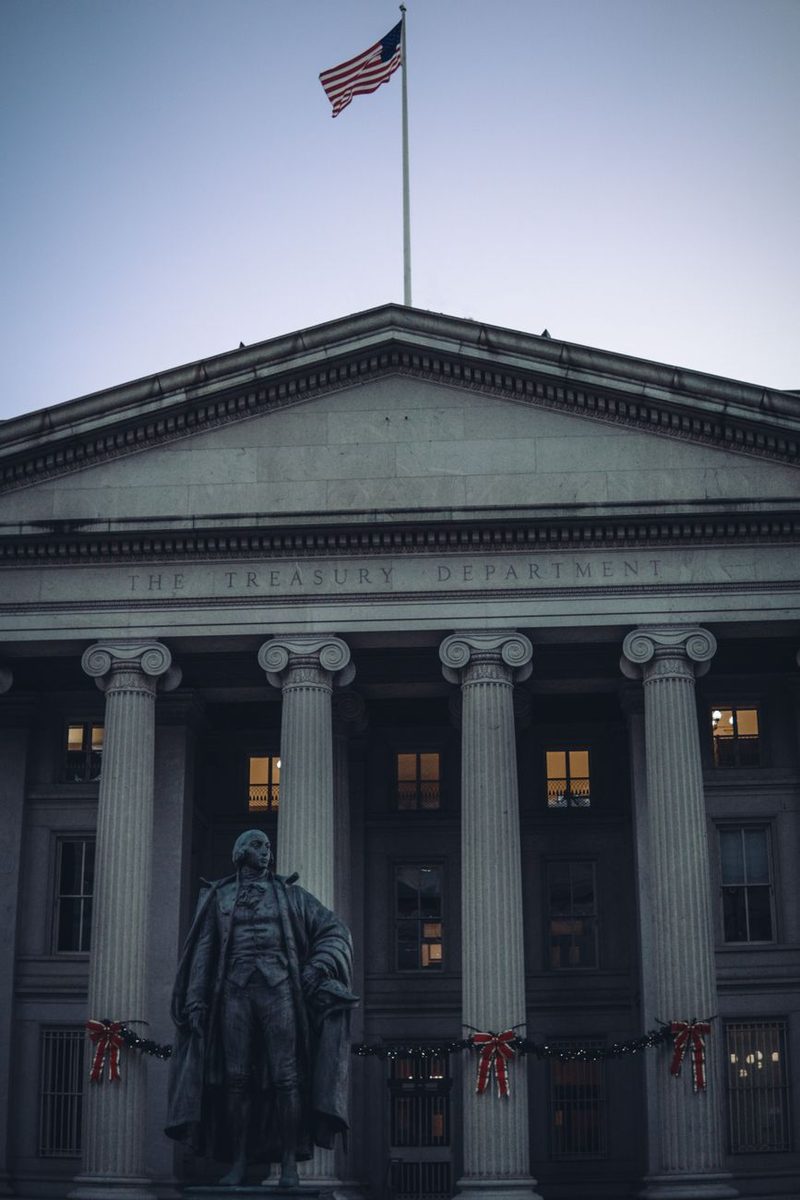
Captivating view of the US Treasury Department facade with columns and American flag at dusk.
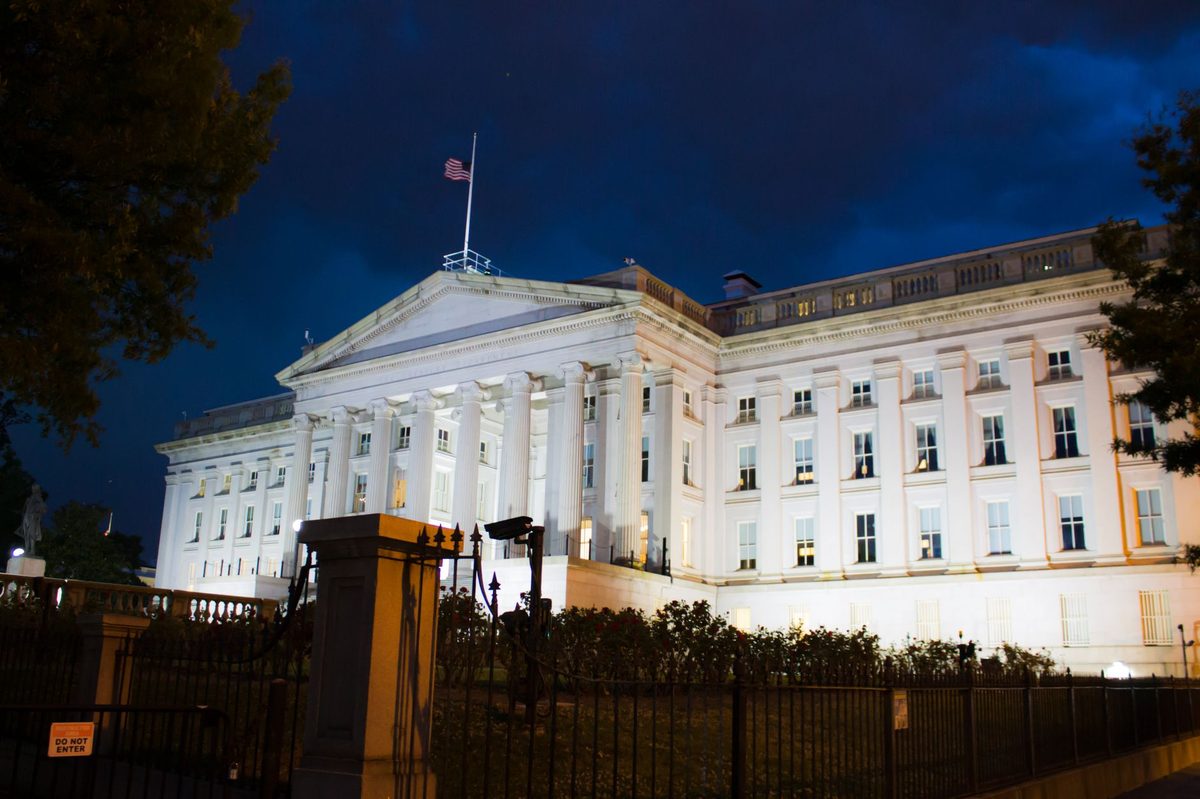
Stunning view of the U.S. Treasury Building illuminated against a twilight sky in Washington, DC.
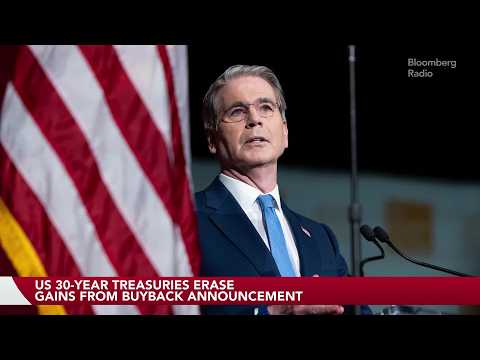
4.6K views
4:31
US 30-Year Bonds Erase Gains From Treasury's Buyback ...
Bloomberg Television

55.1K views
8:35
Why did bond markets ignore Scott Bessent's buyback plan?
Reuters
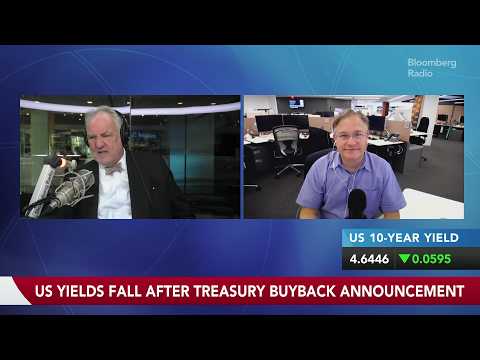
26.5K views
6:29
Bessent Deploys Debt Buybacks in Sign of Concern Over Yield ...
Bloomberg Podcasts
Images from Openverse under Creative Commons licenses. Videos from YouTube.
Voices
Curated perspectives — historical figures and your fellow readers.
Play
Exploring all sides of a story is often best achieved with Play.
Most of these play right now — no account needed. Sign up to save scores, keep a streak, and unlock Debate and Predict.
Log in
Sign Up
Higher or Lower
A number from this story, against one from elsewhere in the news — guess which is bigger, then keep the chain going. 5 rounds, 3 strikes; a miss costs a strike and resets your streak.
Example
Anchor
EU tariff revenue
$52B
Big for this kind of number
Mystery
Pentagon AI contract
?
Round 1
Streak: 0
Mystery
?
Keyboard: ↓/L lower · ↑/H higher
0 pts
Best streak: 0 · Rounds: 0
0 points — sign up to put that on the leaderboard.
Now try on this story
Connections
Sixteen names from the news. Find the four hidden groups of four. Four mistakes max.
Loading today's puzzle…
0/4 groups
Mistakes
Sign up to keep a daily streak — a new puzzle lands every day.
Now try on this story
Exit debate?
Your progress in this debate will be lost.
How it works
- 1 Two AI personas square off on this story.
- 2 You predict who'll win each round — correct picks earn XP.
- 3 One crossfire question is yours to fire. Pick it carefully.
Couldn't generate a topic
Select Your Champions
Choose one persona for each side of the debate
DEBATE TOPIC
Choose personas with different perspectives for a more dynamic debate.
SIDE A (PRO)
Select debater for this side:
No debate personas available right now.
SIDE B (CON)
Select debater for this side:
No debate personas available right now.
VS
Get ready to make your prediction...
Round of
Claim
Evidence
Stakes
Crossfire Answer
Closing Statement
Claim
Evidence
Stakes
Crossfire Answer
Closing Statement
Your Crossfire Question
Generating arguments...
Who's Got This Round?
Make your prediction before the referee scores
The referee scores both sides on
Correct predictions earn +20 XP
· Press 1 or 2 to pick
Evidence
40%
Logic
30%
Detail
20%
Style
10%
Round Results
Your Pick
Not this time
(%)
Overall Score
/10
Your Pick
Not this time
(%)
Overall Score
/10
Set the Crossfire
Pick the question both personas must answer in the final round
Crafting crossfire questions...
Choosing a question earns +10 XP crossfire bonus
🏆
Total XP Earned
Cred Change
Predictions
Debate Oracle! You called every round!
Sharp Instincts! You know your debaters!
The Coin Flip Strategist! Perfectly balanced!
The Contrarian! Bold predictions!
Inverse Genius! Try betting the opposite next time!
XP Breakdown
Base completion
+20 XP
Rounds played ( rounds x 5 XP)
+ XP
Correct predictions ( correct x 20 XP)
+ XP
Crossfire bonus
+10 XP
Accuracy
%
Prediction History
Round
You picked:
✓
✗
Now try on this story
Keep debating to level up your credibility and unlock achievements
People Involved
Organizations Involved
Timeline
August 2026 September 2026
5 events
Latest: Today
Tap a bar to jump to that date
-
Buyback operation scheduled: up to $6 billion
Upcoming Market Operation20-minute operation runs 1:40-2 p.m. ET, targeting 10- and 20-year notes maturing Feb 2037 to Aug 2046.
-
Treasury triples buyback to $6 billion; yields keep rising
Today Policy AnnouncementBureau of the Fiscal Service sets $6 billion cap for Sept 10 operation. 10-year hits 4.841%, 30-year 5.307%.
-
10-year auction draws strong demand
Today Market EventAuction saw strong investor demand despite the yield surge, per Wells Fargo's fixed income team.
-
Bessent doubles buyback program to $4 billion
Policy AnnouncementTreasury Secretary announces long-dated buybacks will be at least $4 billion per operation through early November.
-
30-year yield tops 5.33%, highest since 2007
Market EventLong-term yields hit their highest level since before the 2008 financial crisis.
Historical Context
2 moments from history that rhyme with this story — and how they unfolded.
September 2011 - December 2012
Operation Twist (2011-2012)
The Federal Reserve sold short-term Treasury bills and bought long-term bonds, aiming to push down long-term yields without expanding its balance sheet. The program targeted the same part of the curve Treasury is now buying.
Then
Long-term yields fell initially, and the Fed extended the program once before ending it in late 2012.
Now
The effect faded as the economic recovery strengthened. The episode showed that targeting the long end can produce short-lived relief but rarely overrides structural factors like growth and inflation expectations.
Why this matters now
Today's buybacks are a similar attempt to manage long-term yields through targeted purchases. The 2011 precedent suggests the market may absorb the operation without a lasting change in yield levels.
July - August 2011
U.S. debt ceiling crisis and S&P downgrade (2011)
Congress fought over raising the debt ceiling until a last-minute deal. Standard & Poor's downgraded U.S. credit from AAA to AA+ on Aug 5. The national debt then stood near $14.3 trillion.
Then
Treasury yields fell sharply despite the downgrade, as investors fled to the safety of U.S. government debt.
Now
The episode showed that bond markets can defy conventional logic, pricing relative safety over headline risk. It also cost the U.S. its perfect credit rating.
Why this matters now
Today's situation is the reverse: yields are rising despite Treasury intervention. The 2011 paradox is a reminder that bond investors weigh their alternatives as much as the issuer's fundamentals.
Sources
(9)Related Stories
Scott Bessent’s farmland divestiture: ethics clash inside Trump’s Treasury
Money Moves
Updated May 10
Bank of Japan's market operations track the unwinding of its easing era
Money Moves
Updated Aug 24
Treasury Secretary Bessent's congressional confrontations
Rule Changes
Updated May 27
SoftBank prices record ¥1 trillion retail bond at 4.75% coupon
Money Moves
Updated 4 days ago
China injects $54 billion into state banks and insurers
Money Moves
Updated 2 days ago
Fed’s 2025 rate-cut run: three eases, one new playbook, and a president pushing hard
Rule Changes
Updated May 10