Trump’s 2025 mass-deportation drive reaches New Orleans with ‘Catahoula crunch’
Force in Play
A Border Patrol-led sweep that fell far short of its 5,000-arrest target still reshaped New Orleans policing, as NOPD repealed its decade-old immigration cooperation ban and community fears persisted long after agents departed.
A Border Patrol-led sweep that fell far short of its 5,000-arrest target still reshaped New Orleans policing, as NOPD repealed its decade-old immigration cooperation ban and community fears persisted long after agents departed.
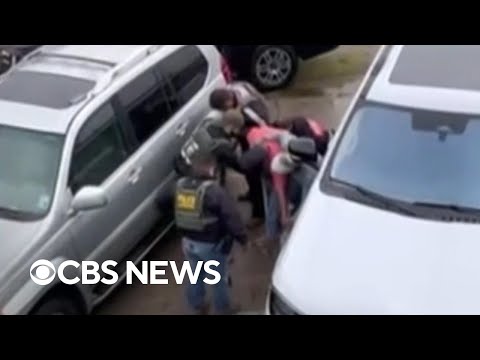
On December 3, 2025, President Trump launched Operation Catahoula Crunch, a Border Patrol sweep targeting 5,000 arrests in southeast Louisiana and southern Mississippi. The operation deployed roughly 250 agents to raid big-box stores, workplaces, and residential neighborhoods while conducting round-the-clock online surveillance of activists, protests, and community organizing.
However, the operation fell short of its goal. By early January 2026, federal authorities had arrested only 560 people—11% of the target—before withdrawing to Minneapolis. Early arrest data showed that fewer than 10% of detainees had criminal backgrounds.
The operation collided with Louisiana's new Act 399, which criminalizes interference with immigration enforcement, and local consent decrees limiting police cooperation. The ACLU sued to challenge Act 399 as unconstitutional, but Attorney General Liz Murrill provided assurances it would not target First Amendment activity, prompting the ACLU to dismiss the case in December 2025. On January 27, 2026, House Democrats held a field hearing criticizing ICE tactics, where food distribution requests surged from 30 to 400 families as fear kept people from work, school, and shopping.
Why it matters
The sweep reshaped local policing and community trust in New Orleans, and could become a template for other states seeking stricter immigration enforcement.
Questions about this story
Free account needed to ask — your question is kept and asked for you right after sign-up. Answers are public.
No questions yet — be the first to ask.
Key Indicators
560
Total arrests during Operation Catahoula Crunch
Federal authorities arrested approximately 560 people during the operation from December 3, 2025, through early January 2026—falling 89% short of the 5,000-arrest target before agents were redeployed to Minneapolis.
11%
Percentage of arrest goal achieved
The operation netted only 560 of its planned 5,000 arrests, achieving just 11% of DHS's stated target before being suspended and agents withdrawn.
< 10%
Share of initial arrestees with criminal backgrounds
In the operation's first eight days, Border Patrol arrested 250 people, with fewer than 10% having criminal backgrounds—far below the administration's claims of targeting violent offenders.
30 → 400
Food distribution requests from immigrant families
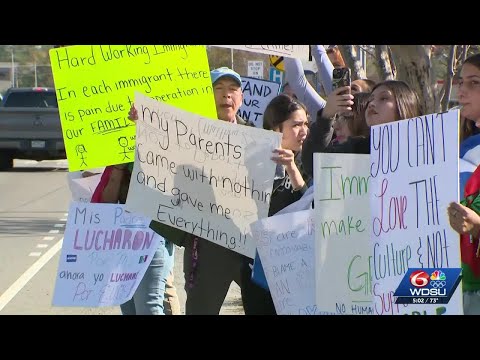
During the operation, food distribution requests surged from 30 to 400 families as immigrants became too afraid to go to work, take children to school, or shop at grocery stores.
Dismissed
ACLU lawsuit against Act 399 (December 2025)
The ACLU voluntarily dismissed its First Amendment challenge to Louisiana's Act 399 after Attorney General Murrill provided written assurances the law would not target protected speech or Know-Your-Rights activities.
Replaced
NOPD 2016 immigration cooperation policy
After weeks of negotiations with AG Liz Murrill, NOPD agreed to replace its 2016 policy barring officers from assisting federal civil immigration enforcement, blending relevant provisions into other policy sections.
Curated perspectives — historical figures and your fellow readers.
Ayn Rand
(1905-1982) ·Cold War · philosophy
Fictional AI pastiche — not real quote.
"A government that deploys 250 armed agents to hunt down people whose only crime is seeking work—then abandons the charade when reality exposes the lie—reveals not strength but the impotent flailing of bureaucrats who produce nothing, create nothing, and can only justify their existence by terrorizing those who do. The tragedy is not that the operation "failed," but that it was launched at all: individual rights are not suspended at borders, and a nation built by immigrants that now criminalizes immigration has lost its moral foundation."
100% found this insightful
Ever wondered what historical figures would say about today's headlines?
Sign up to generate historical perspectives on this story.
23 events
Latest: April 1st, 2026 · 6 months ago
Showing 8 of 23
JK to step
Tap a bar to jump to that date
Jump to
April 2026
Harper's publishes 'Thirty-Eight Days of ICE' retrospective
LatestMedia Coverage
Harper's Magazine publishes a feature by Daniel Brook documenting the full 38-day arc of Operation Catahoula Crunch, including DHS's deployment of tear gas and pepper-spray balls and the operation's impact on New Orleans immigrant communities.
February 2026
NOPD agrees to replace 2016 immigration cooperation policy
Policy Change
After weeks of negotiations between Supt. Anne Kirkpatrick and AG Liz Murrill, NOPD agrees to replace its 2016 policy barring officers from assisting federal civil immigration enforcement. New rules blend relevant provisions into other policy sections and take effect the following Sunday.
Federal government withholds list of 560 Catahoula Crunch arrestees
Transparency
DHS declines to release detailed information about the identities or criminal backgrounds of the 560 people arrested during Operation Catahoula Crunch, limiting public accountability and preventing independent verification of the operation's stated focus on violent offenders.
ICE arrests NOPD recruit with active deportation order one week before graduation
Enforcement
ICE arrests Larry Temah, a 46-year-old recruit from Cameroon who had been issued a firearm by the New Orleans Police Department despite an active deportation order. The arrest, occurring one week before his scheduled academy graduation, sparks renewed controversy over vetting procedures and immigration enforcement.
January 2026
House Democrats hold field hearing criticizing ICE tactics in New Orleans
Legislative Oversight
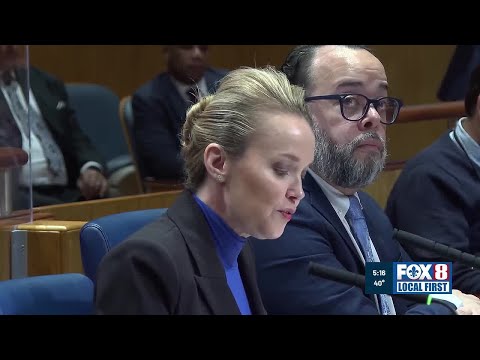
Democratic Congressman Troy Carter and fellow Democrats on the U.S. House Homeland Security Committee hold a field hearing in New Orleans focusing on ICE and DHS's Catahoula Crunch crackdown. Democrats blast ICE tactics and document community impacts, including surging food-aid requests and widespread fear.
Federal agents abruptly leave Louisiana operation for Minneapolis deployment
Enforcement
Federal immigration officers pull out of the Louisiana Catahoula Crunch operation and redeploy to Minneapolis in an abrupt pivot, effectively ending the New Orleans sweep after just over one month with 560 arrests—far short of the 5,000-arrest goal. Kenner Police Chief Keith Conley confirms the operation has been suspended.
December 2025
Arrest count reaches approximately 370 as operation continues
Enforcement
Border Patrol reports approximately 370 arrests as of mid-December, with the pace of detentions slowing considerably from the operation's opening days. The count remains well below the 5,000-arrest target announced at the operation's launch.
Attorney General Murrill encourages law enforcement cooperation with Catahoula Crunch
Public Statement
One week after agents begin making arrests, Attorney General Liz Murrill publicly encourages Louisiana law enforcement agencies to cooperate with Operation Catahoula Crunch, stating that 'Louisiana fully supports U.S. Border Patrol and ICE' and warning that individuals who interfere will face prosecution.
AP reveals arrest data and chilling effect of surveillance in New Orleans
Investigation
The Associated Press publishes an in-depth report on the Catahoula Crunch operation’s first days, based on internal records. It reveals that only a minority of the first 38 arrestees had significant criminal histories and that authorities are closely tracking online criticism and protest activity, prompting local officials and advocates to warn of a chilling effect on free speech.
ACLU dismisses Act 399 lawsuit after state assurances on free-speech protections
Legal Action
The ACLU of Louisiana voluntarily dismisses its federal lawsuit challenging Act 399 after Attorney General Liz Murrill files a court document assuring that the law will not be used to prosecute 'pure speech' such as Know-Your-Rights presentations. Judge Nannette Jolivette Brown dismisses the case without prejudice, allowing it to be refiled if the state's assurances are violated.
Online surveillance briefings track protests and public sentiment
Surveillance
Law-enforcement briefings circulated among federal, state, and local agencies show around-the-clock monitoring of social media, message boards, Reddit threads, and protest organizing related to Catahoula Crunch. The briefings summarize public ‘sentiment,’ track activist trainings on filming agents, and identify locations where immigrants might be found.
Louisiana AG warns NOPD to fully cooperate or face malfeasance charges
Public Statement
Attorney General Liz Murrill sends a letter to NOPD Superintendent Anne Kirkpatrick asserting that officers who follow departmental policies limiting cooperation with ICE and CBP could be committing malfeasance in office, intensifying pressure on local agencies caught between state law and federal consent decrees.
DHS officially launches Operation Catahoula Crunch in New Orleans
Enforcement
DHS announces the start of Operation Catahoula Crunch (previously code‑named Swamp Sweep) in New Orleans, promising to focus on ‘criminal illegal aliens’ released because of local sanctuary policies. Around 250 agents fan out across the metro area, including into heavily immigrant suburbs like Kenner.
ACLU of Louisiana sues to block Act 399 as Catahoula Crunch begins
Legal Action
The ACLU of Louisiana files a federal lawsuit on behalf of Immigration Services and Legal Advocacy (ISLA), arguing that Act 399’s criminalization of interference with immigration enforcement violates the First and Fourteenth Amendments by threatening Know‑Your‑Rights trainings and other protected speech.
Early raids in New Orleans target workers and neighborhoods
Enforcement
Journalists and witnesses document Border Patrol convoys and arrests at big-box stores like Lowe’s and Walmart in New Orleans and Kenner. Residents describe agents chasing people in parking lots and surrounding homes, intensifying fear in Latino-majority neighborhoods.
November 2025
New Orleans braces as next city in federal sweep campaign
Public Statement
Local media report that New Orleans will likely be the next city to experience a Border Patrol–led crackdown. Mayor-elect Helena Moreno circulates Know‑Your‑Rights guides and expresses concern over reports of abuses in prior operations.
AP reveals planning documents for ‘Swamp Sweep’ in Louisiana
Investigation
Associated Press reporters obtain internal DHS planning documents showing that around 250 border agents will be deployed to New Orleans and surrounding areas for a two‑month crackdown dubbed ‘Swamp Sweep,’ targeting roughly 5,000 arrests across southeast Louisiana and southern Mississippi.
Operation Charlotte’s Web winds down; New Orleans named next target
Enforcement
After less than a week of raids, a federal immigration crackdown in Charlotte, North Carolina, known as Operation Charlotte’s Web, appears to conclude with more than 250 arrests. Local officials say Border Patrol is shifting resources to New Orleans for an upcoming ‘Swamp Sweep’ operation.
September 2025
Operation Midway Blitz launched in Chicago
Enforcement
DHS begins Operation Midway Blitz, a multi-agency immigration surge in Chicago framed as targeting ‘criminal illegal aliens’ in response to local sanctuary policies. Thousands are arrested, most for civil immigration violations or nonviolent offenses, raising questions about the operation’s stated aims and legality.
August 2025
Louisiana’s Act 399 takes effect, criminalizing interference with immigration enforcement
Legislation
Act 399, signed earlier in 2025, comes into force in Louisiana. It exposes local jailers to up to 10 years in prison for refusing ICE detainer requests and makes it a misdemeanor for any member of the public to ‘knowingly’ hinder or interfere with federal immigration enforcement, drawing sharp criticism from civil-rights advocates.
July 2025
Camarillo farm raid in California leaves one worker dead
Enforcement
ICE and federal agents raid greenhouses near Camarillo, California, detaining more than 200 people and causing one farmworker to die after a fall while fleeing. The incident intensifies criticism that Trump’s deportation drive is causing preventable deaths and trauma in workplaces.
June 2025
Federal forces and protests in Los Angeles mark first major city sweep
Enforcement
Federal and National Guard forces deploy into Los Angeles as part of Trump’s mass-deportation push, sparking weeks of protests and civil unrest. The operation demonstrates the administration’s willingness to use military-style tactics in large Democratic cities and foreshadows similar deployments elsewhere.
January 2025
Trump signs Executive Order 14159 on immigration enforcement
Policy
On his first day back in office, President Trump signs Executive Order 14159, ‘Protecting The American People Against Invasion,’ expanding expedited removal, threatening to cut funds to sanctuary jurisdictions, and announcing an aggressive interior immigration-enforcement agenda that will later underpin city sweeps like Catahoula Crunch.
Scenarios
1
Catahoula Crunch runs its full course and becomes the model for future Deep South sweeps
Possible
Discussed by: Supportive coverage from outlets like Fox News and Breitbart; statements by Louisiana officials; DHS messaging
Under this scenario, federal courts decline to significantly limit either Operation Catahoula Crunch or Louisiana’s Act 399. The ACLU’s constitutional challenge stalls or results in only narrow clarifications, and DHS continues the New Orleans operation for the planned 60 days or longer, edging close to its 5,000‑arrest target by focusing on any deportable immigrants it can locate, not just people with violent convictions. New Orleans becomes a proof‑of‑concept that state governments can pass laws compelling cooperation and criminalizing interference, while Border Patrol and ICE run highly visible sweeps reinforced by online-intelligence monitoring. A perceived success in Louisiana encourages replication in other Deep South and Midwestern states with similar anti‑sanctuary laws.
2
Courts carve out strong First Amendment protections but leave core raids intact
Likely
Discussed by: Legal analysts, ACLU of Louisiana, national civil-liberties commentators
Here, federal courts uphold much of Louisiana’s ability to mandate cooperation with ICE detainers but agree that Act 399 cannot be used against Know‑Your‑Rights trainings, protest organizing, or recording of agents. The ACLU wins a narrow injunction clarifying that speech and peaceful observation are outside the statute’s reach, reducing some of the chilling effect on groups like ISLA. However, judges stop short of restricting Catahoula Crunch itself or of invalidating the broader mass-deportation policy. DHS continues to run large-scale sweeps, but with more explicit protections for observers and activists, and with somewhat greater transparency about arrest statistics.
3
Federal oversight and consent decrees reassert limits on state-directed cooperation
Possible
Discussed by: Immigration-law scholars, civil-rights litigators, some national media editorials
New litigation and federal court rulings emphasize that existing consent decrees and constitutional constraints prevent states from forcing local agencies like NOPD and the Orleans Parish Sheriff’s Office to function as extensions of ICE and Border Patrol. Courts either refuse to dissolve the New Orleans consent decree or rewrite it only minimally, and they strike down parts of Act 399 related to compelled cooperation by local officials. In practice, DHS must rely on its own agents and willing state-level partners such as Louisiana State Police, limiting the reach of sweeps in jurisdictions with strong federal oversight. This outcome creates a patchwork of cooperation across the country but slows the expansion of state-driven mass-deportation frameworks.
4
National backlash to mass-deportation tactics forces strategic pullback
Uncertain
Discussed by: Some national editorial boards, historians drawing parallels to Operation Wetback, advocacy coalitions
If televised images of raids, detentions, and family separations in New Orleans, Chicago, Los Angeles and other cities trigger sustained national outrage—especially combined with widely publicized reports of deaths, abuses in detention, and surveillance of political dissent—the administration may face mounting political pressure, including from some Republicans in swing states. Congress or the courts could respond with funding constraints, oversight hearings, or broader injunctions, forcing DHS to scale back city sweeps and shift to lower‑profile enforcement. This would resemble how backlash against the 1950s Operation Wetback eventually turned it into a political liability rather than an asset.
5
Normalization of digital-intelligence–driven immigration policing
Likely
Discussed by: Technology and civil-liberties analysts, investigative reporting (AP and others)
Another path is that the most enduring legacy of Catahoula Crunch is not the number of arrests but the playbook for monitoring dissent. Around-the-clock tracking of social media, Reddit threads, activist trainings and community mutual-aid channels becomes a standard feature of immigration operations, justified as officer-safety planning. Even if portions of Act 399 are narrowed, the underlying capacity for sentiment analysis, protest mapping, and target identification remains and is shared with other law-enforcement agencies. Over time, such practices could quietly migrate into other areas of policing and protest surveillance, making New Orleans a watershed in normalizing intelligence-led suppression of immigrant-rights organizing.
6
Act 399 enforcement despite state assurances triggers renewed litigation
Possible
Discussed by: Civil-liberties attorneys, ACLU of Louisiana, immigration-law scholars
If Louisiana authorities use Act 399 to prosecute Know-Your-Rights trainings, protest organizing, or other protected speech despite Attorney General Murrill's December 2025 assurances, the ACLU could refile its dismissed lawsuit with stronger evidence of First Amendment violations. Because the case was dismissed 'without prejudice,' advocates retain the ability to challenge the law if the state's written commitments prove hollow in practice. Such a renewed challenge would test whether Murrill's assurances bind future attorneys general and local prosecutors, or whether they were merely tactical concessions to avoid an adverse judicial ruling during a politically sensitive operation.
7
Catahoula Crunch's low arrest numbers discredit city-sweep model nationally
Likely
Discussed by: Immigration-policy analysts, Democratic lawmakers, some editorial boards
Operation Catahoula Crunch's failure to reach even a fraction of its arrest target—560 out of 5,000, or 11%—combined with data showing fewer than 10% of detainees had criminal backgrounds, could undermine political support for similar operations elsewhere. If congressional oversight, media investigations, or internal DHS reviews conclude that city sweeps impose high economic and humanitarian costs while producing minimal public-safety benefits, the administration may face pressure to scale back or redesign its interior enforcement strategy. New Orleans could become a cautionary example rather than a replicable model, much as Operation Wetback's exaggerated claims eventually discredited mass-deportation rhetoric in the 1950s.
Discussed by: Civil-rights attorneys, immigration advocates, ACLU of Louisiana
The replacement of NOPD's 2016 policy could face legal challenges from advocates who argue it violates constitutional protections or the department's prior consent decree obligations. If the new policy leads NOPD officers to notify ICE about civil immigration detainers, advocates may sue to block implementation, potentially reviving court oversight that ended just before Catahoula Crunch began.
Historical Context
3 moments from history that rhyme with this story — and how they unfolded.
1 of 3
1954–1955
Operation Wetback (1954–1955)
Operation Wetback was a mid‑1950s U.S. immigration enforcement campaign under President Dwight D. Eisenhower that used military-style tactics to apprehend and deport Mexican migrants, including some U.S. citizens and legal residents. Border Patrol deployed hundreds of officers, vehicles and aircraft to border regions and cities like Los Angeles and Chicago, ultimately apprehending fewer than 300,000 people during the campaign—far less than the 1 million figure often cited by officials and later politicians. Deportees were frequently transported to unfamiliar regions of Mexico under harsh conditions, and there were documented deaths from heat and neglect.
Then
The operation temporarily reduced unauthorized migration from Mexico and allowed Eisenhower to claim a strong border-security victory, but it also produced human-rights abuses and deep community trauma.
Now
Historians now view Operation Wetback as a cautionary tale about propaganda-driven mass deportations—its numbers were inflated, its tactics brutal, and it failed to resolve the structural economic drivers of migration. Trump’s repeated invocation of the operation as a model underscores how misremembered history can legitimize new crackdowns.
Why this matters now
Catahoula Crunch echoes Operation Wetback in combining spectacle, racialized rhetoric, and large-scale sweeps with disputed statistics about dangerous criminals. The historical record shows how easily such campaigns overshoot their stated targets, inflict collateral harm on citizens and legal residents, and leave enduring civil-rights scars even when sold as limited operations.
2 of 3
August 7–8, 2019
2019 Mississippi Poultry-Plant ICE Raids
In August 2019, ICE agents raided multiple poultry-processing plants in Mississippi, arresting about 680 workers in what officials called the largest single-state workplace enforcement action to date. Many of those detained were Latino, and the raids left children stranded after parents were arrested; more than 300 people were released the following day. The operations drew national attention to the reliance of U.S. agriculture on immigrant labor and to the humanitarian fallout of mass workplace raids.
Then
The raids disrupted local economies, traumatized families and communities, and prompted criticism from religious leaders, advocates and some local politicians. ICE defended the actions as necessary to enforce immigration law and deter the hiring of unauthorized workers.
Now
The Mississippi raids became a reference point in debates about proportionality and humanitarian impact in immigration enforcement. They demonstrated how large, highly publicized operations could quickly provoke backlash and scrutiny, shaping later conversations about Trump’s second-term deportation plans.
Why this matters now
The Mississippi example illustrates how large-scale raids in Southern communities strain local institutions, destabilize families, and raise questions about whether such operations actually target abusive employers or merely punish workers. New Orleans’ Catahoula Crunch, with its big-box-store arrests and economic shock to immigrant-heavy neighborhoods, risks replaying those dynamics on a broader, more militarized scale.
3 of 3
2017–2019 and renewed in 2025
Trump’s First-Term Sanctuary-City Funding Fights
During his first term, Trump attempted to punish ‘sanctuary’ cities by threatening to cut federal funds, but courts repeatedly blocked these efforts as unconstitutional. In 2025, similar strategies resurfaced, and Judge William Orrick again issued injunctions preventing the administration from denying or conditioning federal funding to dozens of municipalities based on their immigration policies.
Then
The rulings limited the administration’s leverage over sanctuary jurisdictions and affirmed that the executive branch could not unilaterally rewire congressional spending decisions to coerce local cooperation on immigration enforcement.
Now
Unable to use funding threats as effectively, Trump’s second-term team turned to other tools—such as deploying federal agents directly into cities and encouraging states like Louisiana and Arkansas to pass laws mandating cooperation or criminalizing interference. This shift set the stage for conflicts like those now unfolding in New Orleans.
Why this matters now
The sanctuary-city funding fights show a legal and strategic pivot: where direct fiscal coercion failed, the administration is now leaning on display-oriented sweeps and state-level legal innovations like Act 399. Catahoula Crunch thus represents not a standalone crackdown but the latest iteration in a multi-year struggle over who controls immigration enforcement inside U.S. cities.