
Pull to refresh
Logo
Tuberculosis deaths reach a global target set for 2020, as donor funding falls

Tuberculosis deaths reach a global target set for 2020, as donor funding falls

Rule Changes

WHO's 2026 report finds deaths down 35% since 2015 and domestic TB spending up 14%, while international donors cut funding by the same share

Overview

Updated 26 minutes ago

The World Health Organization had a milestone it was supposed to reach in 2020: cutting tuberculosis deaths 35% below their 2015 level. Its Global Tuberculosis Report 2026 says the world got there in 2025, with an estimated 1.13 million deaths against 1.74 million in 2015 and 1.18 million in 2024.

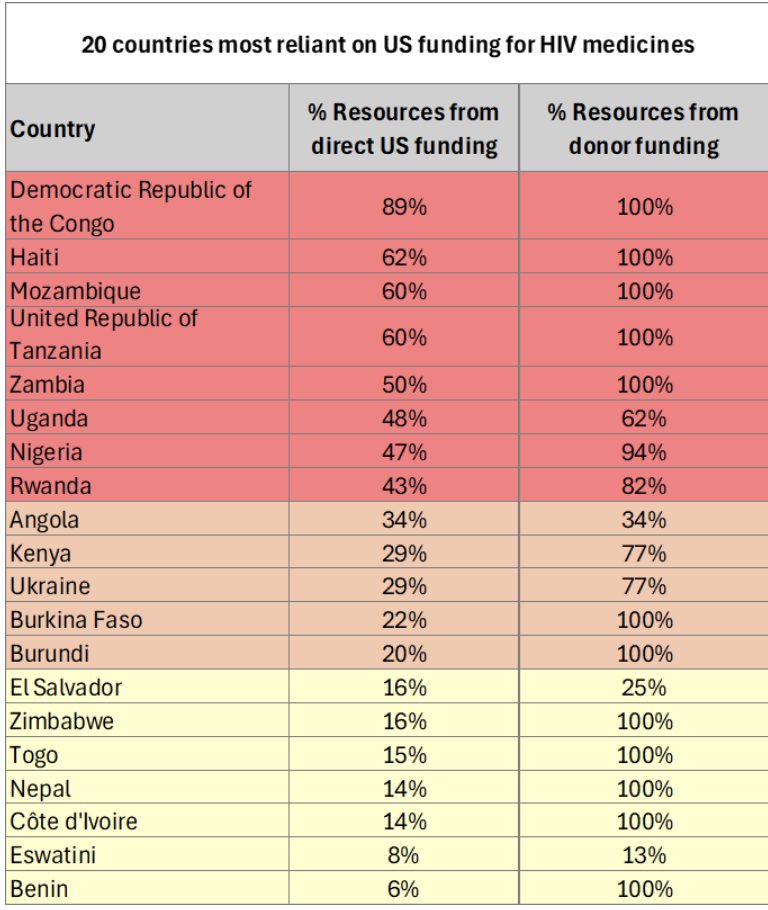
International donor funding for TB fell 14% in 2025, to $0.94 billion, after the Trump administration dismantled the US Agency for International Development. Domestic spending rose 14% to $5.63 billion, lifting total TB funding in low- and middle-income countries to $6.6 billion. The WHO's target for 2027 is $22 billion a year.

Why it matters

Tuberculosis still kills about 1.13 million people a year, and the donor money that pays for testing and treatment fell by $160 million.

Questions about this story

Free account needed to ask — your question is kept and asked for you right after sign-up. Answers are public.

No questions yet — be the first to ask.

Key Indicators

1.13 million
TB deaths in 2025
Down 4% from 1.18 million in 2024 and 35% from 1.74 million in 2015.
35%
Fall in annual TB deaths, 2015 to 2025
The first End TB Strategy milestone, set for 2020, reached five years late.
10.6 million
People who fell ill with TB in 2025
Almost unchanged from 2024, a 0.7% decline; the 2030 target implies an 80% cut from 2015.
$6.6 billion
TB spending in low- and middle-income countries, 2025
Up from $6.0 billion in 2024; the target is $22 billion a year by 2027.
$0.94 billion
International donor funding for TB, 2025
Down 14% from $1.1 billion in 2024.
$5.63 billion
Domestic TB funding, 2025
Up 14% from $4.9 billion in 2024.
8.4 million
People newly diagnosed and reported in 2025
About 79% of estimated cases, up slightly from 8.3 million in 2024.

Voices

Curated perspectives — historical figures and your fellow readers.

Sign up to generate historical perspectives on this story.

People Involved

Organizations Involved

Timeline

2015 November 2026

6 events Latest: 3 days ago
Tap a bar to jump to that date
  1. TB death decline reported as donor funding drops

    Latest Report

    Human Progress summarizes WHO data: 1.13 million deaths in 2025, 35% below 2015.

  2. WHO publishes Global TB Report 2026

    Report

    Deaths fall 4% to 1.13 million, hitting the 2020 milestone of a 35% cut since 2015.

  3. US terminates most USAID TB awards

    Funding

    A KFF analysis found 79% of USAID TB-related awards ended during the agency's dismantling.

  4. Domestic TB budgets rise as donors retreat

    Funding

    Domestic funding reached $5.63 billion; 13 of 23 countries exposed to donor changes spent more.

  5. COVID-19 pushes TB deaths upward

    Setback

    Disruptions to diagnosis and treatment raised estimated deaths in 2020 and 2021.

  6. Baseline year for the End TB Strategy

    Baseline

    An estimated 1.74 million people died of TB, the starting point for the 35%, 75% and 90% reduction milestones.

Scenarios

1

Donor cuts show up as fewer people diagnosed

Possible Resolves by Nov 30, 2027

Discussed by: WHO officials Katherine Floyd and Tereza Kasaeva, and TB Alliance

The WHO says the 2025 data show no clear-cut effect from the funding drop, and that some effects would be delayed. If the cuts reach testing and treatment, the first measurable sign is fewer people diagnosed and reported. Deaths would follow later, since untreated TB kills slowly.

2

Domestic budgets keep covering the donor gap

Likely Resolves by Nov 30, 2027

Discussed by: WHO 2026 report and its 12 November funding release

Domestic spending rose 14% in 2025, more than offsetting the donor decline in total funding. The pattern held in 13 of the 23 countries most exposed to funding changes. If it continues, TB services keep running while donor money stays low.

3

International donor funding for TB rebounds

Unlikely Resolves by Nov 30, 2027

Discussed by: TB Alliance and other TB advocacy groups cited in the 2026 report coverage

Donor funding fell from $1.1 billion in 2024 to $0.94 billion in 2025, mostly through the end of US-supported awards. A rebound would require the US or another large donor to rebuild TB programs. No announced plan to do so appears in the 2026 report or WHO statements.

Historical Context

3 moments from history that rhyme with this story — and how they unfolded.

2015

End TB Strategy milestones set (2015)

The WHO's End TB Strategy measured progress against 2015, when an estimated 1.74 million people died of TB. It set milestones of a 35% cut in deaths by 2020 and a 75% cut by 2025, with 90% by 2030.

Then

Deaths rose instead of falling, as COVID-19 disrupted TB services in 2020 and 2021.

Now

The 35% milestone was reached in 2025, five years late; the 75% target for 2025 was missed, with deaths down 35% instead.

Why this matters now

Explains exactly what the 2026 report's headline number measures, and how far the TB response still is from its next target.

2020-2021

COVID-19 disrupts TB diagnosis and treatment (2020-2021)

Pandemic restrictions pulled staff, laboratories and patients away from TB services. Estimated TB deaths climbed for two years, breaking a long decline.

Then

Millions of TB cases went undiagnosed and unreported during the disruption.

Now

By 2025, deaths were 21% below their 2021 level as services recovered, but the setback cost years of progress.

Why this matters now

A working example of how quickly a shock to health services reaches TB mortality, which is what the 2025 donor cuts test.

2000-2025

TB treatment scale-up (2000-2025)

Countries and donors expanded TB diagnosis and treatment. The WHO estimates that treating people with TB averted 86 million deaths over 25 years.

Then

Treatment success rates reached about 90% for drug-susceptible TB and about 70% for rifampicin-resistant TB.

Now

The gains came from delivering care, which depends on health workers and drug budgets rather than on new technology.

Why this matters now

The mortality decline in this story is the product of sustained service delivery, the part most exposed to a funding drop.

Sources

(7)