
Pull to refresh
Logo
Turkiye and Qatar sign mutual defence agreement

Turkiye and Qatar sign mutual defence agreement

Force in Play

A second security guarantor for Doha, with the terms undisclosed

Overview

Updated 1 hour ago

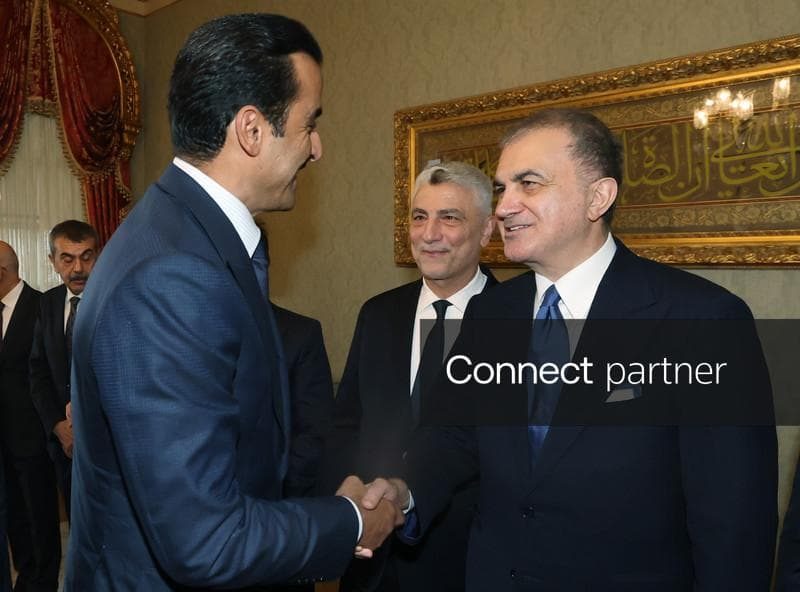
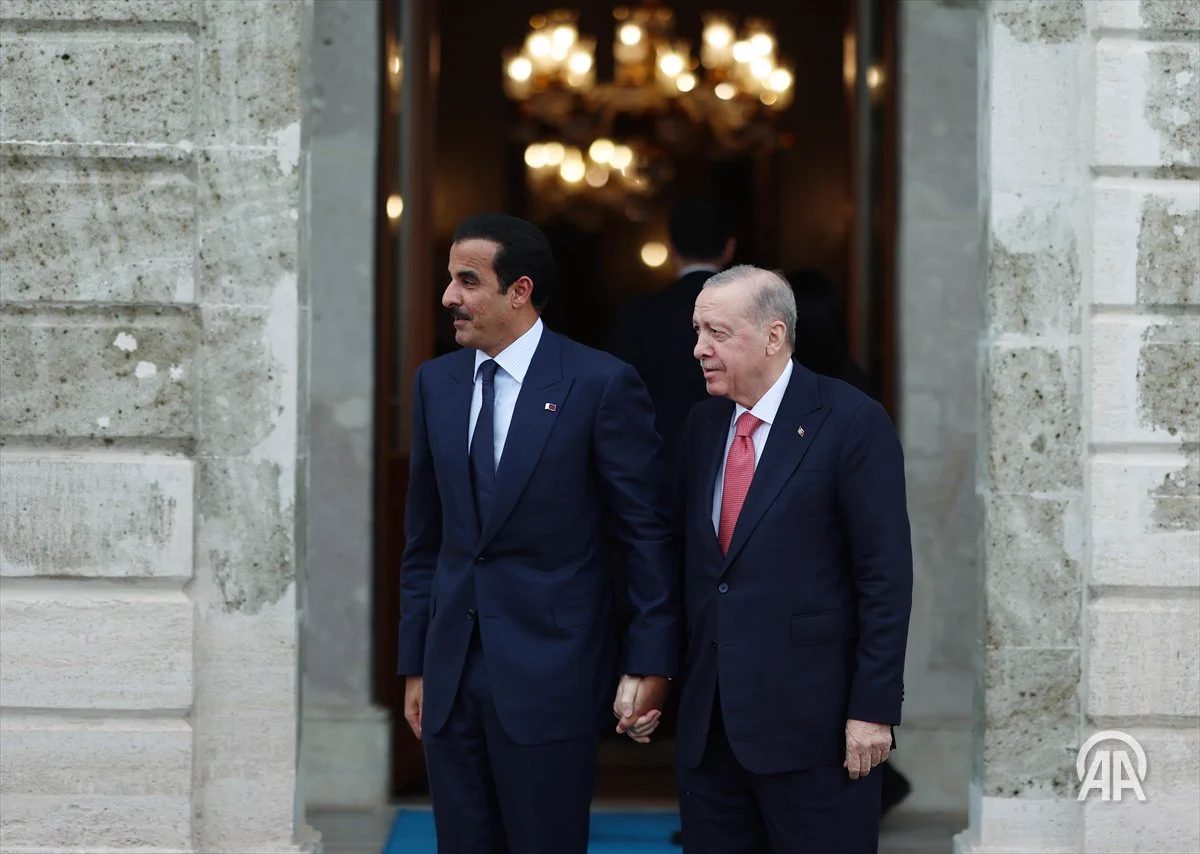
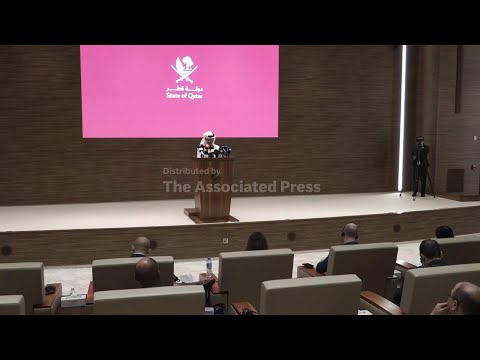
Turkish President Tayyip Erdogan and Qatari Emir Sheikh Tamim bin Hamad Al Thani signed a mutual defence agreement in Istanbul on 13 November 2026. The joint statement pledged a unified stance against any external armed attack on either country. Neither side published the text.

The pact sits on top of a Turkish military presence in Qatar that dates to a 2014 cooperation agreement, and it follows a year in which Iranian missiles damaged Qatar's Ras Laffan gas complex despite a US security commitment. Turkiye and Qatar also said they would expand joint exercises, defence-industry work and personnel exchanges, and pursue liquefied natural gas cooperation.

Why it matters

Qatar hosts US forces at Al Udeid; a second defence guarantor changes who Doha calls first in a crisis.

Questions about this story

Free account needed to ask — your question is kept and asked for you right after sign-up. Answers are public.

No questions yet — be the first to ask.

Key Indicators

5
Agreements signed
Bilateral deals concluded alongside the defence pact at the Istanbul meeting.
12th
Supreme Strategic Committee session
The defence pact was signed at the 12th meeting of the two countries' high-level coordinating body.
17%
Qatar LNG export capacity removed
Two of 14 liquefied natural gas trains were damaged in the March 2026 strikes on Ras Laffan.
$20B
Projected annual revenue loss
QatarEnergy's estimate of lost revenue from the damaged trains, with repairs expected to take years.

Voices

Curated perspectives — historical figures and your fellow readers.

Sign up to generate historical perspectives on this story.

People Involved

Organizations Involved

Timeline

2014 November 2026

10 events Latest: Today
Tap a bar to jump to that date
  1. Turkiye and Qatar sign mutual defence agreement

    Today Agreement

    Erdogan and Sheikh Tamim signed the pact in Istanbul and pledged a unified stance against external attack.

  2. Turkish parliament ratifies the Makkah defence agreement

    Ratification

    Approval cleared the way for Ankara to send military support to Saudi Arabia.

  3. Four countries sign Badr defence memorandum in Doha

    Agreement

    Qatar, Indonesia, Pakistan and Turkiye agreed to expand joint defence production and training.

  4. Turkiye, Saudi Arabia and Pakistan sign Makkah defence pact

    Agreement

    The three countries agreed that an attack on one constitutes an attack on all.

  5. Iranian missiles damage Qatar's Ras Laffan gas complex

    Attack

    Two of 14 LNG trains were hit, removing 17% of export capacity and an estimated $20 billion a year in revenue.

  6. Turkiye and Qatar sign defence industry memorandum

    Agreement

    The two governments formalised cooperation on defence production.

  7. Trump order pledges US response to attacks on Qatar

    Executive order

    Executive Order 14353 directed Washington to treat armed attacks on Qatar as threats to US peace and security.

  8. Turkish defence firms sign deals with Barzan Holding

    Defence industry

    ASFAT and MKE agreed joint investments and projects with Qatar's state-linked holding company.

  9. Turkish parliament ratifies the military framework

    Ratification

    The 2014 agreement came into force after parliamentary approval, alongside a separate troop deployment arrangement.

  10. Turkiye and Qatar sign military cooperation framework

    Agreement

    The deal covered military expertise, defence industry development and access to facilities including ports and airspace.

Scenarios

1

Turkish air defences and weapons deploy to Qatar

Likely Resolves by Q3 2027

Discussed by: Security analyst Yusuf Alabarda, speaking to Al Jazeera

Alabarda said Turkish troops in Qatar are already significant, and that Turkish weapons and air-defence systems could be deployed in the near term under the new agreement. A deployment would turn a paper commitment into a physical shield over Qatari territory and energy sites, and would put Turkish crews in the same airspace as US forces at Al Udeid.

2

Pact text published with an automatic mutual defence clause

Possible Resolves by Q2 2027

Discussed by: Reuters and Al Jazeera, both noting the terms were not disclosed

Neither government released the operative terms, and Reuters reported the wording was not disclosed. If the published text treats an attack on one party as an attack on both, the pact would resemble the Makkah agreement and NATO's Article 5. If it only commits the parties to consult, it would be closer to the US executive order it sits beside.

3

Egypt joins the Makkah defence framework

Unlikely Resolves by End of 2027

Discussed by: Turkish officials, via Al Jazeera and Reuters

Turkiye has said the Makkah Joint Defence Agreement is not aimed at any other country and remains open to other states, including Egypt. Cairo joining would extend the same attack-on-one-is-attack-on-all language across the eastern Mediterranean and Red Sea, and would pull a US partner into a bloc built without Washington.

Historical Context

3 moments from history that rhyme with this story — and how they unfolded.

June 2017

Qatar diplomatic crisis (2017)

Saudi Arabia, the United Arab Emirates, Bahrain and Egypt cut diplomatic ties with Qatar and closed land, sea and air routes. Turkiye airlifted food and medicine into Doha and rushed troops to its base there, while Iran opened its airspace to Qatari flights.

Then

Qatar absorbed the blockade with Turkish and Iranian support and kept importing goods.

Now

The blockade was lifted in January 2021, but the Turkish military presence in Qatar stayed and became a permanent part of Doha's security planning.

Why this matters now

The new pact formalises a security relationship that was first tested under blockade, when US mediation did not stop Qatar's neighbours from cutting it off.

April 1949

NATO Article 5 (1949)

The North Atlantic Treaty committed twelve founding members to treat an armed attack on one as an attack on all. The clause has been invoked once, after the September 11, 2001 attacks on the United States.

Then

The clause deterred direct attack on members during the Cold War without ever being triggered.

Now

It became the reference model for mutual defence commitments worldwide, including the language used in the 2026 Makkah agreement.

Why this matters now

Whether the Turkiye-Qatar text copies Article 5's automatic obligation or only requires consultation is the central unanswered question about the pact.

September 2025

US Executive Order 14353 on Qatar (2025)

President Donald Trump directed Washington to treat armed attacks on Qatar's territory, sovereignty or critical infrastructure as threats to US peace and security, authorising diplomatic, economic and, if necessary, military responses. The order required joint contingency planning but was not a ratified treaty.

Then

The order did not prevent Iranian missiles from damaging the Ras Laffan gas complex in March 2026.

Now

It left open whether the US commitment would survive a change of administration, a gap the Turkish pact now partly fills.

Why this matters now

The Qatar-Turkiye agreement is the second external guarantee Doha has secured in fourteen months, and the first that is a state-to-state pact rather than a single-country executive action.

Sources

(10)