
Pull to refresh
Logo
GCC opens forward military command in Kuwait

GCC opens forward military command in Kuwait

Force in Play

Six Gulf states assign forces to a command post closer to Iran and Iraq

Overview

Updated 1 hour ago

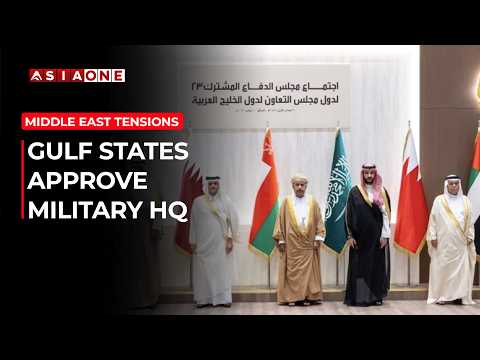
Gulf defense ministers agreed on 10 November to place a forward command post for their joint military force in Kuwait, at the northern tip of the Gulf. It is the first time the six-state bloc has put a standing command outside its Riyadh headquarters.

The decision follows Iranian missile and drone strikes on Gulf states during the US-Israel war on Iran, and a Houthi attack on Riyadh's airport that killed 14 people. A command closer to Iraq and Iran shortens the distance between decision and deployment. The bloc has not said how many troops it will assign or when the post will open.

Why it matters

If the command gets real forces, Gulf states gain a second layer of deterrence that does not depend on American bases, and Iran gains a new target set.

Questions about this story

Free account needed to ask — your question is kept and asked for you right after sign-up. Answers are public.

No questions yet — be the first to ask.

Key Indicators

6
GCC member states
Bahrain, Kuwait, Oman, Qatar, Saudi Arabia and the United Arab Emirates.
2013
Unified Military Command established
The bloc's joint command was created in 2013; its Riyadh headquarters opened in 2021.
14
Killed in Riyadh airport attack
A Houthi attack on King Khalid International Airport on 10 October 2026 also wounded more than 300.
300+
Wounded in Riyadh airport attack
The GCC cited the attack when announcing the Kuwait command.
23rd
Joint Defense Council session
The meeting in Manama, Bahrain, where the decision was approved.

Voices

Curated perspectives — historical figures and your fellow readers.

Sign up to generate historical perspectives on this story.

People Involved

Organizations Involved

Timeline

2013 November 2026

9 events Latest: Today
Tap a bar to jump to that date
  1. Defense ministers approve Kuwait forward command

    Today Decision

    The 23rd Joint Defense Council approves an advanced command in Kuwait with assigned forces.

  2. GCC chiefs of staff meet in Manama

    Military

    Military leaders discuss stronger defense coordination amid regional threats.

  3. Houthi attack on Riyadh airport

    Attack

    Strike on King Khalid International Airport kills 14 and wounds more than 300.

  4. Mecca Joint Defense Agreement signed

    Treaty

    Saudi Arabia, Pakistan and Turkiye agree an attack on one is an attack on all.

  5. GCC leaders meet in Jeddah

    Summit

    Leaders call for faster work on a joint ballistic missile warning system.

  6. US and Israel launch war on Iran

    Conflict

    Iranian missile and drone strikes hit Gulf states hosting US bases.

  7. Pakistan and Saudi Arabia sign mutual defense treaty

    Treaty

    A bilateral pact obliging each to defend the other.

  8. Riyadh headquarters opens

    Institutional

    The Unified Military Command's main headquarters begins operating in the Saudi capital.

  9. GCC establishes Unified Military Command

    Institutional

    The bloc creates a joint command to coordinate member armed forces.

Scenarios

1

Kuwait forward command becomes operational with assigned units

Possible Resolves by Q2 2027

Discussed by: GCC Secretary-General Jasem Mohamed Albudaiwi; Gulf defense ministers

The GCC follows through on the 10 November decision and announces the Kuwait post is staffed and operating with assigned forces. This would give the bloc a standing command closer to Iran and Iraq, separate from the Riyadh headquarters. The announcement did not specify troop numbers or a timeline, so the trigger is an official operational statement.

2

GCC completes joint ballistic missile warning system

Possible Resolves by End of 2027

Discussed by: GCC leaders at the April 2026 Jeddah summit; Secretary-General Albudaiwi

Gulf leaders called in April 2026 for accelerated work on a shared early warning system against ballistic missiles. Completion would let member states detect launches faster and coordinate responses. The Kuwait command and the warning system are separate projects but part of the same integration push.

3

Kuwait command stays a headquarters without permanently assigned combat units

Uncertain Resolves by Q2 2027

Discussed by: Analysts noting the absence of troop numbers and timelines

The decision names "appropriate" forces but gives no size, composition or date. If the post opens as a planning and coordination hub without permanently assigned combat units, the deterrent signal is weaker than the announcement implies. This scenario tracks whether the command remains symbolic through mid-2027.

4

Iran or aligned groups strike the Kuwait command

Unlikely Resolves by Q2 2027

Discussed by: Muhanad Seloom, Middle East Council on Global Affairs

Seloom said the command sends a message to Iran and Iraq and reassures GCC states they are ready for all scenarios. A forward post in Kuwait is closer to Iran-aligned groups operating from Iraq. If those groups or Iran target the facility, the command becomes a test of whether the bloc can defend a shared asset.

Historical Context

3 moments from history that rhyme with this story — and how they unfolded.

1984

Peninsula Shield Force (1984)

The GCC created a joint force, the Peninsula Shield Force, as its collective defense instrument. It deployed to Bahrain in 2011 during unrest there, its most visible operation.

Then

The force gave the bloc a shared military tool but no permanent forward command.

Now

For four decades the GCC coordinated defense without a standing post outside Saudi Arabia, which the 2026 decision changes.

Why this matters now

The Kuwait command is the first permanent forward headquarters for a bloc that has had a joint force since the 1980s.

2016

NATO Enhanced Forward Presence (2016)

After Russia's 2014 annexation of Crimea, NATO deployed multinational battlegroups to Estonia, Latvia, Lithuania and Poland. The forces were placed forward, close to the Russian border, as a deterrence signal.

Then

The battlegroups put allied troops in the path of any incursion, raising the cost of attack.

Now

Forward presence became NATO's main answer to a larger neighbor, and the model spread to other regions.

Why this matters now

The GCC is copying the logic: put a command closer to the threat so response is faster and the deterrent is visible.

1950

Arab League Joint Defense and Economic Cooperation Treaty (1950)

Arab states signed a collective defense pact promising mutual aid against aggression. It created a permanent military commission but no standing joint command with assigned forces.

Then

The treaty produced coordination meetings, not a fighting force.

Now

The gap between paper commitments and real command structures persisted for decades.

Why this matters now

The GCC's Kuwait decision is an attempt to avoid that gap by pairing a command post with assigned forces, though the size of those forces is still undisclosed.

Sources

(8)