
Pull to refresh
Logo
Turkey, Saudi Arabia, Pakistan activate Mecca defense pact for first time

Turkey, Saudi Arabia, Pakistan activate Mecca defense pact for first time

Force in Play

Emergency Riyadh meeting commits forces to rapid deployment in Saudi Arabia against Houthi attacks

2 days ago: Pakistan details supporting role

Overview

Updated 1 hour ago

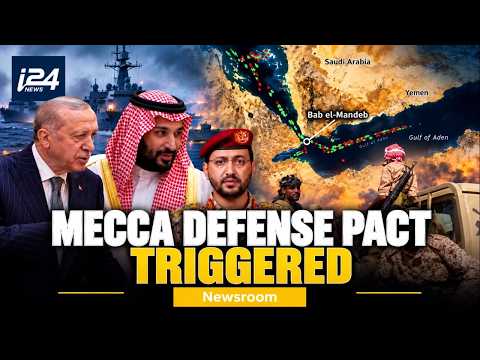
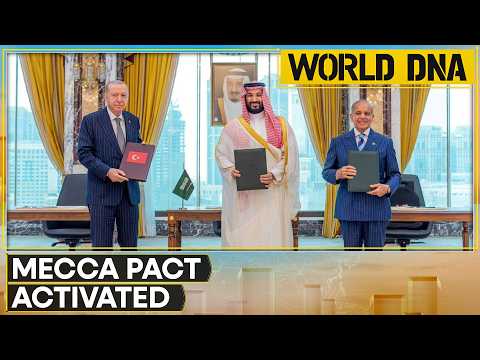
Turkey, Saudi Arabia, and Pakistan activated the Mecca Alliance for Defense on Monday, October 5, at an emergency Riyadh meeting — the pact's first use since its August signing. They agreed to move immediately toward deploying agreed military forces and capabilities to Saudi Arabia, which has absorbed repeated Houthi missile and drone strikes.

The pact treats an attack on any member as an attack on all, mirroring NATO's Article 5. The activation creates a standing structure: a Pakistani secretary-general, agreed force commitments, and a rapid-deployment plan. Turkey is a NATO member and Pakistan is nuclear-armed, so both militaries now sit behind Saudi defense.

Why it matters

Turkey, Saudi Arabia, and nuclear-armed Pakistan now share a defense commitment — Houthi attacks on the kingdom are no longer a one-nation fight.

Questions about this story

Free account needed to ask — your question is kept and asked for you right after sign-up. Answers are public.

No questions yet — be the first to ask.

Key Indicators

3
Alliance member states
Turkey, Saudi Arabia, and Pakistan signed and activated the tri-lateral pact.
1.4M
Combined active troops
Active military personnel across the three members, per the 2026 Global Firepower Index.
100
Fighter jets in Saudi counteroffensive
Coalition aircraft backing the Yemeni government's push against Houthi forces.
59 days
From signing to activation
Days between the August 7 signing and the October 5 emergency meeting.

Voices

Curated perspectives — historical figures and your fellow readers.

Ever wondered what historical figures would say about today's headlines?

Sign up to generate historical perspectives on this story.

People Involved

Organizations Involved

Timeline

September 2025 October 2026

8 events Latest: 2 days ago
Tap a bar to jump to that date
  1. Pakistan details supporting role

    Latest Statement

    Defense Minister Khawaja Asif says Pakistani forces provide reconnaissance while Saudis conduct combat.

  2. Collective deterrence activated in Riyadh

    Decision

    Emergency meeting activates the pact; Nauman Mahmood named first secretary-general. Rapid deployment agreed.

  3. Houthis strike two Saudi airports

    Attack

    Evening missile or drone strikes hit two airports, injuring at least three people.

  4. Pakistan calls pact defensive

    Statement

    Foreign Minister Ishaq Dar says the Mecca pact has no offensive agenda.

  5. Houthis launch Yemen offensive

    Conflict

    Group seizes territory from the Yemeni government and attacks Saudi cities and oil infrastructure.

  6. Mecca Alliance for Defense signed

    Agreement

    Turkey, Saudi Arabia, and Pakistan sign the collective defense pact amid regional conflict.

  7. Pakistani aircraft arrive at Saudi airbase

    Deployment

    Fighter and support aircraft arrived at King Abdulaziz airbase in the Eastern Province.

  8. Pakistan, Saudi Arabia sign mutual defense agreement

    Agreement

    Bilateral pact treating aggression against either country as aggression against both.

Scenarios

1

Turkey ratifies Mecca pact, deploys forces to Saudi Arabia

Possible Resolves by Q2 2027

Discussed by: Defense analyst Ereli, cited by Al Jazeera; The National

Turkey's parliament must approve the pact before Erdogan can ratify it, under Article 92 of the constitution. If approved, Turkish air-defense, naval, drone, and electronic warfare assets would deploy alongside Pakistani forces. Turkish law allows troop deployment without a parliamentary vote only if an existing international treaty to which Turkey is party demands it.

2

Deterrence holds, Houthi attacks on Saudi soil stop

Possible Resolves by Apr 30, 2027

Discussed by: Dania Thafer, Gulf International Forum

Analysts expect a short, high-intensity campaign to secure Saudi territory and the Bab al-Mandeb strait rather than another open-ended Yemen war. Saudi forces would retake Houthi-seized territory while Pakistan and Turkey reinforce air and missile defenses. If deterrence works, rocket and drone strikes on Saudi cities cease for an extended period.

3

War widens, Yemeni government forces push toward Sanaa

Uncertain Resolves by Q3 2027

Discussed by: Dania Thafer; Yemeni government forces statements cited by Al Jazeera

Yemeni government forces say they now aim to retake Sanaa, held by the Houthis since 2014. That goal goes beyond recapturing territory lost in recent weeks. Pursuing it would likely draw Pakistani and Turkish involvement deeper, risking a much longer war. Analysts note "all those responsible" in the alliance statement leaves room for striking Houthi sponsors and infrastructure.

Historical Context

3 moments from history that rhyme with this story — and how they unfolded.

September 2001

NATO Article 5 first invoked (2001)

After the September 11 attacks killed nearly 3,000 people in the United States, NATO invoked Article 5 for the first time in its 52-year history, declaring the attack an attack on all members. The alliance then joined operations in Afghanistan.

Then

NATO began military operations in Afghanistan, its first combat deployment as an alliance.

Now

Article 5 has been invoked only once; the Afghanistan campaign became NATO's longest war, lasting 20 years.

Why this matters now

The Mecca pact mirrors NATO's Article 5 language. Its first activation will show whether a collective defense clause produces real deployments or stays symbolic.

August 1990 - January 1991

Operation Desert Shield (1990-91)

After Iraq invaded Kuwait, the United States deployed troops to Saudi Arabia under Operation Desert Shield to deter an Iraqi advance into the kingdom. The deployment grew to about 540,000 US personnel.

Then

Iraq did not invade Saudi Arabia; a coalition forced Iraqi forces out of Kuwait in February 1991.

Now

The deployment set a precedent for foreign forces on Saudi soil, a politically sensitive step the kingdom has generally avoided since.

Why this matters now

Saudi Arabia's willingness to host Turkish and Pakistani forces under the Mecca pact recalls this precedent — foreign troops protecting Saudi territory during a regional crisis.

1967-1982

Pakistan-Saudi defense ties (1967-1982)

Pakistan began training Saudi military personnel in 1967, and a 1982 agreement formalized the deputation of Pakistani troops to the kingdom. Pakistani units have maintained a presence since.

Then

A standing Pakistani military presence in Saudi Arabia developed over decades.

Now

Pakistan deepened the relationship in September 2025 with a bilateral Strategic Mutual Defence Agreement.

Why this matters now

The Mecca pact builds on this long-standing relationship, widening Pakistan's role from bilateral trainer to partner in a tri-lateral defense structure.

Sources

(8)