


Pull to refresh
Logo
German courts hold Google liable for what its AI Overviews say

German courts hold Google liable for what its AI Overviews say

Rule Changes

Two regional courts treat AI search answers as Google's own statements, ending the link-only defense

Today: Google's Munich appeal ends in quiet settlement

Overview

Updated 1 hour ago

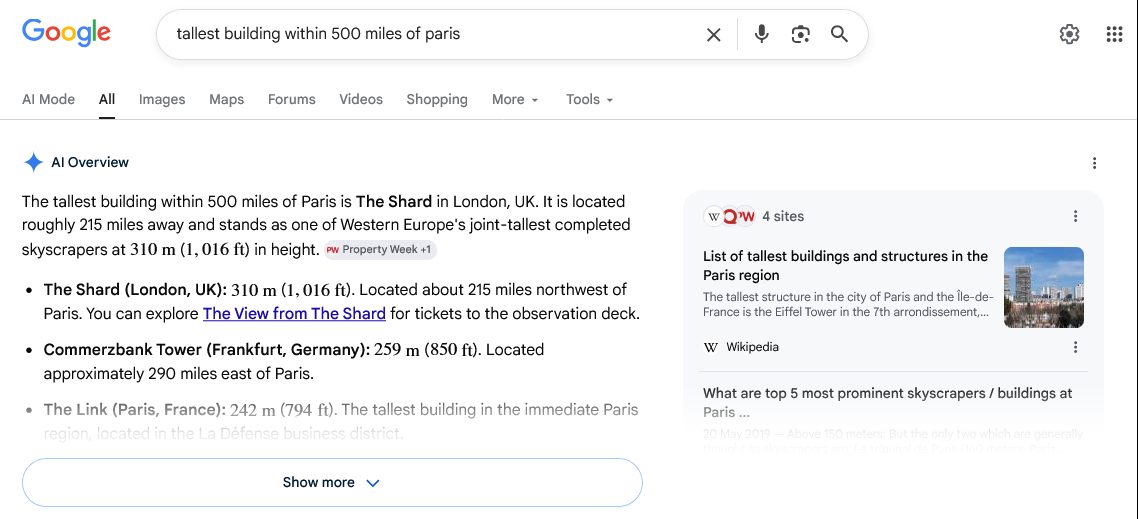
Google's AI search told users that a German anatomy professor had been convicted of sexual coercion and paid off a former secretary. The conviction belonged to a different man. On September 24, the Aachen Regional Court banned Google from repeating the claim, with fines up to €250,000 per violation.

Aachen is the second German court this year to rule that AI Overviews are Google's own statements, not links to third-party pages. The Munich Regional Court I reached the same conclusion in May. Together the rulings strip away the search-engine safe harbor that long protected Google, and they put Google in the position of a publisher that must verify what its AI says about real people.

Why it matters

Google can no longer claim its AI answers are neutral links in Germany—every false AI statement about a real person now carries publisher liability.

Questions about this story

Free account needed to ask — your question is kept and asked for you right after sign-up. Answers are public.

No questions yet — be the first to ask.

Key Indicators

2
German regional courts adopting the 'own content' theory
Munich (May) and Aachen (September) both ruled AI Overviews are Google's statements. A Hamburg court issued a similar order on September 29.
€250,000
Maximum fine per violation in Aachen order
Google Ireland faces this penalty if it repeats any of three false text variants about the physician.
0
Binding appellate rulings
Google's Munich appeal ended in a quiet settlement, so no higher court has validated or rejected the theory.
3
German courts addressing AI Overview liability
Munich, Aachen, and Hamburg regional courts have all weighed in during 2026.

Voices

Curated perspectives — historical figures and your fellow readers.

Ever wondered what historical figures would say about today's headlines?

Sign up to generate historical perspectives on this story.

People Involved

Organizations Involved

Timeline

September 2025 October 2026

8 events Latest: Today
Tap a bar to jump to that date

Scenarios

1

German appeals court cements AI Overview liability

Possible Resolves by Q2 2028

Discussed by: Legal analysts cited in Lawfare and the Oxford Business Law Blog

Google fails to settle again, and a party presses a case to an appellate court. A Higher Regional Court (Oberlandesgericht) or the Federal Court of Justice (BGH) rules that AI Overviews are Google's own substantive statements, not protected links to third-party content. That would make the theory binding law across Germany and likely force Google to pre-screen AI answers about private individuals or restrict the feature.

2

Google curbs AI Overviews for EU users

Likely Resolves by Q1 2027

Discussed by: The Decoder and Ars Technica, citing compliance cost pressures

Facing publisher-style liability for every false answer about a real person, Google narrows or disables AI Overviews and AI Mode in Germany or across the EU. It could restrict the feature to queries unlikely to name individuals, or geo-block it entirely pending a higher-court ruling. The EU AI Act obligations cited by the Munich court add regulatory pressure.

3

Higher court rejects the liability theory

Unlikely Resolves by Q2 2028

Discussed by: Google's own defense, as presented in the Munich and Aachen proceedings

Google wins on appeal in a future case. A higher court finds that AI Overviews are automated summaries of third-party content, functionally equivalent to links and therefore protected by the search-engine safe harbor. This would restore the notice-and-takedown regime for AI answers and undo the Munich and Aachen reasoning.

Historical Context

2 moments from history that rhyme with this story — and how they unfolded.

2012-2013

Bettina Wulff vs. Google autocomplete (2013)

Bettina Wulff, wife of Germany's then-president, sued Google after autocomplete paired her name with words like 'escort' and 'prostitute.' Google had declined to remove the suggestions when asked.

Then

German courts granted her interim relief, and Google removed the offending suggestions.

Now

Autocomplete suggestions, though machine-generated, were treated as content Google could be ordered to remove—not neutral passing-through of third-party data.

Why this matters now

Both cases apply the same principle: a machine-generated search output is still Google's statement about a person. AI Overviews extend that logic from a few suggested words to full paragraphs of freshly written text.

May 2014

Google Spain v. AEPD (2014)

The Court of Justice of the European Union ruled that Google, as a search engine operator, processes personal data and acts as a data controller. Spanish citizen Mario Costeja González had asked Google to remove links to an old newspaper notice about a debt auction he had long since resolved.

Then

Google had to honor removal requests for inadequate, irrelevant, or excessive personal data, creating the right to be forgotten in Europe.

Now

The ruling established that search engines are not neutral conduits but bear direct responsibility for what they display about people.

Why this matters now

The 2014 ruling already rejected the neutral-tool view of search engines. The German AI Overview rulings extend the same principle to a system that generates new statements rather than merely indexing what others wrote.

Sources

(9)