

Pull to refresh
Logo
Boeing wins Navy's F/A-XX sixth-generation fighter contract

Boeing wins Navy's F/A-XX sixth-generation fighter contract

New Capabilities

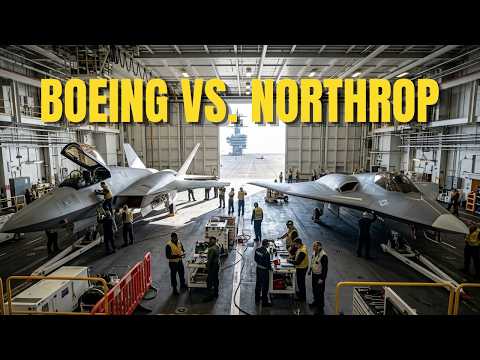
Boeing beat Northrop Grumman for the Navy's next-generation carrier fighter in a deal worth more than $20 billion

Yesterday: Navy awards F/A-XX contract to Boeing

Overview

Updated 1 hour ago

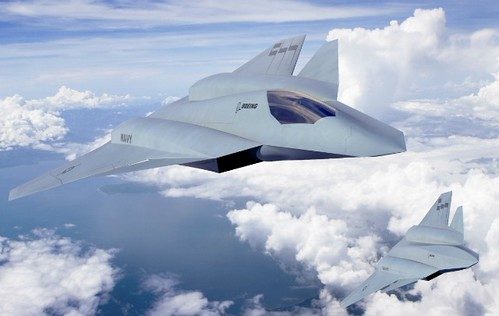
Boeing won the U.S. Navy's contract to build the F/A-XX, its sixth-generation carrier-based fighter. The deal is worth more than $20 billion for full-scale development, including multiple test aircraft for ground, airworthiness, systems, and weapons integration testing.

The win makes Boeing the sole supplier of sixth-generation fighters to the U.S. military — it already builds the Air Force's F-47, awarded in March 2025. The Navy's F/A-XX will replace F/A-18E/F Super Hornets and EA-18G Growlers in the 2030s, and will fly alongside F-35C Joint Strike Fighters and coordinate semi-autonomous drone wingmen.

Why it matters

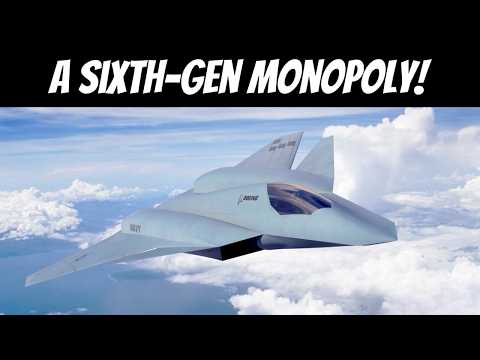
Boeing now holds both U.S. sixth-generation fighter programs, controlling the military's next two decades of air combat capability.

Questions about this story

Free account needed to ask — your question is kept and asked for you right after sign-up. Answers are public.

No questions yet — be the first to ask.

Key Indicators

> $20B
F/A-XX development contract value
Full-scale development phase, including multiple test aircraft.
2 of 3
Sixth-gen fighter programs won by Boeing
Boeing will make two of the three sixth-generation aircraft in U.S. military development.
2030s
F/A-XX service entry window
Fighter will augment, then replace, F/A-18E/F Super Hornets and EA-18G Growlers.
25%+
Range advantage over current Navy fighters
F/A-XX is expected to fly more than 25 percent farther before refueling, per Navy official John Donnelly.

Voices

Curated perspectives — historical figures and your fellow readers.

Ever wondered what historical figures would say about today's headlines?

Sign up to generate historical perspectives on this story.

People Involved

Organizations Involved

Timeline

March 2025 September 2026

5 events Latest: Yesterday
Tap a bar to jump to that date
  1. Navy awards F/A-XX contract to Boeing

    Latest Contract award

    Boeing wins the Navy's sixth-generation fighter contract, valued at more than $20 billion for full-scale development.

  2. F/A-XX decision imminent

    Reporting

    Reuters reports the Pentagon has selected an F/A-XX winner and could announce within weeks.

  3. Congress adds F/A-XX funding

    Legislation

    Lawmakers restore funding for the program, pushing back against the freeze with earmarks in the 2025 spending bill.

  4. Pentagon freezes F/A-XX program

    Policy decision

    Defense officials freeze the Navy fighter program, citing industrial base capacity concerns after the F-47 award.

  5. Boeing wins Air Force F-47 contract

    Contract award

    Air Force selects Boeing for sixth-generation fighter F-47, beating Lockheed Martin.

Scenarios

1

F/A-XX reaches first flight on schedule, enters service in 2030s

Likely Resolves by End of 2033

Discussed by: Pentagon officials and industry analysts quoted by Air & Space Forces Magazine

Boeing leverages F-47 design work, its St. Louis factory, and shared supply chains to hit development milestones. First flight comes in the early 2030s, with initial operational capability by mid-decade, matching the Pentagon's stated timeline that the fighter will fly for the Navy beginning in the 2030s.

2

F/A-XX program hits new delay or funding cut

Possible Resolves by End of 2029

Discussed by: Breaking Defense, Reuters — both noting the 2025 freeze

Congress and the Pentagon again clash over funding, as they did when the program was frozen in mid-2025. Boeing's concurrent F-47 and F/A-XX work strains engineering and supply-chain capacity, pushing milestones back. The Navy's insistence on the program faces renewed White House skepticism about running two sixth-gen fighters in parallel.

3

Boeing consolidates F-47 and F/A-XX into shared platform

Possible Resolves by End of 2029

Discussed by: The War Zone, which noted similarities between Boeing's F/A-XX concept rendering and official F-47 renders

Boeing increasingly shares design, production, and supply chains between the two fighters to manage costs and capacity. The Navy accepts commonality as a tradeoff for schedule and budget certainty. The Pentagon formally acknowledges the programs share major airframe and systems elements, a path the services took with the F-35's three variants.

Historical Context

2 moments from history that rhyme with this story — and how they unfolded.

1986-1991

Advanced Tactical Fighter selection (1986-1991)

In April 1991, the Air Force chose the Lockheed-Boeing-General Dynamics YF-22 over Northrop and McDonnell Douglas' YF-23 for the Advanced Tactical Fighter program. The YF-23 was widely seen as stealthier and faster, but the YF-22's maneuverability and cockpit visibility won over evaluators. The YF-22 became the F-22 Raptor.

Then

Lockheed built the F-22 Raptor, which entered service in 2005. Northrop exited crewed fighter design for decades.

Now

Northrop has not designed a U.S. crewed fighter since. The company now focuses on bombers (B-2, B-21), drones, and missiles.

Why this matters now

Northrop's F/A-XX loss mirrors its YF-23 defeat. The company is again shut out of crewed fighter production, now for at least another generation, while Boeing and Lockheed split the market.

1996-2001

Joint Strike Fighter selection (1996-2001)

In 2001, the Pentagon chose Lockheed Martin's X-35 over Boeing's X-32 for the Joint Strike Fighter program, worth hundreds of billions of dollars over its lifetime. Boeing's X-32 flew first but suffered from design compromises; Lockheed's X-35 demonstrated short takeoff, vertical landing, and supersonic flight in a single airframe. Lockheed went on to build the F-35 in three variants for the Air Force, Navy, and Marines.

Then

Lockheed won the largest fighter program in history, while Boeing lost its bid to extend its fighter line beyond the F/A-18 and F-15.

Now

The F-35 became the backbone of U.S. and allied airpower. Boeing's fighter business shrank, and by early 2025 the company faced the prospect of ending fighter production entirely.

Why this matters now

The 2025-2026 sixth-generation awards reverse that outcome. Boeing has locked up both F-47 and F/A-XX, while Lockheed is not building a sixth-generation fighter.

Sources

(8)