
Strong August jobs report raises odds of Fed rate hike
Rule ChangesPayrolls rose 162,000, nearly triple forecasts, keeping a September rate increase on the table
3 days ago: August payrolls surge 162,000, nearly triple forecastsNew here? Follow stories to track developments over time. Create a free account to get updates when stories you care about change.
Overview
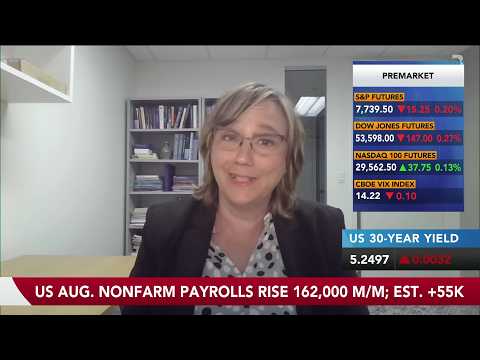
Updated 2 hours agoThe U.S. added 162,000 jobs in August, nearly triple the 56,000 economists expected. The unemployment rate held at 4.1%, and wages rose 3.1% from a year earlier.
The report shifts the Federal Reserve's calculus. Traders now price about a 60% chance the Fed raises its benchmark rate at the September 15-16 meeting, up from about 55% before the data. The decision now hinges on inflation numbers due next week.
Why it matters
If the Fed hikes, borrowing costs rise for mortgages, credit cards, and business loans across the country.
Questions about this story
Free account needed to ask — your question is kept and asked for you right after sign-up. Answers are public.
No questions yet — be the first to ask.
Key Indicators
Voices
Curated perspectives — historical figures and your fellow readers.
Play
Exploring all sides of a story is often best achieved with Play.
Higher or Lower
A number from this story, against one from elsewhere in the news — guess which is bigger, then keep the chain going. 5 rounds, 3 strikes; a miss costs a strike and resets your streak.
Keyboard: ↓/L lower · ↑/H higher
0 points — sign up to put that on the leaderboard.
Connections
Sixteen names from the news. Find the four hidden groups of four. Four mistakes max.
Sign up to keep a daily streak — a new puzzle lands every day.
Exit debate?
Your progress in this debate will be lost.
- 1 Two AI personas square off on this story.
- 2 You predict who'll win each round — correct picks earn XP.
- 3 One crossfire question is yours to fire. Pick it carefully.
Couldn't generate a topic
Select Your Champions
Choose one persona for each side of the debate
DEBATE TOPIC
Choose personas with different perspectives for a more dynamic debate.
Select debater for this side:
No debate personas available right now.
Select debater for this side:
No debate personas available right now.
Who's Got This Round?
Make your prediction before the referee scores
The referee scores both sides on
Round Results
Set the Crossfire
Pick the question both personas must answer in the final round
Debate Oracle! You called every round!
Sharp Instincts! You know your debaters!
The Coin Flip Strategist! Perfectly balanced!
The Contrarian! Bold predictions!
Inverse Genius! Try betting the opposite next time!
XP Breakdown
Prediction History
People Involved
Organizations Involved
The U.S. central bank, deciding whether to raise its benchmark interest rate.
The federal agency that produces the monthly employment report.
Timeline
July 2026 September 2026
-
Fed policy meeting begins
Upcoming Upcoming eventThe Federal Open Market Committee meets to decide on interest rates, with a hike now seen as about 60% likely.
-
August payrolls surge 162,000, nearly triple forecasts
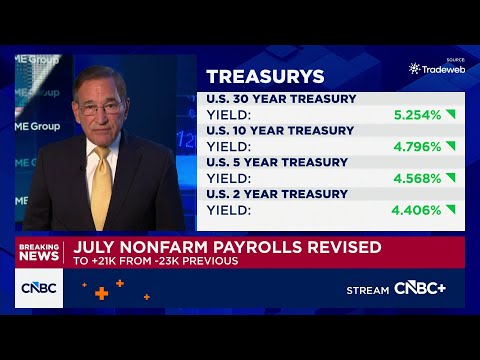
Latest Economic dataThe BLS reported 162,000 jobs added in August. June and July were revised up by a combined 55,000. Restaurants and bars led with 59,000 jobs.
-
July payrolls fall 23,000
Economic dataThe BLS reported a 23,000 job loss in July, the first decline in months, raising recession fears.
-
June jobs report shows weak 20,000 gain
Economic dataThe BLS reported June payroll growth of 20,000, well below expectations, signaling a slowdown.
Historical Context
2 moments from history that rhyme with this story — and how they unfolded.
2019 'no-hire, no-fire' labor market
Unemployment sat at 50-year lows, but hiring was slow and layoffs were rare. Economists called it a 'no-hire, no-fire' labor market.
The Fed cut rates three times in 2019 despite low unemployment.
Showed that low unemployment alone doesn't force the Fed to hike.
PBS explicitly compares today's market to this period, noting the same dynamic of low hiring and low firing.
2022-2023 inflation cycle
The Fed raised rates from near zero to over 5% to fight the worst inflation in 40 years. Each strong jobs report reinforced the case for aggressive hikes.
Inflation cooled from 9% to around 3%, but the labor market stayed surprisingly strong.
The episode showed the Fed will prioritize inflation control even when jobs data is strong.
Today's situation mirrors that trade-off: strong hiring versus persistent inflation.
