
Pull to refresh
Logo
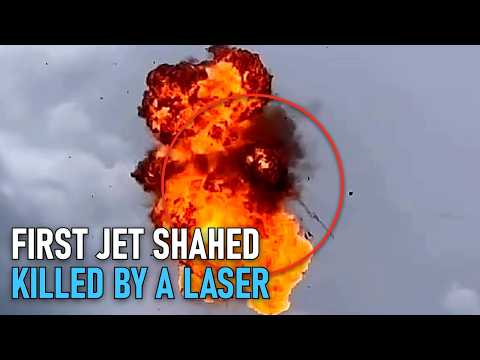
Ukraine downs a Russian jet drone with a laser for the first time

Ukraine downs a Russian jet drone with a laser for the first time

New Capabilities

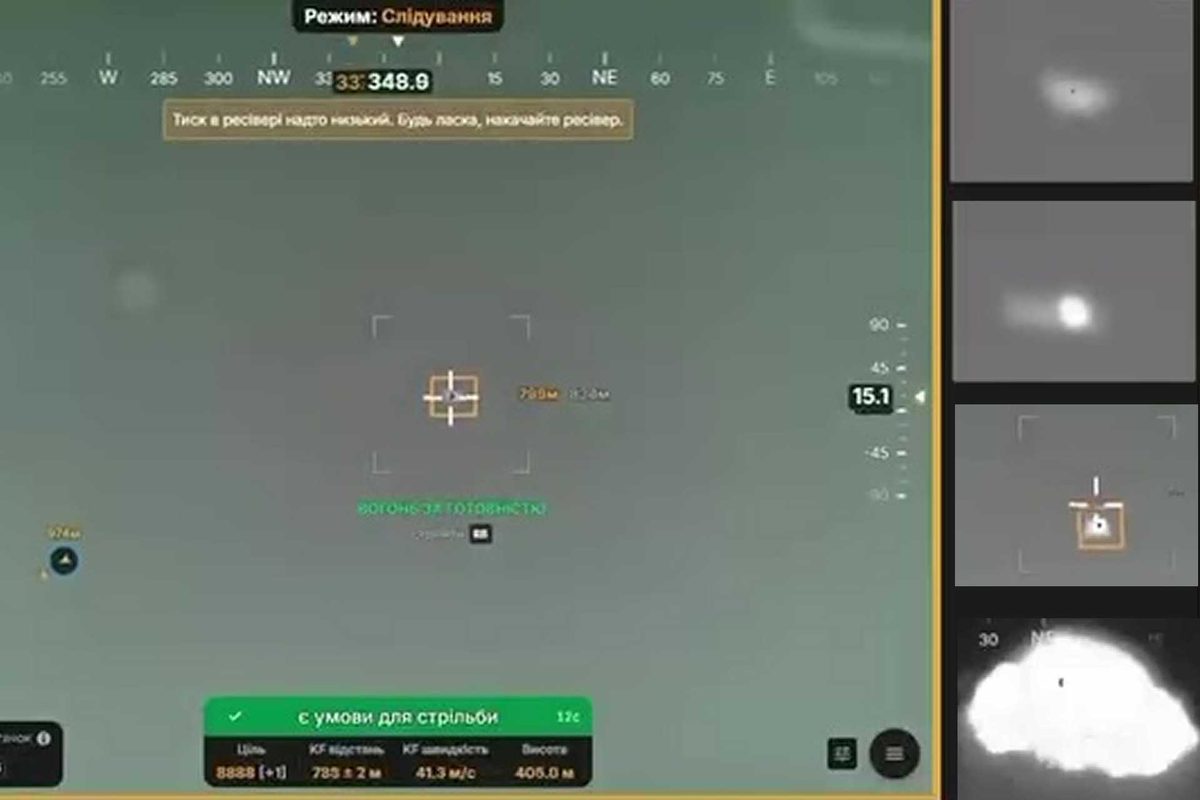
A four-kilowatt prototype named Blysk, built by a private firm and run by a private air-defense crew, hit a jet-powered Geran. Brave1 says it is not ready for mass production.

Overview

Updated 30 minutes ago

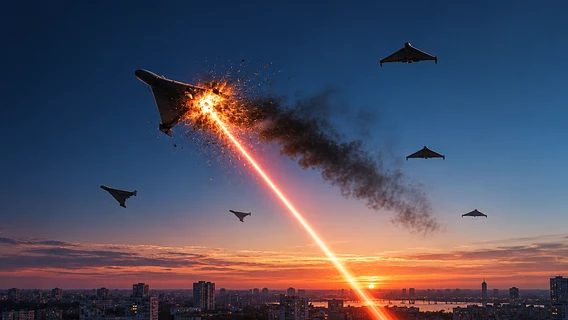
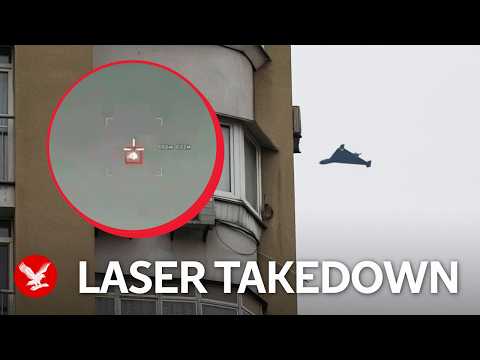
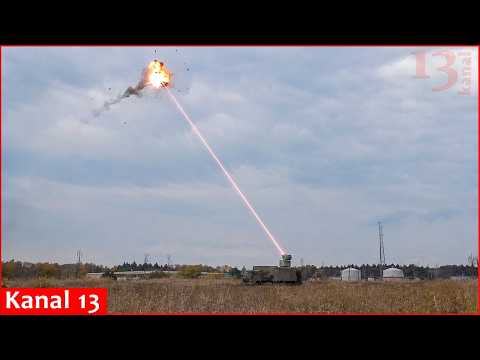
For nearly five years, Ukraine has brought down Russian drones with machine guns, shoulder-fired missiles and, more recently, interceptor drones. This week, a private air-defense crew used a four-kilowatt laser instead, downing a jet-powered Geran drone.

Brave1, the state defense-technology group that confirmed the kill, called it the first combat laser interception of a jet-powered drone. It also said the system is experimental, one of at least seven laser projects in the country, and not ready for mass deployment.

Why it matters

If combat lasers hold up, Ukraine can stop firing interceptor missiles at drones a beam can hit for the cost of electricity.

Questions about this story

Free account needed to ask — your question is kept and asked for you right after sign-up. Answers are public.

No questions yet — be the first to ask.

Key Indicators

4 kW
Blysk laser power output
Reported output of the Carmine Sky system, low-power by laser-weapon standards.
1 km
Blysk effective range
Roughly 0.6 miles, per BBC Ukraine reporting cited by the Kyiv Post.
3,000+
Jet-powered drones Russia launched in September 2026
Up from about 350 in June, according to Ukraine's Air Force.
60%
Share of jet drones Ukraine intercepted in September 2026
Against 90–95% for slower propeller-driven models.
7
Ukrainian teams working on laser air defense
Brave1 says at least seven groups are developing the technology.
460+
Drones Russia says it downed heading for Moscow region
Figure given by Moscow Mayor Sergei Sobyanin for the overnight window into Saturday.

Voices

Curated perspectives — historical figures and your fellow readers.

Sign up to generate historical perspectives on this story.

People Involved

Organizations Involved

Timeline

June 2026 November 2026

9 events Latest: Today
Tap a bar to jump to that date
  1. Russian drone attacks damage Dnipro transport infrastructure; five injured

    Today Strike

    More than 20 attacks across four Dnipropetrovsk districts, including a 15-year-old boy hurt.

  2. Brave1 confirms the first combat laser kill of a jet drone

    Confirmation

    The cluster calls laser air defense experimental and not ready for mass deployment.

  3. Adviser publishes footage of a drone falling in flames

    Statement

    Beskrestnov says the Blysk laser downed a Geran jet drone.

  4. Blysk laser enters service defending Kyiv

    Deployment

    Developer Carmine Sky announces the system is guarding the capital.

  5. Private air-defense units have downed more than 60 targets

    Milestone

    Defense Ministry tally covers mostly drones, not missiles.

  6. Ukraine deploys an interceptor that can kill jet-powered Shaheds

    Deployment

    Announced after a Security Service of Ukraine briefing.

  7. Zelensky orders fast-tracked interceptor drone development

    Policy

    The order targeted the gap against jet-powered Shaheds.

  8. Jet-drone launches hit 3,000 a month; intercepts fall to 60%

    Escalation

    Faster targets outran machine guns and shoulder-fired missiles.

  9. Russia fires about 350 jet-powered drones at Ukraine

    Escalation

    The Air Force's baseline month before jet-drone launches multiplied.

Scenarios

1

Blysk stays a one-site prototype through mid-2027

Likely Resolves by Q2 2027

Discussed by: Brave1 and Carmine Sky, both of which described the system as experimental and still in testing

Brave1's own statement is the strongest signal here: a first kill is not a production line. Weather is the constraint. Persistent cloud and fog over Kyiv had already blocked the system from engaging targets before this intercept, and lasers lose power as a beam disperses through moisture. A four-kilowatt beam also needs seconds on a target as large as a Shahed, which leaves little margin against a drone moving at 400 to 600 kilometers per hour.

2

Ukraine fields lasers at several sites alongside interceptor drones

Possible Resolves by End of 2027

Discussed by: Ukrainian officials quoted on the Private Air Defense program, which already runs about 100 companies and half as many active combat units

The private air-defense model gives laser developers something a state procurement program would not: dozens of sites willing to test equipment against real targets. If Carmine Sky solves the weather problem or pairs the laser with radar cueing and gun turrets, the system could become one layer in a mixed defense rather than a standalone weapon. Cost is the pull: each shot draws electricity instead of an interceptor missile.

3

Russia's jet drones keep outrunning Ukraine's new defenses

Possible Resolves by End of 2027

Discussed by: Ukraine's Air Force, which reported the 60% jet-drone intercept rate, and Ukrainian officials warning of a twelvefold rise in jet-drone launches

The laser is one answer to a problem that has grown faster than any single counter. Russia's jet-drone launches rose from roughly 350 in June to more than 3,000 in September, and Ukraine's intercept rate fell well below its record against propeller models. If launches keep climbing, lasers arriving a few units at a time will not change the monthly interception figures, and the interceptor-drone and electronic-warfare programs will carry the load.

Historical Context

3 moments from history that rhyme with this story — and how they unfolded.

2020s

Israel's Iron Beam enters service (2020s)

Israel developed a high-power laser air-defense system designed to intercept rockets, mortars and drones for the cost of the electricity it burns rather than the price of an interceptor missile. Ukrainian coverage cites it as one of the first high-powered laser air-defense systems to enter military service.

Then

It gave military planners a working example of a laser as a fielded layer of air defense rather than a laboratory project.

Now

It set the benchmark against which smaller systems like Blysk are now measured, even though the power gap between them is large.

Why this matters now

Blysk follows Iron Beam's logic at a fraction of the power, which is why Brave1 describes the Ukrainian system as experimental rather than operational.

June-August 1944

The V-1 campaign over Britain (1944)

Germany fired pulsejet-powered flying bombs at London, moving faster than most interceptors could catch. Britain rebuilt its defense into a layered belt of fighters, anti-aircraft guns with new gun-laying radar and proximity fuzes, and barrage balloons along the coast.

Then

The reorganized belt raised the share of incoming bombs destroyed, mostly by guns rather than fighters.

Now

It established the pattern that a fast unmanned weapon forces a new defensive layer instead of better use of the old one.

Why this matters now

Jet-powered Gerans flying at 400 to 600 kilometers per hour are doing to machine guns and shoulder-fired missiles what the V-1 did to wartime fighter interception.

1996-2011

US Airborne Laser retired (2011)

The United States fitted a megawatt-class chemical laser into a Boeing 747 to shoot down ballistic missiles shortly after launch. The aircraft flew repeated tests but never scored a combat intercept. Defense Secretary Robert Gates moved to cancel the program, and the aircraft was retired in 2011.

Then

The program ended without a deployed weapon and left laser air defense looking like a permanent prototype.

Now

It became the standard cautionary example for why a successful test does not mean a fielded system.

Why this matters now

Brave1's warning that a first kill does not mean the technology is ready for mass deployment is the lesson of the Airborne Laser restated in one sentence.

Sources

(9)