


Pull to refresh
Logo
Uncontacted Awá emerge from Amazon forest to ask for food

Uncontacted Awá emerge from Amazon forest to ask for food

Force in Play

Twenty to 30 isolated hunter-gatherers approached a government post in Maranhão, where logging and ranching have pressed into their territory

Overview

Updated 1 hour ago

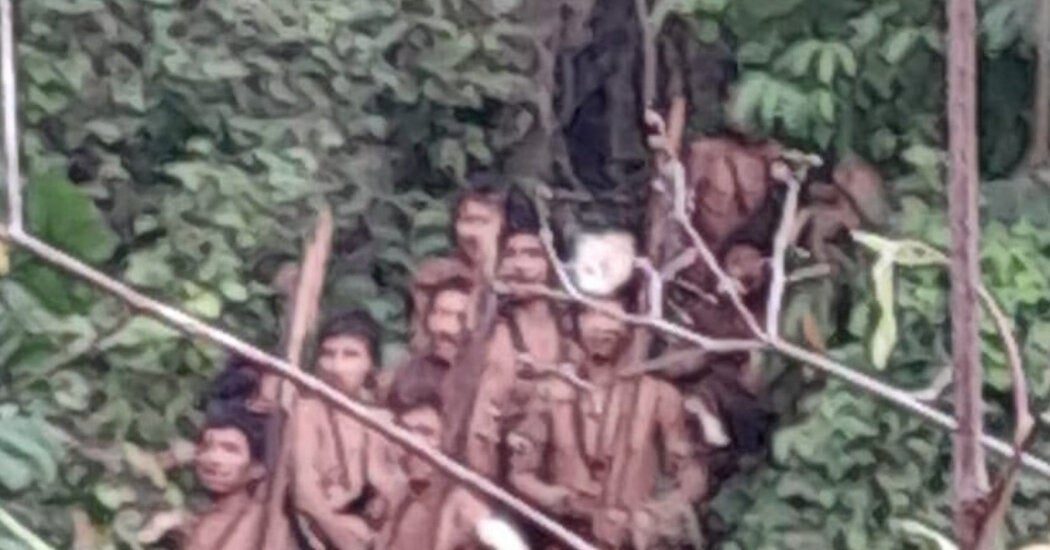
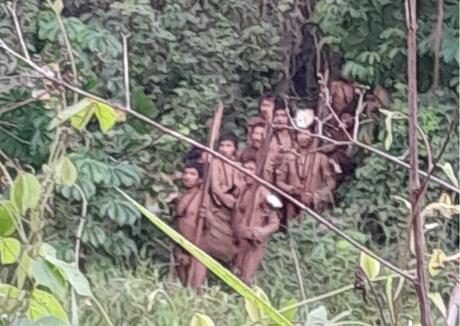
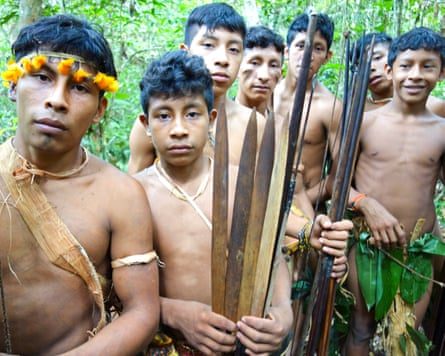
On the morning of November 16, roughly 20 to 30 Awá walked out of the forest in Brazil's Maranhão state and approached a government access control post beside the Guajajara village of Tawari. They asked for food. Survival International called the encounter historic; Brazil's Indigenous ministry called the information preliminary.

Villagers and Coapima, an organization representing Indigenous groups in Maranhão, reported clear signs of severe weight loss, particularly among children and elderly people. Brazil's policy toward isolated peoples is built on not contacting them. A group that leaves the forest to ask for food is telling the state that the territory is no longer feeding them.

Why it matters

Brazil's no-contact policy is meant to keep isolated groups alive. When people walk out hungry, the forest buffer it depends on has already failed.

Questions about this story

Free account needed to ask — your question is kept and asked for you right after sign-up. Answers are public.

No questions yet — be the first to ask.

Key Indicators

20–30
Awá in the approaching group
Estimates from Brazil's Indigenous ministry and Indigenous organizations range from about 20 to 30 people.
3
Indigenous groups in Arariboia
The territory is home to three Indigenous groups, some of whose members live in isolation.
10,000+
People living in the territory
Arariboia covers an expanse described as roughly twice the size of Rhode Island.
2015
Previous Awá contact episode
Three Awá left the forest that year after loggers moved in; they had contracted flu and tuberculosis.

Voices

Curated perspectives — historical figures and your fellow readers.

Sign up to generate historical perspectives on this story.

People Involved

Organizations Involved

Timeline

1980 November 2026

7 events Latest: Yesterday
Tap a bar to jump to that date
  1. Federal agencies activate a Situation Room

    Latest Government response

    Funai, the Indigenous ministry and the Indigenous health secretariat convened an emergency coordination room focused on Awá health and autonomy.

  2. Survival International calls the encounter historic

    Statement

    The advocacy group said the Awá were suffering from the advance of loggers and ranchers into their territory.

  3. Indigenous ministry confirms encounter, details preliminary

    Statement

    The Ministry of Indigenous Peoples confirmed the approach and said authorities were still assessing it.

  4. Coapima reports severe emaciation in the group

    Statement

    The Maranhão Indigenous organization said villagers noticed clear signs of severe weight loss, especially in children and the elderly.

  5. Awá approach Funai post near Tawari and ask for food

    Contact

    Around 20 to 30 isolated Awá emerged near the access control post in the Arariboia Indigenous Territory.

  6. Three Awá leave the forest after hearing chainsaws

    Contact

    Two sisters and a child took refuge in a settled community, carrying flu and tuberculosis and too weak to hunt.

  7. Grande Carajás project cuts into Awá territory

    Territorial pressure

    An iron mine, railway and highway network built from the 1980s brought loggers and settlers into the forest the Awá depended on.

Scenarios

1

Awá return to the forest and are monitored, not contacted

Possible Resolves by May 31, 2027

Discussed by: Funai and the Ministry of Indigenous Peoples, both of which describe non-contact as the policy's aim

The group goes back into the territory after receiving food, and Funai's Awá protection front tracks them from a distance without initiating further interaction. This is the outcome Brazilian policy is designed to produce, and officials stress that a single approach does not end a group's isolated status.

2

The group settles near Tawari under continuing food and health support

Possible Resolves by Nov 30, 2027

Discussed by: Survival International and Coapima, both of which point to the 2015 precedent

Hunger and illness keep the Awá close to the Guajajara village, and federal health teams begin regular care. The 2015 case followed this path: three Awá left the forest, contracted tuberculosis, and never returned to isolation. Settlement brings sustained medical attention and also the risk of epidemic disease.

3

Federal operation removes illegal loggers from Arariboia

Uncertain Resolves by Q2 2027

Discussed by: Survival International and the Guajajara Forest Guardians, who have asked for state enforcement for years

The encounter creates pressure for an enforcement push by federal environment and Indigenous agencies, with arrests or equipment seizures inside the territory. The Guardians have carried out this work themselves, at the cost of members' lives, and a federal operation would shift that burden to the state.

4

Health teams confirm an outbreak among the contacted Awá

Possible Resolves by Feb 28, 2027

Discussed by: Coapima and Survival Brasil, citing the 2015 respiratory and tuberculosis cases

Isolated groups have little immunity to common infections. If the group stays near a settled village, a single flu or tuberculosis case can spread quickly through people already weakened by hunger. Health surveillance would then become the dominant part of the response.

Historical Context

3 moments from history that rhyme with this story — and how they unfolded.

December 2015

Awá contact in Maranhão (2015)

Three Awá — sisters Amakaria and Jakarewyj, and Jakarewyj's son Irahoa — left the forest after hearing chainsaws and took refuge in a settled community. They arrived with respiratory infections and tuberculosis and were too weak to hunt for themselves.

Then

They received treatment and food in a community that already had contact with non-Indigenous society.

Now

They did not return to isolation, becoming the reference case for what a contact episode looks like when driven by logging and hunger.

Why this matters now

The current group's condition — severe weight loss, a request for food — matches the pattern that preceded the 2015 case.

1980s onward

Projeto Grande Carajás (1980s)

Brazil built one of the world's largest mining complexes in the eastern Amazon, including an open-pit iron mine, a railway and highways through forest the Awá used. Loggers, ranchers and settlers followed the access routes.

Then

Forest cover in the Awá's range shrank and isolated families were pushed into contact with outsiders.

Now

The Arariboia Indigenous Territory became a continuous enforcement problem, with illegal logging persisting decades after the land was demarcated.

Why this matters now

The infrastructure that brought pressure in the 1980s is the same infrastructure today's loggers use to reach Awá territory.

November 2018

North Sentinel Island (2018)

An American missionary, John Allen Chau, was killed by Sentinelese islanders after being ferried to the island in an attempt to make contact. India restricts access to the island and does not pursue contact.

Then

The killing ended the attempt and prompted debate about enforcement of the island's exclusion zone.

Now

The case became the standard reference for why no-contact rules exist: encounters carry fatal disease risk in both directions.

Why this matters now

Brazil's non-contact policy rests on the same reasoning that restricts North Sentinel — the danger is highest for the isolated group.

Sources

(8)