


Pull to refresh
Logo
Brazil recognizes Kayapó and Yudjá possession of Raoni's birthplace

Brazil recognizes Kayapó and Yudjá possession of Raoni's birthplace

Rule Changes

A declaratory order covers 362,243 hectares in Mato Grosso and Pará; about 200 farms and a presidential decree stand between the territory and full demarcation

Overview

Updated 1 hour ago

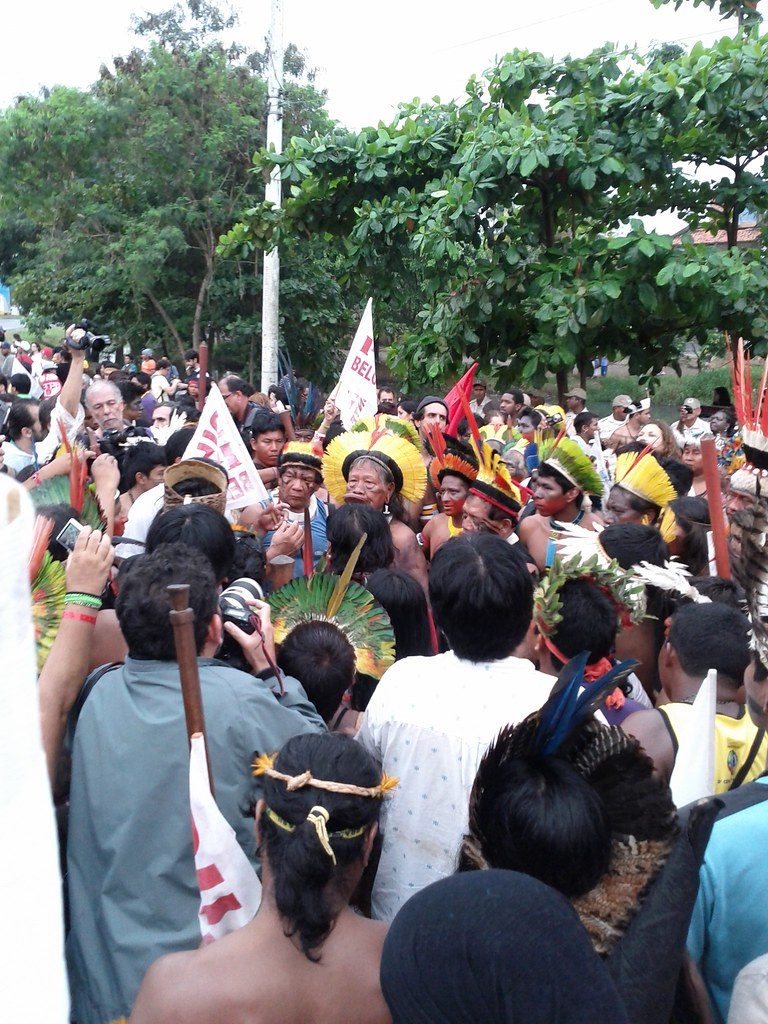
Chief Raoni Metuktire, 94 and receiving palliative care for gastrointestinal cancer, met President Luiz Inácio Lula da Silva at his bedside in Peixoto de Azevedo on Nov. 19. Hours later, Brazil's Justice Ministry declared the 362,243-hectare Kapôt Nhĩnore territory the permanent possession of the Mẽbêngôkre (Kayapó) and Yudjá (Juruna) peoples, the land where Raoni was born.

The order is one stage, not the finish line. Roughly 200 non-Indigenous farms overlap the territory, and only a presidential homologation decree completes the demarcation.

Why it matters

Fully recognized Indigenous land is one of Brazil's cheapest barriers to Amazon deforestation. This territory lost 58,000 hectares of forest by 2026.

Questions about this story

Free account needed to ask — your question is kept and asked for you right after sign-up. Answers are public.

No questions yet — be the first to ask.

Key Indicators

362,243 ha
Territory size
Kapôt Nhĩnore spans Vila Rica and Santa Cruz do Xingu in Mato Grosso and São Félix do Xingu in Pará.
83%
Forest cover
Share of the territory still forested, according to the presidential palace.
~200
Overlapping rural properties
Farms and land claims inside the territory that still have to be resolved.
58,000 ha
Deforested by 2026
Up from 4,178 hectares in 2000, per Funai figures cited by the palace.
20
Territories fully demarcated since 2023
Out of nearly 800 Indigenous lands in Brazil, about 60% are fully regularized.

Voices

Curated perspectives — historical figures and your fellow readers.

Sign up to generate historical perspectives on this story.

People Involved

Organizations Involved

Timeline

1950 November 2026

7 events Latest: 2 days ago
Tap a bar to jump to that date
  1. Lula visits Raoni and signs the declaratory order

    Latest Policy

    The Justice Ministry declared Mẽbêngôkre and Yudjá permanent possession of 362,243 hectares; Lula acknowledged roughly 200 properties still overlap it.

  2. Funai approves identification and delimitation report

    Administrative

    The agency signed off on the studies, which then drew legal challenges.

  3. Funai opens technical group on the territory

    Administrative

    The agency began the anthropological and land surveys needed to identify and delimit the area.

  4. Colonization fronts displace Mẽbêngôkre from the Xingu basin

    Historical

    Advancing settlement pushed Indigenous communities off land that became Kapôt Nhĩnore, including old villages and burial sites.

Scenarios

1

Lula signs the homologation decree

Possible Resolves by End of 2027

Discussed by: Planalto and the Ministry of Indigenous Peoples, which describe the Nov. 19 order as a stage before presidential homologation

Lula told the ceremony he would work to settle the overlapping properties and the cases at the Supreme Court. A homologation decree would turn recognized possession into fully regularized Indigenous land, the status that carries the strongest legal protection against land clearing.

2

A court freezes the order

Possible Resolves by Q2 2027

Discussed by: Rural producers' representatives, who have argued demarcation carries severe economic costs for non-Indigenous residents

About 200 properties sit inside the territory, and the process has already drawn legal challenges that the October appellate ruling answered. A new injunction at the regional court or the Supreme Federal Court could suspend the Nov. 19 order and push the file back into litigation.

3

Raoni dies before homologation

Likely Resolves by End of 2027

Discussed by: Raoni's family, who called the order his last wish, and Lula, who said he wanted the land settled while Raoni was alive

Raoni is 94 and in palliative care for an aggressive gastrointestinal cancer. If he dies before a decree is published, the final step passes to the next administration, and the territory's fate depends on whoever holds the presidency after the 2026 election.

Historical Context

3 moments from history that rhyme with this story — and how they unfolded.

1950s

Displacement from the Xingu basin (1950s)

Colonization fronts moving into the Xingu basin pushed Mẽbêngôkre communities off the land that became Kapôt Nhĩnore. When the neighboring Capoto/Jarina territory was regularized in the 1990s, this area was left outside its perimeter.

Then

Families lost access to villages, gardens and old burial sites inside the territory.

Now

The exclusion left the area open to ranching, and later soy, while the claim sat unresolved for decades.

Why this matters now

Explains why the government describes the Nov. 19 order as restoring possession rather than granting new land.

2012

Federal court faults the Union for delay (2012)

Acting on a suit by the Federal Public Ministry, a federal court ruled the Union had taken too long to regularize the territory. Funai set up a technical group in 2015 to produce the anthropological and land studies.

Then

The ruling put the demarcation on a legal clock.

Now

Funai approved its identification and delimitation report in July 2023, eleven years after the ruling.

Why this matters now

The Nov. 19 order is the administrative step that follows those studies.

2023-2026

Lula restarts demarcations (2023-2026)

Lula returned to office in 2023 and resumed signing Indigenous territories that had stalled. His government has fully demarcated 20 territories in three years; about 60% of Brazil's nearly 800 Indigenous lands are fully regularized.

Then

New demarcations drew resistance from agribusiness and legal challenges.

Now

The remaining territories stay under pressure from ranching, illegal gold mining and logging.

Why this matters now

Kapôt Nhĩnore is the highest-profile case in that batch because of Raoni's international standing.

Sources

(9)