Anchor

Lawsuit follows August signal failures and a 10-day shutdown of the Red Line's Cambridge branch.
2 days ago: Tringali sues MBTA over Aug. 10 delayNew here? Follow stories to track developments over time. Create a free account to get updates when stories you care about change.
Overview
Updated 2 hours agoRev. Zachariah Tringali boarded the Red Line at Harvard Square on Aug. 10. He reached Quincy more than two hours later, after signal breakdowns, crowded cars, and what he described as a car without working air conditioning. On Sept. 1, he sued the Massachusetts Bay Transportation Authority (MBTA) in U.S. District Court in Boston.
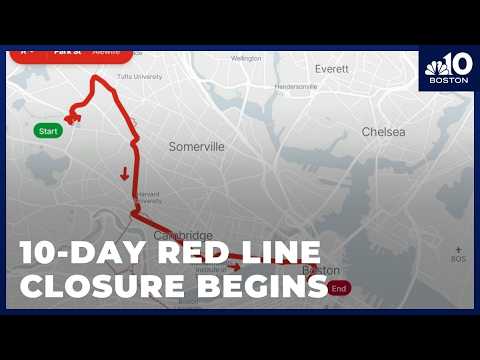
The ride came less than two weeks after the MBTA closed the Red Line between Alewife and Park Street for 10 days of track and signal work. The agency says closures like that are the price of fixing a system that has struggled with reliability for years. The lawsuit turns a familiar commuter complaint into a legal claim.
Why it matters
The lawsuit makes the MBTA's chronic Red Line failures a federal legal liability, not just a commute complaint.
Questions about this story
Free account needed to ask — your question is kept and asked for you right after sign-up. Answers are public.
No questions yet — be the first to ask.
Key Indicators
130 min
Tringali's Aug. 10 ride time
Harvard Square to Quincy on the Red Line, according to the lawsuit.
10 days
July Red Line closure
Alewife to Park Street was shut for track, signal, and repair work.
70 min
Shuttle bus time during closure
The MBTA told riders to budget 70 minutes from Alewife to Park Street, versus about 20 minutes normally.
3
Federal lawsuits filed by Tringali in 2026
Privacy suits against Ford and Flock, plus the MBTA case.
Related Media
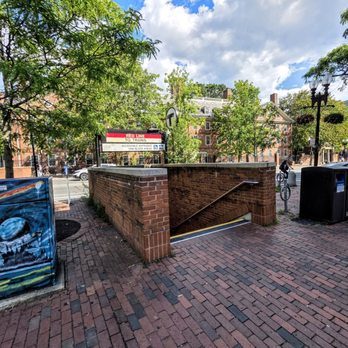
HARVARD SQUARE MBTA STATION - RED LINE & BUSES - Updated August 2026 - 59 Photos & 10 Reviews - 18 Brattle St, Cambridge, Massachusetts - Train Stations - Phone Number - Yelp
914 views
2:29
Family of man dragged to death on Red Line sues MBTA
CBS Boston
13.6K views
2:39
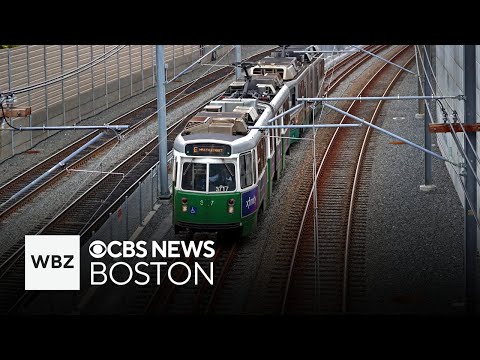
Federal government threatens to withhold MBTA money over ...
CBS Boston
895 views
1:34
The Red Line shut down for 10 days: 'It is what it is'
NBC10 Boston
Images from Openverse under Creative Commons licenses. Videos from YouTube.
Voices
Curated perspectives — historical figures and your fellow readers.
Play
Exploring all sides of a story is often best achieved with Play.
Most of these play right now — no account needed. Sign up to save scores, keep a streak, and unlock Debate and Predict.
Log in
Sign Up
Higher or Lower
A number from this story, against one from elsewhere in the news — guess which is bigger, then keep the chain going. 5 rounds, 3 strikes; a miss costs a strike and resets your streak.
Example
Anchor
EU tariff revenue
$52B
Big for this kind of number
Mystery
Pentagon AI contract
?
Round 1
Streak: 0
Mystery
?
Keyboard: ↓/L lower · ↑/H higher
0 pts
Best streak: 0 · Rounds: 0
0 points — sign up to put that on the leaderboard.
Now try on this story
Connections
Sixteen names from the news. Find the four hidden groups of four. Four mistakes max.
Loading today's puzzle…
0/4 groups
Mistakes
Sign up to keep a daily streak — a new puzzle lands every day.
Now try on this story
Exit debate?
Your progress in this debate will be lost.
How it works
- 1 Two AI personas square off on this story.
- 2 You predict who'll win each round — correct picks earn XP.
- 3 One crossfire question is yours to fire. Pick it carefully.
Couldn't generate a topic
Select Your Champions
Choose one persona for each side of the debate
DEBATE TOPIC
Choose personas with different perspectives for a more dynamic debate.
SIDE A (PRO)
Select debater for this side:
No debate personas available right now.
SIDE B (CON)
Select debater for this side:
No debate personas available right now.
VS
Get ready to make your prediction...
Round of
Claim
Evidence
Stakes
Crossfire Answer
Closing Statement
Claim
Evidence
Stakes
Crossfire Answer
Closing Statement
Your Crossfire Question
Generating arguments...
Who's Got This Round?
Make your prediction before the referee scores
The referee scores both sides on
Correct predictions earn +20 XP
· Press 1 or 2 to pick
Evidence
40%
Logic
30%
Detail
20%
Style
10%
Round Results
Your Pick
Not this time
(%)
Overall Score
/10
Your Pick
Not this time
(%)
Overall Score
/10
Set the Crossfire
Pick the question both personas must answer in the final round
Crafting crossfire questions...
Choosing a question earns +10 XP crossfire bonus
🏆
Total XP Earned
Cred Change
Predictions
Debate Oracle! You called every round!
Sharp Instincts! You know your debaters!
The Coin Flip Strategist! Perfectly balanced!
The Contrarian! Bold predictions!
Inverse Genius! Try betting the opposite next time!
XP Breakdown
Base completion
+20 XP
Rounds played ( rounds x 5 XP)
+ XP
Correct predictions ( correct x 20 XP)
+ XP
Crossfire bonus
+10 XP
Accuracy
%
Prediction History
Round
You picked:
✓
✗
Now try on this story
Keep debating to level up your credibility and unlock achievements
People Involved
Organizations Involved
Timeline
July 2026 September 2026
3 events
Latest: 2 days ago
-
Tringali sues MBTA over Aug. 10 delay
Latest LegalThe Cambridge minister files the case himself in U.S. District Court in Boston over the two-hour ride and the car's condition.
-
Red Line signal breakdowns cause hours-long delays
Service disruptionA series of signal failures forces delays and shuttle bus service. Tringali's trip takes more than two hours.
-
MBTA shuts Red Line between Alewife and Park Street
Service disruptionThe 10-day closure replaces trains with shuttle buses for track, signal, and repair work.
Historical Context
2 moments from history that rhyme with this story — and how they unfolded.
January-March 2015
MBTA Snow Crisis (2015)
Back-to-back snowstorms buried Boston under more than 100 inches of snow. The MBTA's subway and commuter rail ground to a halt, stranding riders and forcing weeks of partial shutdowns. The agency's general manager resigned.
Then
Governor Charlie Baker created a fiscal control board, hired a new general manager, and began a long-term investment program.
Now
The crisis became shorthand for how deferred maintenance and underfunding can break a transit system.
Why this matters now
The same system now faces the consequences of that underfunding, with closures and signal failures on the Red Line.
June 2016-June 2017
Washington Metro SafeTrack (2016-2017)
The Washington Metropolitan Area Transit Authority, facing a safety review and years of deferred maintenance, launched SafeTrack, a year-long program of station closures, single-tracking, and overnight work. It was the largest repair effort in Metro's history.
Then
Riders endured longer waits and crowded trains for months.
Now
WMATA said the program reduced track-caused delays and improved safety after the work ended.
Why this matters now
It is the clearest recent example of a U.S. transit agency choosing short-term pain for long-term reliability, the same tradeoff the MBTA is making.
Sources
(4)Related Stories
MBTA shifts from piecemeal repairs to prolonged shutdowns
Built World
Updated 9 hours ago
Taipei MRT opens Guangci/Fengtian Temple Station after decade-long build
Built World
Updated 3 days ago
Massachusetts schools face accountability wave over teacher sexual abuse
Rule Changes
Updated 17 hours ago
Boston City Council funds feasibility study for Madison Park vocational school rebuild
Built World
Updated Aug 26
Texas high-speed rail loses federal support
Built World
Updated May 27
Long Island Rail Road resumes service after strike ends with union deal
Force in Play
Updated May 19