
Pull to refresh
Logo
Daily Brief
Following
Why
Texas high-speed rail loses federal support

Texas high-speed rail loses federal support

Built World
By Newzino Staff |

A Decade-Long Effort to Build America's First Bullet Train Returns to Private Hands

April 14th, 2025: Trump Administration Terminates Federal Grant

Overview

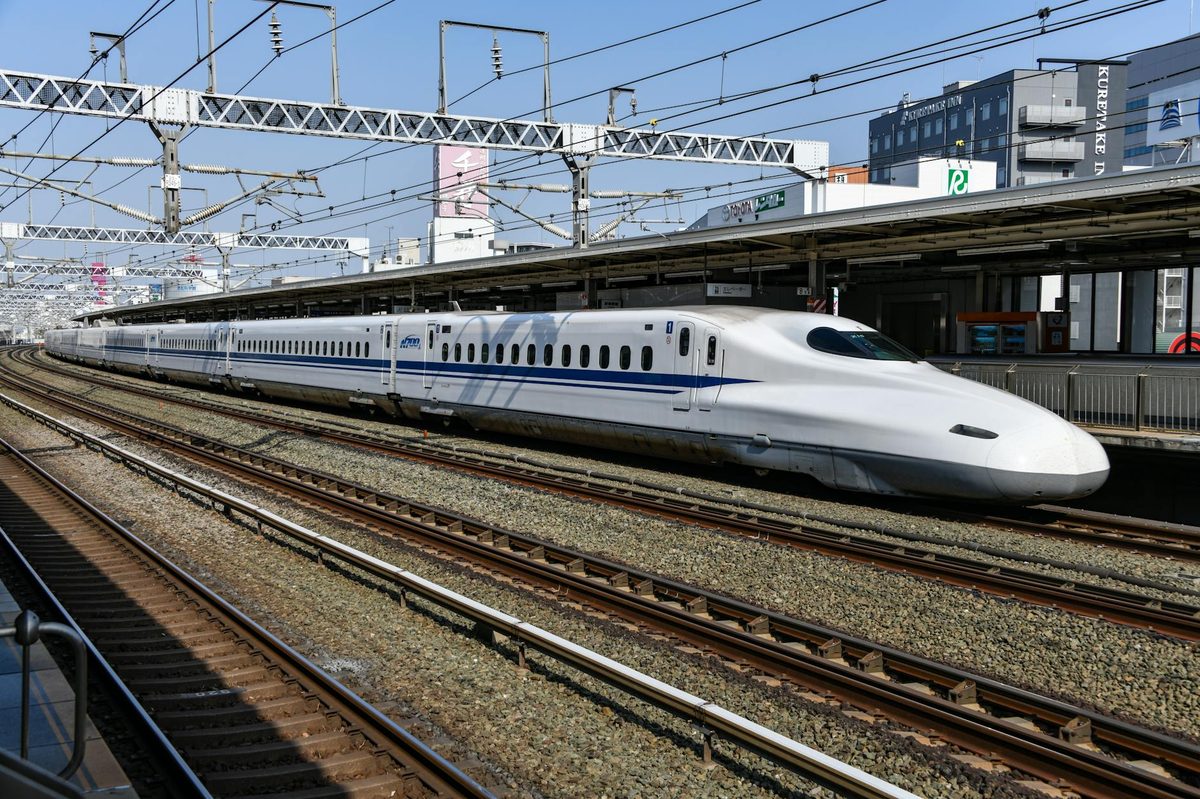
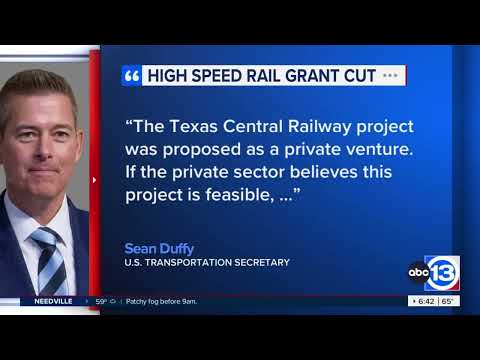
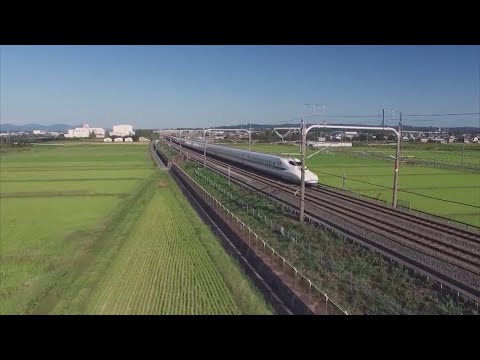
The United States has never built a true high-speed rail line. For over a decade, Texas Central Railway has attempted to change that with a 240-mile bullet train connecting Houston and Dallas—using Japanese Shinkansen technology to cut a 3.5-hour drive to 90 minutes. On April 14, 2025, the Trump administration terminated a $64 million federal planning grant, calling the project 'a waste of taxpayer funds' and returning the initiative entirely to private control.

The grant cancellation marks the latest turn in a project that has ricocheted between momentum and stagnation since 2012. Federal environmental reviews are complete. The Texas Supreme Court affirmed eminent domain rights. Japan's prime minister personally endorsed the project in 2024. But cost estimates have ballooned from $10 billion to over $40 billion, Japanese investors sold their stakes in January 2025, and only 500 of the 2,000 required land parcels have been acquired. New lead investor John Kleinheinz says the project is 'shovel-ready'—but whether private capital alone can build America's first bullet train remains the central question.

Key Indicators

$40B+
Estimated construction cost
Up from $10 billion when the project launched in 2012, making private financing increasingly difficult.
500
Land parcels acquired
Out of approximately 2,000 parcels needed for the 240-mile right-of-way between Dallas and Houston.
90 min
Proposed travel time
Houston to Dallas at speeds exceeding 200 mph, compared to 3.5 hours by car.
$64M
Federal grant terminated
The Corridor Identification and Development Program grant was cancelled on April 14, 2025.

Interactive

Exploring all sides of a story is often best achieved with Play.

Ever wondered what historical figures would say about today's headlines?

Sign up to generate historical perspectives on this story.

Sign Up

Debate Arena

Two rounds, two personas, one winner. You set the crossfire.

People Involved

John Kleinheinz
John Kleinheinz
Lead Investor, Texas Central Railway (Active - acquired Japanese investors' stakes in January 2025)
Sean P. Duffy
Sean P. Duffy
United States Secretary of Transportation (Active - terminated Texas Central grant)
Michael McCaul
Michael McCaul
U.S. Representative (R-Texas) (Active - long-standing opponent of federal funding for the project)

Organizations Involved

Texas Central Partners
Private Development Company
Status: Under new ownership, seeking private financing

The private company developing America's first high-speed rail line between Houston and Dallas.

U.
U.S. Department of Transportation
Federal Agency
Status: Terminated grant, reallocating funds

The federal agency that terminated the $64 million Texas Central planning grant.

Amtrak
Amtrak
Federally Chartered Corporation
Status: Ended involvement in Texas Central project

The national passenger railroad that briefly assumed planning responsibilities before exiting the project.

Timeline

  1. Trump Administration Terminates Federal Grant

    Federal Action

    Transportation Secretary Sean Duffy announces termination of the $64 million grant, calling the project 'a waste of taxpayer funds.' Amtrak ends involvement.

  2. Texas Legislature Considers Funding Prohibition

    Legislative

    Texas House Bill 1402 is introduced to prohibit state or local funding for roadway alterations related to high-speed rail construction.

  3. Japanese Investors Sell Stakes

    Ownership

    Kleinheinz Capital Partners buys out Japanese investors, making Fort Worth banker John Kleinheinz the project's lead sponsor.

  4. $64 Million Federal Grant Awarded

    Financing

    Project receives $64 million from the Infrastructure Investment and Jobs Act through the Corridor Identification and Development Program.

  5. U.S. and Japan Leaders Signal Project Support

    Diplomatic

    During Japanese Prime Minister Kishida's White House visit, both governments issue statements supporting the Texas high-speed rail project.

  6. Amtrak Takes Over Project Planning

    Partnership

    Amtrak formally assumes planning responsibilities for Texas Central, seeking federal infrastructure funding.

  7. Texas Supreme Court Affirms Eminent Domain Rights

    Legal

    In a 5-3 decision, the Texas Supreme Court rules that Texas Central qualifies as an interurban railway with eminent domain authority.

  8. Record of Decision Issued

    Regulatory

    Federal Railroad Administration issues Record of Decision, completing environmental review and selecting the final alignment.

  9. Federal Environmental Review Completed

    Regulatory

    Federal Railroad Administration publishes 10,000+ page Final Environmental Impact Statement after six years of review.

  10. $300 Million Loan Secured

    Financing

    Texas Central earns a $300 million loan for permitting, design and engineering work.

  11. Project Secures $75 Million Private Funding

    Financing

    Texas Central announces private funding to advance from feasibility studies to development planning.

  12. Texas Central Launches Modern Development Push

    Development

    Texas Central begins its most concerted effort to connect Dallas and Houston with 200+ mph train service, targeting a 90-minute trip.

  13. Central Japan Railway Partners with Project

    Partnership

    Central Japan Railway announces plans to provide Shinkansen technology for the Texas project, marking Japan's first major bullet train export since Taiwan.

  14. Lone Star High-Speed Rail Founded

    Founding

    Lone Star High-Speed Rail LLC is established to pursue a Dallas-Houston bullet train, later renamed Texas Central Railway in 2012.

Scenarios

1

Private Capital Succeeds Where Government Failed

Discussed by: Kleinheinz Capital Partners statements; project supporters noting completed federal permits

John Kleinheinz secures private financing sufficient to begin construction, following the Brightline model in Florida. With environmental reviews complete and eminent domain affirmed, the project proceeds without federal grants. This scenario requires solving the core challenge: convincing private investors to fund a $40+ billion infrastructure project with uncertain ridership projections and continued rural opposition.

2

Project Enters Extended Dormancy

Discussed by: Reason Foundation analysis; critics citing 12 years without track laid

Without federal support and facing a potential state prohibition on public road funding, the project stalls indefinitely. Land options expire, remaining investors exit, and Texas Central joins the long list of failed American high-speed rail attempts. The 500 acquired parcels sit unused as the company cannot secure the remaining 1,500.

3

Future Administration Revives Federal Support

Discussed by: Rail advocacy groups; precedent from Biden-era grant revival

A future administration reinstates federal funding for the project, similar to how Biden's Department of Transportation revived support in 2024 after the first Trump administration showed no interest. Texas Central survives in minimal capacity until political winds shift, then seeks new federal grants.

4

Foreign Investor Acquires Project

Discussed by: Industry observers noting international interest in U.S. infrastructure

A foreign rail operator or sovereign wealth fund acquires Texas Central, betting that American high-speed rail will eventually succeed. The Japanese exit created an opening; Chinese, European, or Middle Eastern investors could fill it, though this would face political scrutiny.

Historical Context

Florida High-Speed Rail Rejection (2011)

February 2011

What Happened

Florida Governor Rick Scott rejected $2.4 billion in federal funding for a Tampa-to-Orlando high-speed rail line, killing a project that had been in development for years. Scott cited cost overrun risks and inflated ridership projections, relying on a Reason Foundation analysis that predicted capital costs would exceed estimates.

Outcome

Short Term

The federal government reallocated the $2 billion to other states. The Tampa-Orlando high-speed rail project died.

Long Term

Florida later embraced private high-speed rail through Brightline, which now operates service between Miami and Orlando without government subsidies—though Scott later invested in that company, drawing criticism.

Why It's Relevant Today

The Texas situation echoes Florida's: a Republican-led federal or state government citing taxpayer risk to reject rail funding, while private developers claim they can succeed independently. Florida's eventual Brightline success gives Texas Central supporters a template—but also underscores how different private rail is from government-backed projects.

Taiwan High-Speed Rail Cost Overruns (2000s)

1996-2007

What Happened

Taiwan built Asia's second Shinkansen-derived high-speed rail system at a cost of $15 billion—far exceeding initial estimates. The project switched technology suppliers mid-construction, paying $70 million in damages. The operator ran continuous losses, accumulating $1.73 billion in deficits by 2014.

Outcome

Short Term

Taiwan's government eventually had to restructure the project's finances to prevent bankruptcy.

Long Term

The system now operates successfully, but the experience illustrated how Shinkansen technology requires buying an entire integrated system—tracks, trains, and software—making exports extremely expensive.

Why It's Relevant Today

Taiwan's experience explains why cost estimates for Texas Central have risen from $10 billion to $40 billion. The Shinkansen is not a modular product; it's a complete system that must be built from scratch, driving costs that American rail projects have consistently underestimated.

California High-Speed Rail Struggles (2008-Present)

2008-Present

What Happened

California voters approved $9.95 billion in bonds for high-speed rail connecting San Francisco and Los Angeles. Seventeen years later, the project has spent over $15 billion but completed zero miles of operational track. Cost estimates have risen from $33 billion to over $100 billion, and the Trump administration terminated $4 billion in federal funding in 2025.

Outcome

Short Term

California dropped its lawsuit challenging the funding rescission in December 2025, opting to proceed without federal partnership.

Long Term

The project continues in reduced form, with a 171-mile Central Valley segment under construction, but full Los Angeles-San Francisco service remains decades away if it happens at all.

Why It's Relevant Today

California's ongoing difficulties—land acquisition battles, cost explosions, political opposition, federal funding reversals—preview every challenge Texas Central faces, but at even larger scale. Critics cite California as proof that American high-speed rail cannot succeed; supporters argue Texas's private model avoids California's government-led dysfunction.

12 Sources: