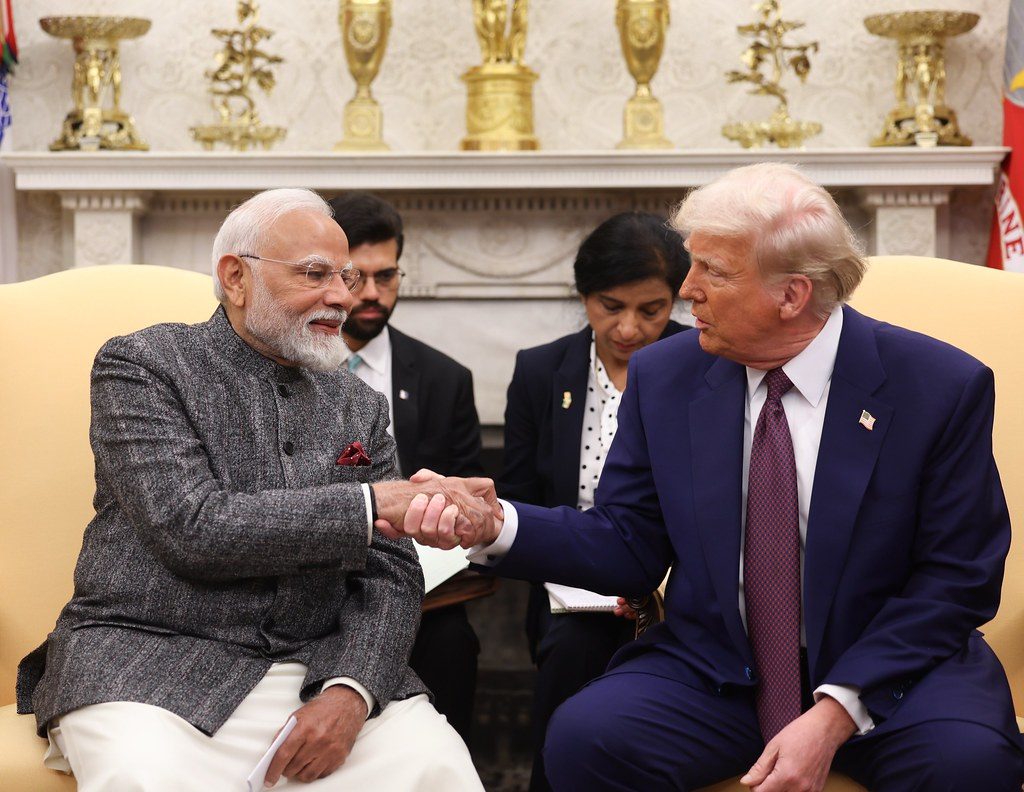
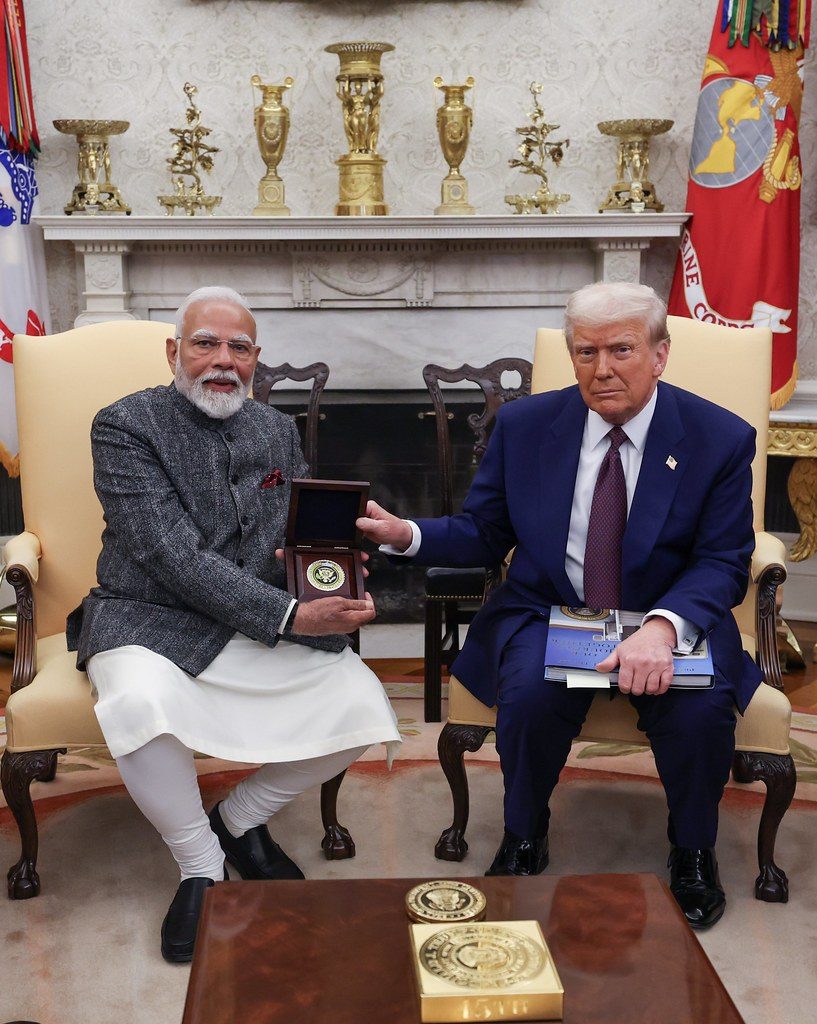
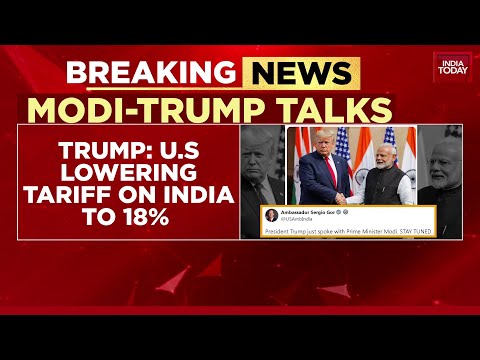
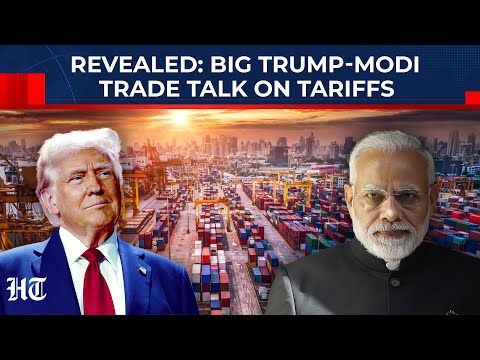
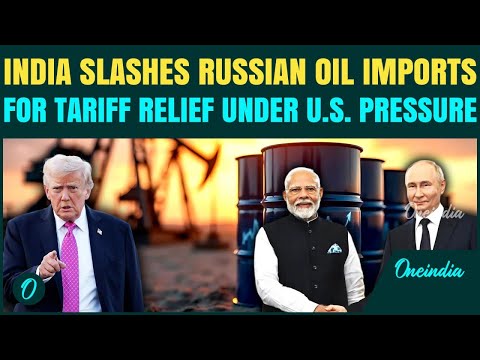
India has been the world's second-largest buyer of Russian oil since 2022, snapping up discounted crude while Western nations sanctioned Moscow. On February 2, 2026, Trump announced that Modi agreed to stop these purchases in exchange for US tariff cuts from 50% to 18%, ending a trade war that escalated for nearly a year.
A US-India Joint Statement released February 6-9 outlined an Interim Trade Agreement framework. India committed to purchasing $500 billion in US energy, technology, aircraft, and coal over five years while the US cut tariffs and suspended the additional 25% Russian oil tariff effective February 7 via Executive Order. However, Modi has publicly confirmed only the tariff reduction, Indian refiners received no instructions to halt imports, and the deal lacks binding enforcement amid shadow logistics risks.
The implementation centers on joint statement details, formal mid-March signing, and US monitoring. US Customs noted February 10 that Indian goods face no extra 25% tariff (snapback if Russian purchases resume); White House fact sheets softened the $500 billion to 'intent' while dropping product mentions like pulses. For Washington, this peels India from Russian energy; for New Delhi, it trades flexibility for market access if US supplies match prices. RBI Governor Sanjay Malhotra noted on February 6 that rupee impacts hinge on fine print with parliamentary opposition demanding alternate sourcing clarity.
Questions about this story
Free account needed to ask — your question is kept and asked for you right after sign-up. Answers are public.
No questions yet — be the first to ask.
Key Indicators
50% → 25% → 18%
US Tariff Rate
Combined tariffs dropped via EO suspending 25% Russian oil penalty effective Feb 7; reciprocal rate to 18% per interim framework
$500B intent
Purchase Intent
India's non-binding pledge over 5 years for US energy, tech, aircraft, coal (softened from commitment in revised fact sheets)
36%
Russian Oil Share
Russia's share of India's crude imports in FY 2024-25, up from 2% pre-Ukraine; now under US monitoring with snapback risk
Feb 7, 2026
Tariff Suspension
Effective date of EO terminating additional 25% duty on Indian goods tied to Russian oil purchases
21 events
Latest: February 10th, 2026 · 8 months ago
Showing 8 of 21
JK to step
Tap a bar to jump to that date
Jump to
February 2026
US Customs Notifies Removal of 25% Russian Oil Tariff
LatestRegulatory
US Customs and Border Protection notified that Indian goods are no longer subject to the additional 25% tariff imposed over Russian oil purchases, effective from February 7 Executive Order.
White House Revises Trade Deal Fact Sheet
Announcement
White House updated fact sheet drops 'pulses' from US tariff elimination list, softens $500B purchase to 'intent,' omits digital services taxes amid ongoing framework details.
White House Releases Fact Sheet on Historic Trade Deal
Announcement
White House fact sheet details interim framework achievements: reciprocal tariffs, market access, $500B purchase intent, supply chain cooperation, with monitoring for Russian oil compliance.
US-India Joint Statement on Interim Trade Framework
Agreement
Joint Statement announces framework for Interim Agreement: India tariff cuts on US goods, $500B purchase intent, US 18% reciprocal rate, non-tariff barrier address, tech/energy cooperation, snapback provisions.
US Executive Order Suspends Russian Oil Tariff on India
Executive
President Trump issues EO indefinitely suspending EO 14329's additional 25% tariff on Indian goods effective Feb 7, citing India's commitment to halt Russian oil imports directly/indirectly.
RBI Governor Flags Deal Details as Key to Rupee Impact
Analysis
Reserve Bank of India Governor Sanjay Malhotra stated that the India-US trade deal's impact on the Indian rupee hinges on the specific details of implementation, signaling central bank concern about currency volatility pending clarification.
Defense Analysts Warn of Enforcement Gaps
Analysis
Foundation for Defense of Democracies publishes analysis warning that deal effectiveness hinges on enforcement. Notes Modi has not publicly confirmed Russian oil commitment, Indian refiners received no government instructions, and workarounds through intermediaries remain likely.
India's MEA Emphasizes Energy Security Priority
Statement
India's Ministry of External Affairs responds to Trump's Russian oil claims, stating energy security is supreme priority and India's efforts to diversify energy imports are not new. Russia states India is free to buy crude from any supplier.
Goyal Announces Formal Signing Timeline
Negotiation
Commerce Minister Piyush Goyal announces joint statement will be issued within 5 days and formal deal will be signed by mid-March 2026. Details of first tranche not immediately disclosed; opposition demands clarity on implementation and alternate oil sources.
Parliamentary Chaos Over Deal Transparency
Political
Opposition parties disrupted Piyush Goyal's Lok Sabha speech on the trade deal, demanding clarity on implementation date, alternate oil sources, and Russian oil purchase halt timeline. Sources confirmed sensitive details would be shared at a later stage.
Trump-Modi Deal: Tariffs Cut to 18%
Agreement
Trump announced a trade deal immediately reducing tariffs from 50% to 18%. India committed to stop Russian oil purchases, buy over $500 billion in American products, and eliminate tariffs on US goods.
January 2026
India Signs EU Trade Deal
Agreement
India concluded a free trade agreement with the EU after nearly 20 years of negotiations. Called the 'mother of all deals,' it covers 2 billion people and $27 trillion in combined GDP.
Bessent: Indian Oil Purchases Have 'Stopped'
Statement
Treasury Secretary Bessent stated that Indian companies had 'stopped' buying Russian oil, signaling the US viewed preconditions for a deal as met.
Rubio and Jaishankar Meet on Trade
Diplomatic
Secretary of State Marco Rubio met with Indian External Affairs Minister S. Jaishankar to discuss bilateral trade negotiations amid reports that Indian Russian oil purchases had begun declining.
September 2025
Negotiations Resume After Summer Standoff
Negotiation
After India refused to immediately cut Russian oil purchases, both sides returned to the table. India began signaling flexibility while simultaneously accelerating talks with the EU.
August 2025
Tariffs Double to 50% Over Russian Oil
Escalation
Trump added a second 25% tariff specifically penalizing India's continued purchases of Russian crude, bringing total duties to 50%—among the highest imposed on any trading partner.
July 2025
US Imposes 25% Reciprocal Tariff on India
Escalation
The Trump administration finalized a 25% 'reciprocal' tariff on Indian goods, effective August 7, citing India's high tariffs on American products.
April 2025
Trump Announces 'Liberation Day' Tariffs
Policy
Trump imposed broad tariffs on over 90 countries. India initially faced a 26% rate, later suspended for 90 days as countries sought to negotiate exemptions.
March 2025
USTR Delegation Arrives in New Delhi
Negotiation
Assistant Trade Representative Brendan Lynch led a delegation for four days of talks aimed at finalizing the first phase of a Bilateral Trade Agreement.
February 2025
Modi Visits White House, Trade Talks Begin
Diplomatic
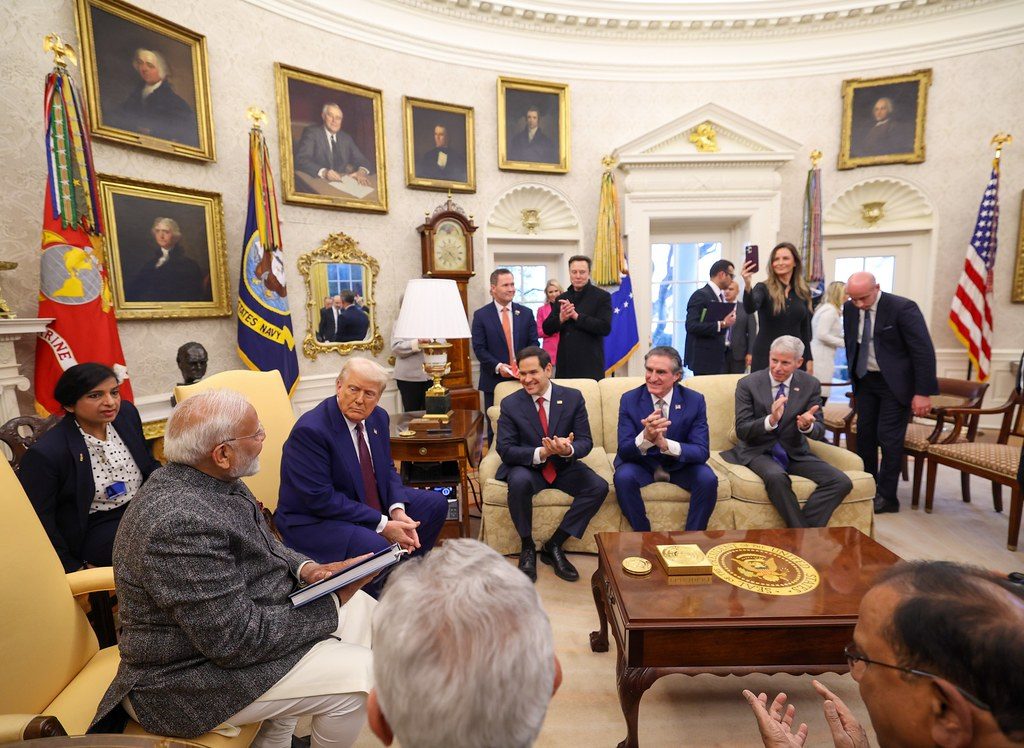
Modi met Trump in Washington to launch bilateral trade negotiations. The leaders announced a goal to double trade to $500 billion by 2030 and established the TRUST technology partnership framework.
February 2022
Russia Invades Ukraine, India Begins Oil Pivot
Background
Russia's invasion triggers Western sanctions. India, seeking discounted crude, begins dramatically increasing Russian oil purchases—from 2% of imports pre-war to over 35% within two years.
Scenarios
1
Deal Holds: India Fully Transitions to US Energy
Possible
Discussed by: Bloomberg, CNBC analysts, Indian Commerce Ministry statements
India successfully replaces Russian crude with American and Middle Eastern supplies, absorbing higher costs through expanded exports to the US market. The $500 billion purchase commitment materializes over 5-7 years, with liquefied natural gas (LNG), agricultural products, and technology comprising the bulk. This scenario requires US energy infrastructure to scale up export capacity and Indian refineries to adapt to different crude grades.
2
Partial Compliance: India Reduces but Doesn't Eliminate Russian Oil
Likely
Discussed by: Carnegie Endowment, energy industry analysts, The Diplomat
India reduces Russian oil imports significantly but maintains some purchases through intermediaries or reclassified shipments, citing energy security. The US tolerates this as long as volumes stay below a threshold, similar to how it handled Turkish and Chinese sanctions evasion. The deal remains nominally in force, but implementation becomes a source of ongoing friction.
3
Deal Collapses: Energy Costs Force Reversal
Unlikely
Discussed by: Council on Foreign Relations, Indian opposition parties, Moscow Times
American LNG and other supplies prove significantly more expensive than Russian crude, straining Indian refiners and fueling domestic political opposition. Modi faces pressure to resume Russian purchases, triggering US tariff reimposition. The deal unravels within 12-18 months, returning relations to the August 2025 standoff.
4
Broader Realignment: Deal Becomes Template for Other Countries
Uncertain
Discussed by: White House officials, Conference Board policy analysts
The India deal establishes a successful model for using tariffs to achieve geopolitical objectives. The administration applies similar pressure to other Russian oil customers—potentially including China, Turkey, and UAE—seeking energy-for-tariffs swaps. This would represent a fundamental shift in how the US uses trade policy to enforce sanctions coalitions.
5
Deal Stalls Over Enforcement Ambiguity
Likely
Discussed by: Foundation for Defense of Democracies, Indian opposition parties, trade analysts
Lack of binding text, enforcement mechanisms, and Modi's non-confirmation of Russian oil commitment create legal ambiguity. US demands clarification on whether halt applies to direct purchases and intermediary flows; India resists specificity to preserve flexibility. Negotiations extend beyond mid-March, delaying formal signing and creating uncertainty for refiners and energy markets.
Historical Context
3 moments from history that rhyme with this story — and how they unfolded.
1 of 3
December 2003 - September 2004
Libya Sanctions Relief (2003-2004)
After years of economic isolation following the Lockerbie bombing, Libya's Muammar Gaddafi agreed to abandon weapons of mass destruction programs and accept responsibility for terrorism. The US responded by lifting sanctions incrementally—first allowing oil companies to resume operations, then restoring full diplomatic relations.
Then
US oil companies returned to Libya within months. President Bush terminated sanctions under the Iran and Libya Sanctions Act in April 2004.
Now
The Libya model became the template for 'carrots and sticks' nonproliferation diplomacy—demonstrating that economic pressure followed by relief could achieve policy objectives without military force.
Why this matters now
The India deal follows a similar structure: punitive tariffs imposed for a specific behavior (Russian oil purchases), followed by relief once the behavior changed. Both cases show the US using economic leverage to reshape a country's strategic choices.
2 of 3
1985-1995
US-Japan Trade Friction (1980s-1990s)
The US ran large trade deficits with Japan throughout the 1980s, prompting a decade of contentious negotiations. Washington used tariff threats and the 'Super 301' provision to pressure Tokyo into voluntary export restraints on automobiles, semiconductors, and other products. Japan eventually agreed to import targets for US goods.
Then
Japan implemented voluntary export restraints and opened markets to some US products. The 1985 Plaza Accord forced yen appreciation to reduce the trade imbalance.
Now
The friction damaged US-Japan relations but didn't fundamentally alter trade patterns. Japan's economic stagnation in the 1990s reduced tensions more than negotiations did.
Why this matters now
Like the Japan disputes, the India deal involves a US attempt to use tariff pressure to force market opening and reduce trade deficits. The key difference: the India deal explicitly links trade terms to a geopolitical objective (cutting Russian oil) rather than purely economic goals.
3 of 3
July 2025
US-South Korea Energy Deal (2025)
Facing threatened 25% tariffs, South Korea negotiated a deal that set tariffs at 15% in exchange for $150 billion in LNG purchases and $350 billion in US investments. The agreement included commitments on automobile and semiconductor trade.
Then
South Korea avoided the highest tariff rates while committing to substantial energy and investment purchases from the US.
Now
The deal established a template that the administration applied to other Asian allies, creating a pattern of energy purchases as a key component of bilateral trade agreements.
Why this matters now
The India deal follows the South Korea template almost exactly: tariff reduction in exchange for energy purchases and investment commitments. India's $500 billion commitment exceeds South Korea's $150 billion LNG pledge, reflecting India's larger economy and the additional geopolitical dimension of cutting Russian oil.