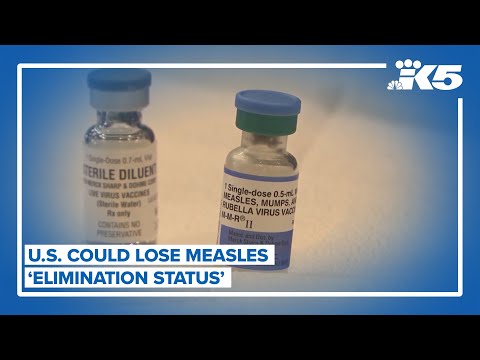
The United States declared measles eliminated in 2000, after decades of vaccination campaigns against the most contagious virus known to infect humans. On January 22, 2026, that status entered jeopardy when the country passed one year and two days of continuous transmission, starting in West Texas.
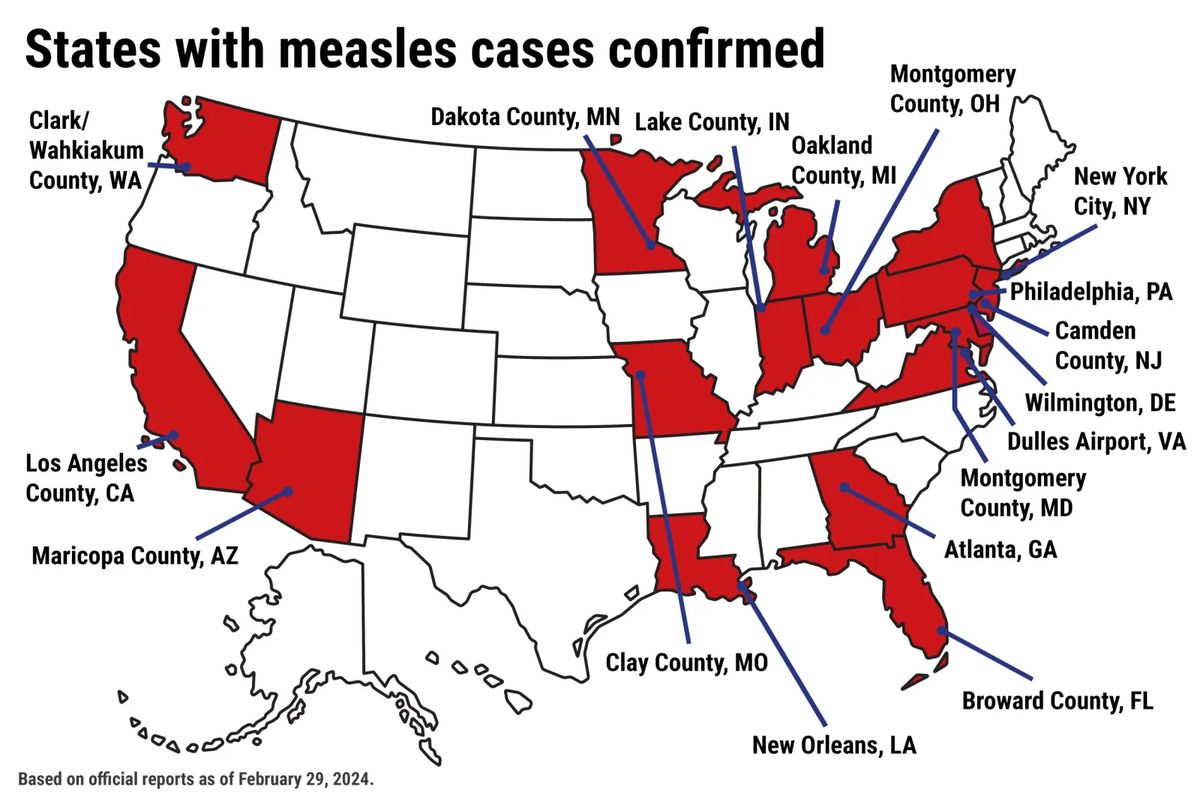
By mid-February 2026, CDC confirmed 910 cases across 24 states this year, 90% outbreak-associated. South Carolina's outbreak reached 950 cases by February 13, adding over 160 since late January, with 94% unvaccinated or of unknown vaccination status. National vaccination coverage sits at 92.5%, below herd immunity thresholds; a PAHO review in April is likely to revoke elimination status.
In 2025, the U.S. recorded 2,255 confirmed cases (the most since 1991) and three deaths; five new outbreaks have already been recorded in 2026. Scientists confirmed the same measles strain in Texas, South Carolina, Canada, Mexico, and beyond — the outbreak spans the continent. PAHO issued a February alert on a 43-fold regional case increase; CDC's principal deputy director called potential status loss 'the cost of doing business.'
Questions about this story
Free account needed to ask — your question is kept and asked for you right after sign-up. Answers are public.
No questions yet — be the first to ask.
Key Indicators
2,255
Cases in 2025
Most U.S. measles cases in a single year since 1991
910
Cases in 2026 (Feb 12)
CDC-confirmed cases across 24 jurisdictions year-to-date, 90% outbreak-associated
950
South Carolina (Feb 13)
Outbreak cases, up from 789 on Jan 27; 94% unvaccinated/unknown
3
Deaths
First U.S. measles deaths since 2015, including two children in Texas
92.5%
MMR Coverage
National kindergarten vaccination rate, below the 95% threshold for herd immunity
24
Jurisdictions Affected
States reporting 2026 cases to CDC as of Feb 12
25
Years Eliminated
Duration of U.S. measles elimination status since 2000, now under review
Images from Openverse under Creative Commons licenses.
Videos from YouTube.
Voices
Curated perspectives — historical figures and your fellow readers.
Dorothy Parker
(1893-1967) ·Jazz Age · wit
Fictional AI pastiche — not real quote.
"I see we've finally achieved what centuries of plague and pestilence could not: we've made stupidity contagious."
0% found this insightful
Madam C. J. Walker
(1867-1919) ·Progressive Era · entrepreneurship
Fictional AI pastiche — not real quote.
"I built an empire by understanding that prevention is far cheaper than cure—a lesson I applied to scalp disease that these modern leaders seem to have forgotten about measles. When I traveled town to town, I saw how easily disease spread among our people, yet I also witnessed the power of education and collective action to stop it; today's failure isn't one of science, but of will. There is no profit in allowing our children to suffer what we already learned to prevent."
0% found this insightful
Ever wondered what historical figures would say about today's headlines?
Sign up to generate historical perspectives on this story.
23 events
Latest: February 13th, 2026 · 8 months ago
Showing 8 of 23
JK to step
Tap a bar to jump to that date
Jump to
February 2026
South Carolina Outbreak Hits 950 Cases
LatestMilestone
South Carolina DPH reported 950 measles cases in its outbreak—246 under age 5, 611 ages 6-17—with 94% unvaccinated or unknown status. The state surge accounts for most of the national total.
CDC Confirms 910 U.S. Cases in 2026
Milestone
CDC reported 910 confirmed measles cases across 24 jurisdictions year-to-date, up 177 from prior week (24% increase); 90% outbreak-associated with 5 new outbreaks.
South Carolina Reaches 933 Cases
Outbreak
South Carolina DPH reported 933 cases (859 unvaccinated); January vaccinations rose 72% year-over-year with 16,800+ doses administered.
PAHO Issues Regional Measles Alert
Official Action
PAHO epidemiological alert noted 1,031 cases in first 3 weeks of 2026 across 7 countries (43-fold increase vs 2025), urging vaccination and surveillance; U.S. had 910 cases in 24 states.
January 2026
South Carolina Outbreak Reaches 789 Cases
Milestone
South Carolina DPH reported 789 cases, surpassing Texas's 762-case outbreak to become the largest U.S. measles outbreak since elimination was achieved in 2000. The state added more than 600 cases in January 2026 alone, with cases linked to California, North Carolina, and Washington.
Senator Proposes Remote Learning for Unvaccinated Students
Policy
South Carolina State Senator Josh Kimbrell, representing Spartanburg County, sent a letter to local school leaders calling the measles outbreak a 'public health crisis' and advocating for remote learning options for unvaccinated students to protect others. More than 700 of the 789 cases were in unvaccinated individuals or those who had not received both recommended MMR doses.
South Carolina Outbreak Reaches 700 Cases
Outbreak
South Carolina DPH reported 700 total cases in the Spartanburg County outbreak, adding 54 cases in three days. The state accounts for 81% of 2026 U.S. cases, with 485 people in quarantine and new exposures identified at five elementary schools.
One-Year Threshold Passed
Milestone
The U.S. passed one year and two days since continuous measles transmission began, triggering the formal process for potential loss of elimination status. CDC's principal deputy director called potential loss 'the cost of doing business.'
U.S. Confirms 416 Cases in First 22 Days of 2026
Milestone
CDC confirmed 416 measles cases nationwide in 2026—an increase of 245 infections in one week, averaging 19 cases per day. Cases reported across 14 jurisdictions including South Carolina, North Carolina, California, and Washington.
PAHO Schedules Review Meeting
Official Action
PAHO announced an April 13, 2026 meeting to review the measles elimination status of the United States and Mexico.
December 2025
Vaccine Schedule Revised
Policy
Following a presidential memorandum, CDC reduced recommended childhood vaccines from 18 to 11 diseases. MMR remained on the core schedule.
November 2025
Abraham Appointed CDC Deputy
Personnel
Ralph Abraham, Louisiana's surgeon general who had ordered his state to stop vaccine promotion campaigns, was sworn in as CDC's principal deputy director.
Americas Loses Regional Elimination Status
Milestone
PAHO announced the Americas had lost regional measles elimination status after Canada exceeded 12 months of continuous transmission. The region had first achieved this status in 2016.
October 2025
South Carolina Outbreak Begins
Outbreak
South Carolina DPH confirmed a new measles outbreak in the Upstate region around Spartanburg County.
August 2025
Texas Outbreak Declared Over
Milestone
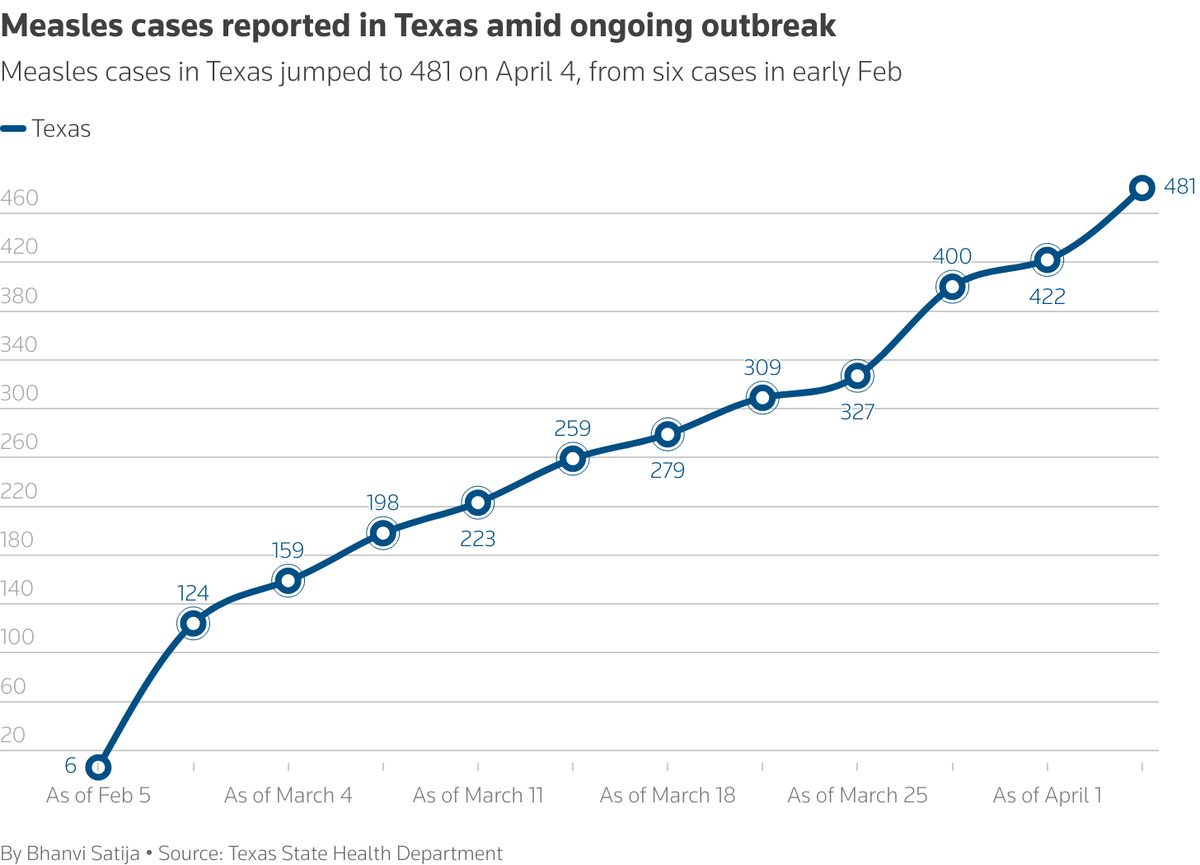
Texas DSHS declared the West Texas outbreak over after 762 confirmed cases. The source of the initial infection was never identified.
April 2025
Kennedy Endorses MMR Vaccine
Statement
HHS Secretary Robert F. Kennedy Jr. stated the MMR vaccine is 'the most effective way to prevent the spread of measles,' drawing criticism from anti-vaccine supporters.
Second Child Death
Death
An unvaccinated eight-year-old girl died of measles pulmonary failure in Lubbock, Texas. Neither child had underlying health conditions.
March 2025
New Mexico Adult Death
Death
An unvaccinated adult in Lea County, New Mexico died after contracting measles.
February 2025
First Child Death
Death
An unvaccinated six-year-old girl died of measles-related pneumonia in Lubbock, Texas—the first U.S. measles death since 2015.
Texas Declares Outbreak
Official Action
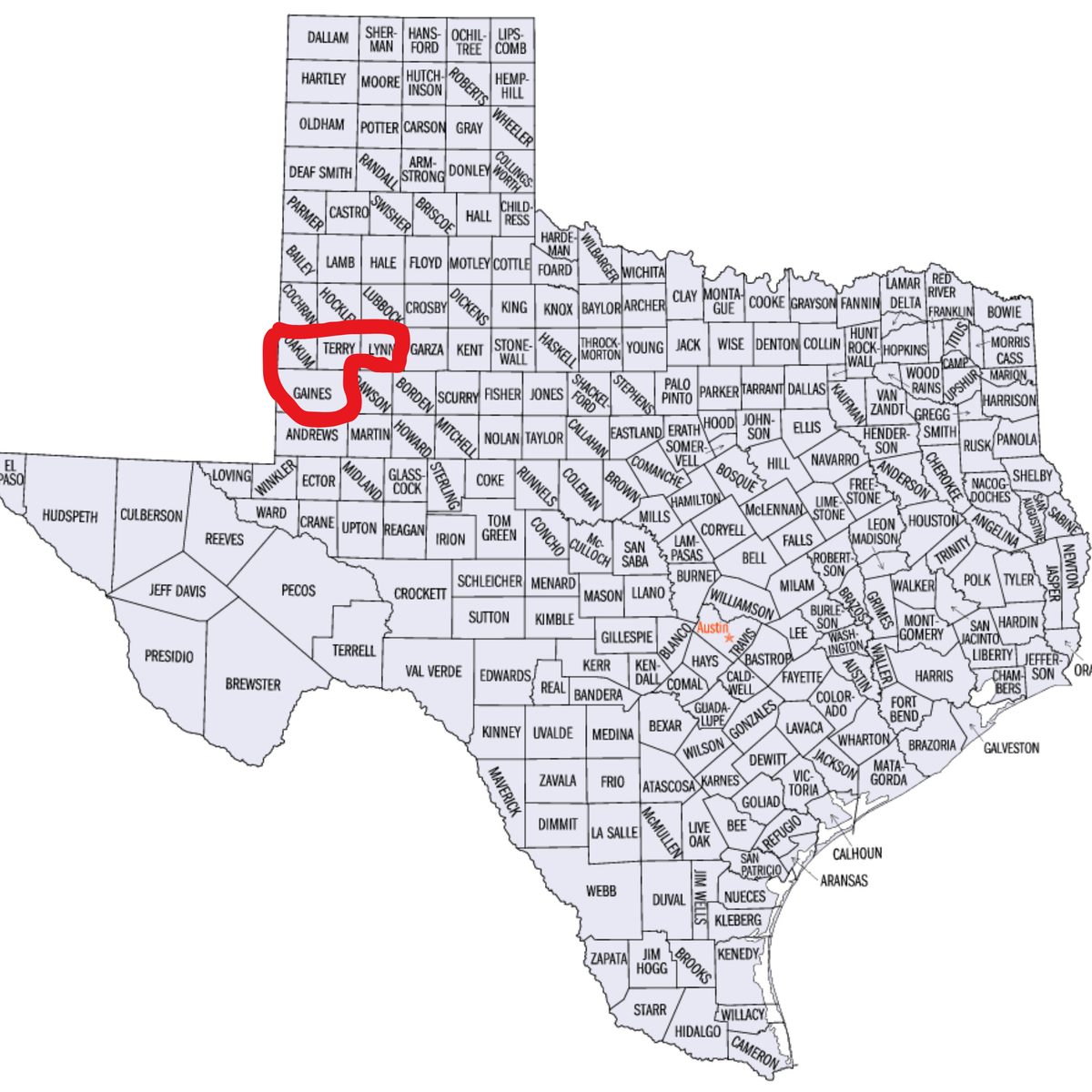
Texas DSHS officially declared a measles outbreak in Gaines County after identifying six cases in unvaccinated school-aged children.
January 2025
West Texas Outbreak Begins
Outbreak
A child in Gaines County, Texas developed the telltale measles rash, marking what PAHO would later designate as the start of continuous U.S. transmission.
September 2016
Americas Declared Measles-Free
Milestone
PAHO declared the Americas the first WHO region to eliminate endemic measles transmission.
March 2000
U.S. Declared Measles-Free
Milestone
CDC convened an expert panel that concluded measles elimination criteria had been met. The U.S. became the first country in the Western Hemisphere to achieve this status.
Scenarios
1
U.S. Stripped of Elimination Status at April Review
Likely
Discussed by: Dr. Andrew Pavia (CDC consultant), PAHO officials, multiple epidemiologists
PAHO's April 13 meeting concludes the U.S. had continuous transmission for 12+ months and revokes elimination status. CDC consultant Andrew Pavia said 'the case for this not being continuous transmission is tenuous' and expects this outcome. The U.S. would join Venezuela and Brazil as countries that lost and must regain elimination status—a process that took Brazil five years.
2
Transmission Ruled Discontinuous, Status Preserved
Unlikely
Discussed by: CDC officials
CDC analysis determines the various outbreaks represent separate introductions rather than a single continuous transmission chain. PAHO accepts this interpretation and maintains U.S. elimination status. This outcome would require demonstrating that the West Texas, South Carolina, and other outbreaks had distinct viral lineages and no epidemiological links.
3
Status Lost, Regained Within 2-3 Years
Possible
Discussed by: PAHO, public health policy analysts
The U.S. loses status but mounts a coordinated federal-state vaccination campaign similar to responses in Brazil and Venezuela. South Carolina outbreak contained by spring 2026, and with 12 months of no endemic transmission plus surveillance, the U.S. is reverified by 2028-2029. This mirrors Brazil's five-year path from loss to reinstatement.
4
Prolonged Endemic Measles Returns
Possible
Discussed by: Dr. Peter Hotez, Dr. Paul Offit, public health researchers
Declining vaccination rates and weakened public health infrastructure prevent the U.S. from regaining elimination status. Measles becomes endemic again as it was before 2000, with thousands of annual cases. Dr. Hotez has warned that the 'ecosystem' that eliminated measles has fundamentally changed, and this trajectory requires sustained vaccination above 95%—a threshold the country has not met since 2019.
Historical Context
3 moments from history that rhyme with this story — and how they unfolded.
1 of 3
1989-1991
U.S. Measles Resurgence (1989-1991)
After a decade of relatively few cases, measles resurged dramatically. Over 55,000 people fell ill and 123 died—most of them preschool children in inner-city areas. New York City alone recorded 5,000 cases and 21 deaths. Budget cuts to federal vaccination programs during the Reagan administration had allowed immunization rates to drop.
Then
CDC changed its recommendation to require a second MMR dose before school entry. President Clinton pledged to raise childhood immunization rates.
Now
Congress created the Vaccines for Children program in 1993, and federal funding increased from $37 million in 1990 to $261 million by 1995. Measles was declared eliminated in 2000.
Why this matters now
The 1989-1991 outbreak demonstrated how quickly measles can return when vaccination infrastructure erodes. The current outbreak—2,144 cases in 2025—represents the highest case count since that era and raises questions about whether today's policy environment can mount a similar response.
2 of 3
December 2014 - April 2015
Disneyland Outbreak (2014-2015)
An unvaccinated child visited Disneyland in Anaheim during the Christmas holiday. The outbreak spread to 131 Californians and 159 people in Quebec, Canada. Genetic sequencing linked the virus to a strain circulating in the Philippines. Twenty percent of U.S. cases required hospitalization.
Then
California passed Senate Bill 277, eliminating personal belief exemptions for school vaccinations. Media coverage focused on the consequences of vaccine refusal.
Now
The 'Disneyland effect' temporarily increased vaccination rates in some communities. However, exemption rates nationally have since climbed from 1.9% in 2020-2021 to 3.1% in 2023-2024.
Why this matters now
The Disneyland outbreak showed how a single infected visitor could spark multi-state transmission in under-vaccinated communities. The current South Carolina outbreak—spreading to North Carolina and Washington state via holiday travel—follows a similar pattern at larger scale.
3 of 3
July 2018 - February 2019
Brazil and Venezuela Lose Elimination Status (2018-2019)
Venezuela lost elimination status in July 2018 after an outbreak spread from the country's collapsing healthcare system. Brazil followed in February 2019 after recording 20,901 cases, including 17,816 in São Paulo state. Both countries had achieved elimination in 2016 as part of PAHO's regional declaration.
Then
PAHO provided technical assistance and intensified vaccination campaigns in affected areas.
Now
Venezuela regained elimination status in 2023 after four years. Brazil took five years, regaining status in 2024. The region briefly recovered elimination before Canada's outbreak in 2024-2025.
Why this matters now
These precedents show elimination status is recoverable but requires sustained effort over multiple years. Brazil's five-year timeline from loss to reinstatement offers a realistic benchmark for U.S. recovery if status is revoked in April.