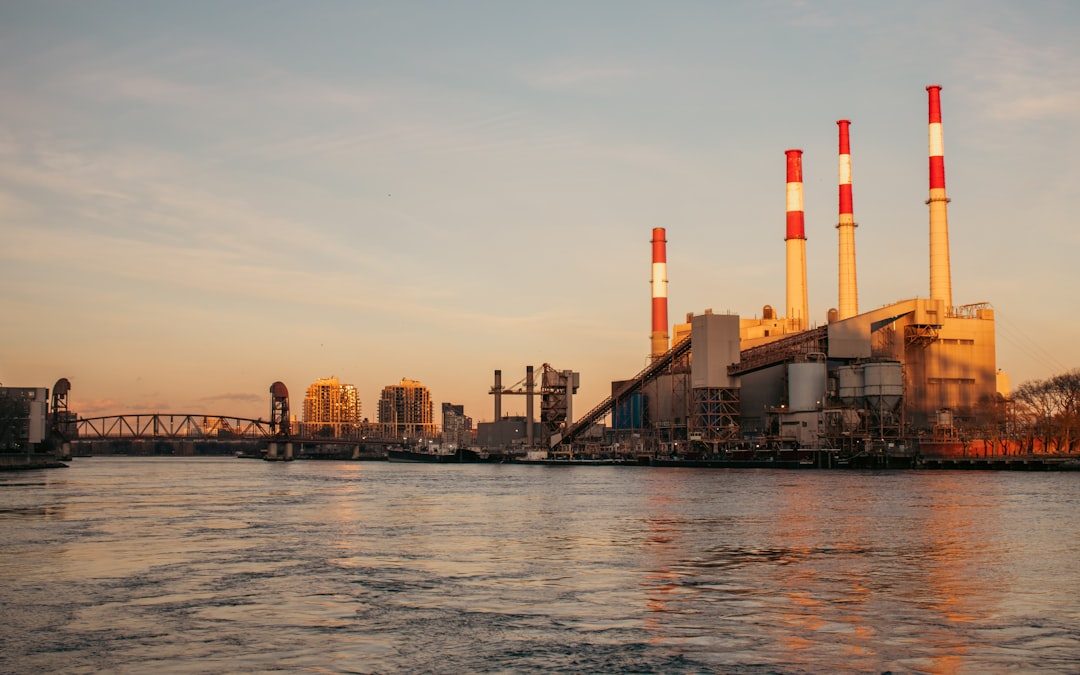
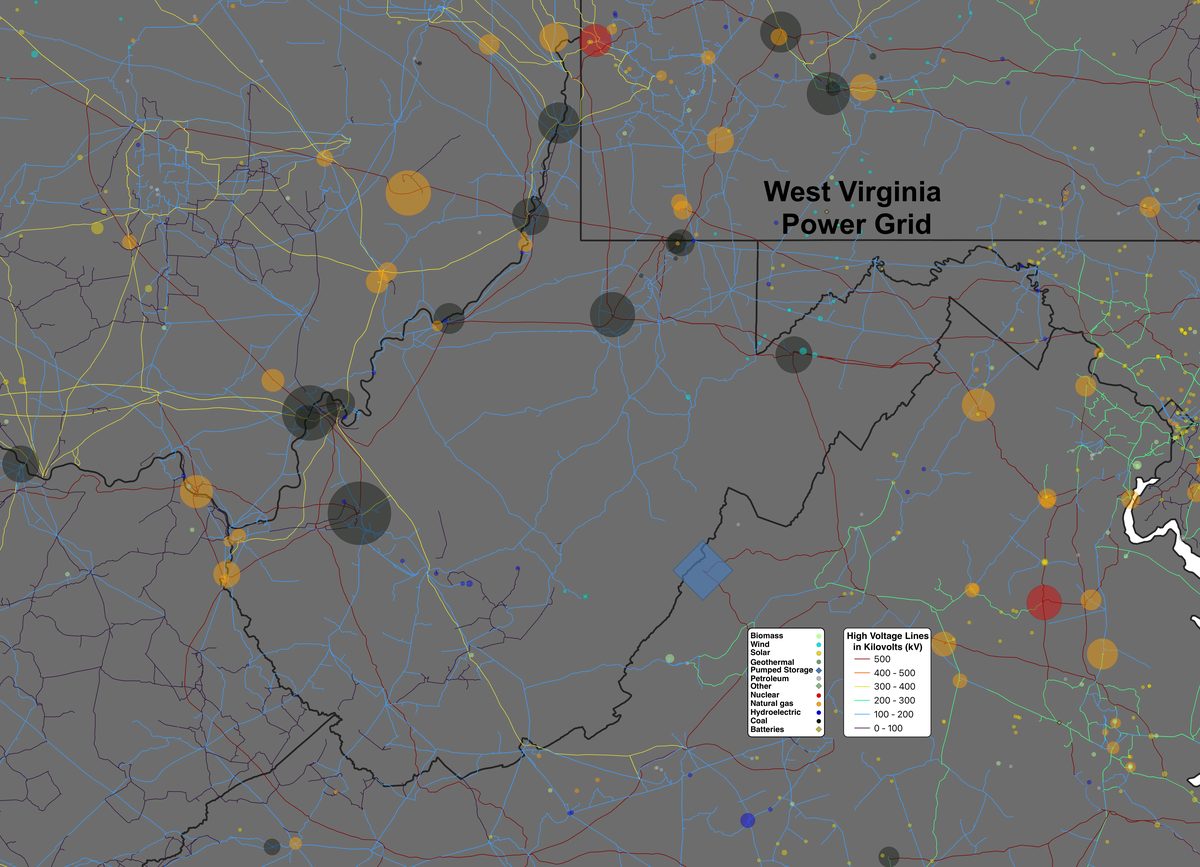
West Virginia has no base-load natural gas power plants online. That's about to change. Governor Patrick Morrisey announced that Calpine, a Constellation Energy subsidiary, will build a $1 billion, 500-megawatt gas plant in Marshall County—part of $4.2 billion in energy investments the state has attracted in just four weeks. The goal: transform a coal-dependent economy into what Morrisey calls 'the battery of the East Coast.'
The investment reflects a national scramble to build generation capacity for data centers and AI infrastructure. PJM Interconnection, the grid operator serving 13 states including West Virginia, forecasts peak demand will grow by 32 gigawatts by 2030—equivalent to adding another Texas-sized grid. Natural gas is filling the gap: developers plan to add nearly 19 gigawatts of combined-cycle capacity by 2028, while coal retirements accelerate. By the end of 2026, the U.S. will have closed half of its coal-fired capacity.
Click a figure to generate their perspective on this story
Debate Arena
Two rounds, two personas, one winner. You set the crossfire.
Choose Your Battle
Watch two AI personas debate this story using real evidence
Make predictions and set the crossfire to earn XP and cred
Select Your Champions
Choose one persona for each side of the debate
DEBATE TOPIC
SIDE A (PRO)
Select debater for this side:
✓
SIDE B (CON)
Select debater for this side:
✓
Choose personas with different perspectives for a more dynamic debate
VS
Get ready to make your prediction...
Round of
Claim
Evidence
Stakes
Crossfire Answer
Closing Statement
Claim
Evidence
Stakes
Crossfire Answer
Closing Statement
Your Crossfire Question
Generating arguments...
Who's Got This Round?
Make your prediction before the referee scores
Correct predictions earn +20 XP
Evidence
40%
Logic
30%
Detail
20%
Style
10%
Round Results
Your Pick!
+20 XP
Your Pick
Not this time
Evidence (40%)
Logic (30%)
Detail (20%)
Style (10%)
Overall Score
/10
Your Pick!
+20 XP
Your Pick
Not this time
Evidence (40%)
Logic (30%)
Detail (20%)
Style (10%)
Overall Score
/10
Set the Crossfire
Pick the question both personas must answer in the final round
Crafting crossfire questions...
Choosing a question earns +10 XP crossfire bonus
🏆
Total XP Earned
Cred Change
Predictions
Debate Oracle! You called every round!
Sharp Instincts! You know your debaters!
The Coin Flip Strategist! Perfectly balanced!
The Contrarian! Bold predictions!
Inverse Genius! Try betting the opposite next time!
XP Breakdown
Base completion+20 XP
Rounds played ( rounds x 5 XP)
+ XP
Correct predictions ( correct x 20 XP)
+ XP
Crossfire bonus+10 XP
Accuracy
%
Prediction History
Round
You picked:
✓✗
Keep debating to level up your credibility and unlock achievements
People Involved
Patrick Morrisey
Governor of West Virginia (Inaugurated January 2025)
Joseph Dominguez
CEO, Constellation Energy (Leading post-Calpine integration)
Organizations Involved
CO
Constellation Energy
Energy Company
Status: Largest U.S. power generator following Calpine acquisition
The nation's largest producer of carbon-free electricity, now also the largest overall power generator with nearly 60 GW of nuclear, gas, and renewable capacity.
CA
Calpine Corporation
Energy Company (Constellation subsidiary)
Status: Acquired by Constellation Energy, January 2026
The largest U.S. producer of energy from natural gas, with 27 GW of generation capacity including the nation's largest geothermal operation.
PJ
PJM Interconnection LLC
Regional Transmission Organization
Status: Managing rapid demand growth and generation queue
The largest grid operator in North America, serving 65 million people across 13 states and managing an interconnection queue of 170,000+ MW of proposed generation.
FI
FirstEnergy Corp.
Utility
Status: Proposing 1,200 MW gas plant for West Virginia
One of the largest investor-owned utilities in the U.S., serving 6 million customers across six states including West Virginia.
Timeline
Calpine Announces $1B West Virginia Gas Plant
Investment
Governor Morrisey announced Calpine will build a 500 MW combined-cycle natural gas plant in Marshall County near Moundsville, creating 400 construction jobs.
Constellation Completes Calpine Acquisition
Deal
Merger closed, creating a 55+ GW power generation company spanning nuclear, natural gas, geothermal, and renewables.
Constellation agreed to divest six power plants to resolve DOJ antitrust complaint—the first such settlement in an electricity merger in 14 years.
Blackstone-Kindle Wolf Summit Plant Announced
Investment
Blackstone, Kindle Energy, and GE Vernova revealed a $1.2 billion, 625 MW gas plant in Harrison County, West Virginia, with a 20-year contract to supply Old Dominion Electric Cooperative.
FirstEnergy Proposes 1,200 MW WV Gas Plant
Investment
FirstEnergy announced plans for a $2.5 billion combined-cycle gas plant in West Virginia, targeting 2031 operation.
Morrisey Unveils '50 by 50' Energy Plan
Policy
Governor Morrisey announced initiative to expand West Virginia's generation capacity from 16 GW to 50 GW by 2050, focused on natural gas, coal, and nuclear.
FERC Approves Constellation-Calpine Deal
Regulatory
Federal Energy Regulatory Commission approved the merger with conditions to limit market power in PJM and ERCOT.
PJM Fast-Tracks 9,300 MW of New Generation
Regulatory
PJM selected 51 projects through its Reliability Resource Initiative, with 69% gas-fired capacity, to address near-term demand growth.
Patrick Morrisey Inaugurated as WV Governor
Political
Morrisey became West Virginia's 37th governor, succeeding Jim Justice and bringing an energy-focused economic agenda.
Constellation Announces Calpine Acquisition
Deal
Constellation Energy agreed to acquire Calpine for $16.4 billion in cash and stock, creating the largest U.S. power generator with nearly 60 GW of capacity.
Marshall County Approves Calpine Tax and Lease Agreements
Regulatory
Marshall County Commission and Board of Education approved 30-year PILOT and lease agreements with Calpine, expected to generate $20.8 million in payments and up to $39.3 million in lease revenue over 30 years.
Microsoft-Constellation Three Mile Island Deal
Deal
Constellation announced a 20-year power purchase agreement with Microsoft to restart Three Mile Island Unit 1, delivering 835 MW of nuclear power to data centers.
PJM Capacity Prices Surge 833%
Market
PJM's capacity auction for 2025-2026 saw prices jump from $28.92/MW-day to $269.92/MW-day, signaling tight supply amid rising demand.
Scenarios
1
Appalachia Becomes 'Battery of the East Coast'
Discussed by: West Virginia state officials, PJM planning documents, natural gas industry analysts
West Virginia and neighboring states successfully attract significant data center investment by leveraging proximity to Marcellus Shale gas, completing multiple gigawatts of new generation by 2030. The state's economy diversifies beyond coal, with natural gas and data center operations creating thousands of permanent jobs. PJM's capacity constraints ease as Appalachian plants come online.
Data center power demand grows more slowly than forecast due to efficiency improvements, project delays, or economic factors. Speculative interconnection requests—which some analysts estimate inflate demand projections by 25-40%—get weeded out. Some announced gas plants delay or cancel as economics worsen. West Virginia's '50 by 50' timeline slips.
3
Nuclear and Renewables Capture Data Center Contracts
Discussed by: BloombergNEF, tech company sustainability reports, nuclear industry advocates
Microsoft, Google, Amazon, and Meta increasingly commit to nuclear power and renewables for carbon-free energy claims. Small modular reactors advance toward commercial deployment. Gas plant developers face higher financing costs as investors weight climate risk. West Virginia's gas-centric strategy faces competition from states offering cleaner power.
Discussed by: NERC reliability assessments, PJM market monitor, Congressional Research Service
Coal retirements outpace new generation additions, leading to summer reliability warnings or actual shortfalls in PJM territory. Federal or state regulators intervene with capacity mandates, accelerated permitting, or reliability payments to keep at-risk plants online. Gas construction accelerates under emergency provisions.
Historical Context
UK 'Dash for Gas' (1990s)
1991-2002
What Happened
After privatizing its electricity industry in 1990, Britain built 20 natural gas power plants in seven years. Gas generation went from 1.1% of UK electricity in 1990 to 39.3% by 2000, surpassing coal for the first time in 1996. The shift was driven by high interest rates favoring quick-build plants, newly permitted gas-for-power use, and efficient combined-cycle turbine technology.
Outcome
Short Term
Gas capacity grew from 1 GW to 23 GW in a decade, displacing coal and reducing CO2 emissions. The buildout cost approximately £11 billion.
Long Term
The UK met its 1990s emissions targets easily but created long-term gas dependency. Gas consumption peaked in 2001 and has declined since 2010 as renewables expanded.
Why It's Relevant Today
The U.S. is experiencing a similar dynamic: regulatory conditions favor gas, advanced turbine technology is available, and demand is surging. The UK precedent shows rapid gas buildouts can succeed but may create lock-in effects.
U.S. Combined-Cycle Boom (2000-2005)
2000-2005
What Happened
In six years, U.S. developers added 192,000 MW of natural gas capacity—more than the entire coal fleet built over two decades. Cheap natural gas from early shale development, deregulated power markets, and merchant plant investment drove the boom. Natural gas replaced coal as the nation's baseload power source.
Outcome
Short Term
Gas generation share doubled. Many merchant plants faced financial distress when gas prices spiked in the mid-2000s.
Long Term
The infrastructure proved critical as fracking later made gas consistently cheap. Natural gas has provided 40%+ of U.S. electricity since 2016.
Why It's Relevant Today
The current buildout is smaller in absolute terms but driven by different demand: data centers rather than residential and industrial load. The precedent shows gas capacity can scale quickly when economics align.
Coal Plant 'Big Buildup' (1967-1987)
1967-1987
What Happened
Responding to 1970s oil crises and concerns about natural gas scarcity, U.S. utilities built 202,416 MW of coal capacity in 20 years—two-thirds of the nation's total coal fleet. Federal policy favored coal as a domestic, reliable fuel. West Virginia was a primary beneficiary, with coal providing 98% of state electricity as recently as 2001.
Outcome
Short Term
Energy security concerns were addressed. Coal employment in West Virginia peaked.
Long Term
The fleet is now retiring: the U.S. will close half its coal capacity by end of 2026. West Virginia coal employment fell 54% between 2005 and 2020.
Why It's Relevant Today
West Virginia's pivot from coal to gas mirrors the nation's earlier pivot from oil to coal—each driven by a perceived demand crisis and available domestic fuel. The state is betting gas won't face the same long-term decline.