

Pull to refresh
Logo
Daily Brief
Following
Why
Australia's grid-scale battery buildout

Australia's grid-scale battery buildout

Built World
By Newzino Staff |

Replacing Coal with Storage at Scale

4 days ago: Supernode Battery Begins Commercial Operations

Overview

When Tesla built a 100-megawatt battery in South Australia in 2017, it was the world's largest. Eight years later, Australia has become the third-largest grid battery market globally, adding 8.6 gigawatt-hours of storage in 2025 alone—a tripling from the previous year. The country now has nearly 100 grid-forming battery projects in its development pipeline.

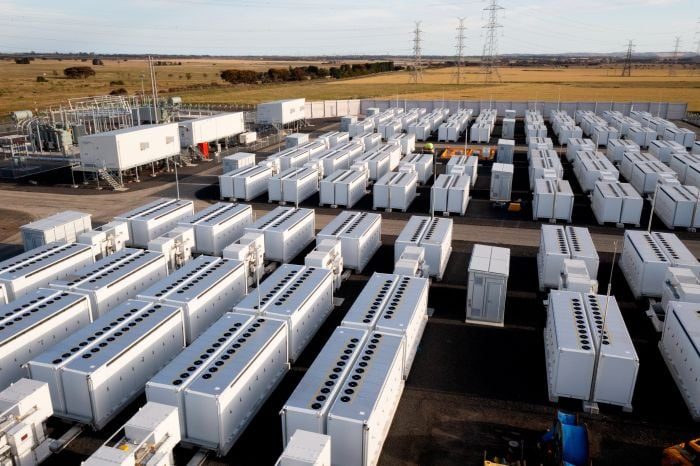
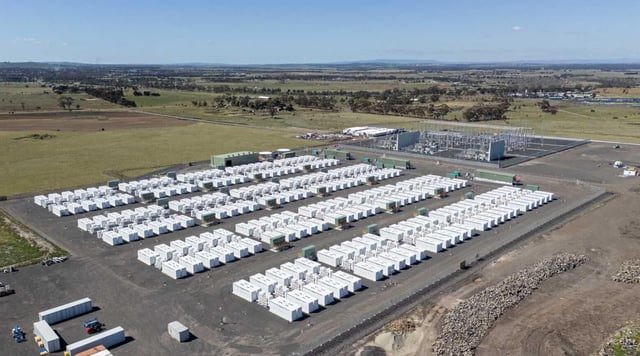
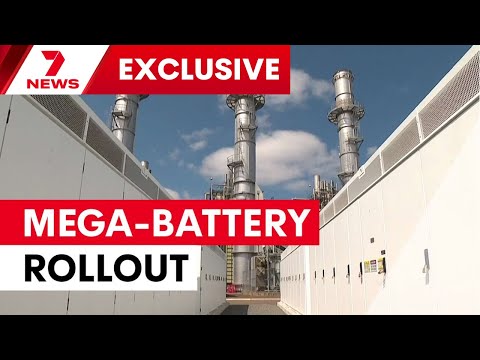
The stakes are existential for Australia's electricity system. Coal plants that once supplied 80% of power are retiring faster than planned, with capacity projected to drop below 30% by 2026. Battery storage is filling the gap—not just storing excess solar and wind, but providing the grid stability services that spinning turbines used to deliver. The 619-megawatt-hour Supernode battery that began operations in Brisbane this week represents the next phase: mega-scale storage positioned at critical grid nodes, with plans to expand to over 3 gigawatt-hours by 2027.

Key Indicators

8.6 GWh
Storage Added in 2025
Grid-scale battery capacity deployed across Australia's National Electricity Market, tripling 2024 levels.
3rd
Global Ranking
Australia now trails only China and the United States in large-scale battery deployment.
A$21B
Projected Investment by 2030
Expected total investment in new storage capacity, supported by the federal Capacity Investment Scheme.
94
Projects in Pipeline
Grid-forming battery projects under development, capable of providing grid stability without coal plants.

Interactive

Exploring all sides of a story is often best achieved with Play.

Ever wondered what historical figures would say about today's headlines?

Sign up to generate historical perspectives on this story.

Sign Up

Debate Arena

Two rounds, two personas, one winner. You set the crossfire.

People Involved

David Scaysbrook
David Scaysbrook
Co-Founder and Managing Partner, Quinbrook Infrastructure Partners (Leading Supernode expansion)
Brian Restall
Brian Restall
Chief Executive Officer, Quinbrook Australia (Overseeing Supernode commercial operations)

Organizations Involved

Quinbrook Infrastructure Partners
Infrastructure Investment Firm
Status: Developing Australia's largest battery storage campus

Specialist investor focused exclusively on lower carbon and renewable energy infrastructure in the US, UK, and Australia.

Origin Energy
Origin Energy
Energy Retailer and Generator
Status: Managing Supernode output under 12-year tolling agreement

One of Australia's largest integrated energy companies, operating power generation, natural gas production, and electricity retail.

Australian Energy Market Operator (AEMO)
Market Operator and Grid Manager
Status: Coordinating grid-forming battery deployment

Operates Australia's National Electricity Market and manages grid reliability as coal plants retire and renewable energy increases.

Contemporary Amperex Technology Co. Limited (CATL)
Battery Manufacturer
Status: Partnering with Quinbrook on eight-hour duration storage

World's largest battery manufacturer, supplying cells for electric vehicles and grid storage systems globally.

Timeline

  1. Supernode Battery Begins Commercial Operations

    Milestone

    The 260-megawatt, 619-megawatt-hour first stage of Quinbrook's Supernode battery in Brisbane begins exporting to the National Electricity Market, with stages two and three under construction.

  2. Grid Battery Discharge Hits Record

    Market Milestone

    Australian batteries discharge a record 2,885 megawatts in a single period, 45% higher than the previous record set just months earlier.

  3. Eraring Battery Achieves Commercial Operation

    Milestone

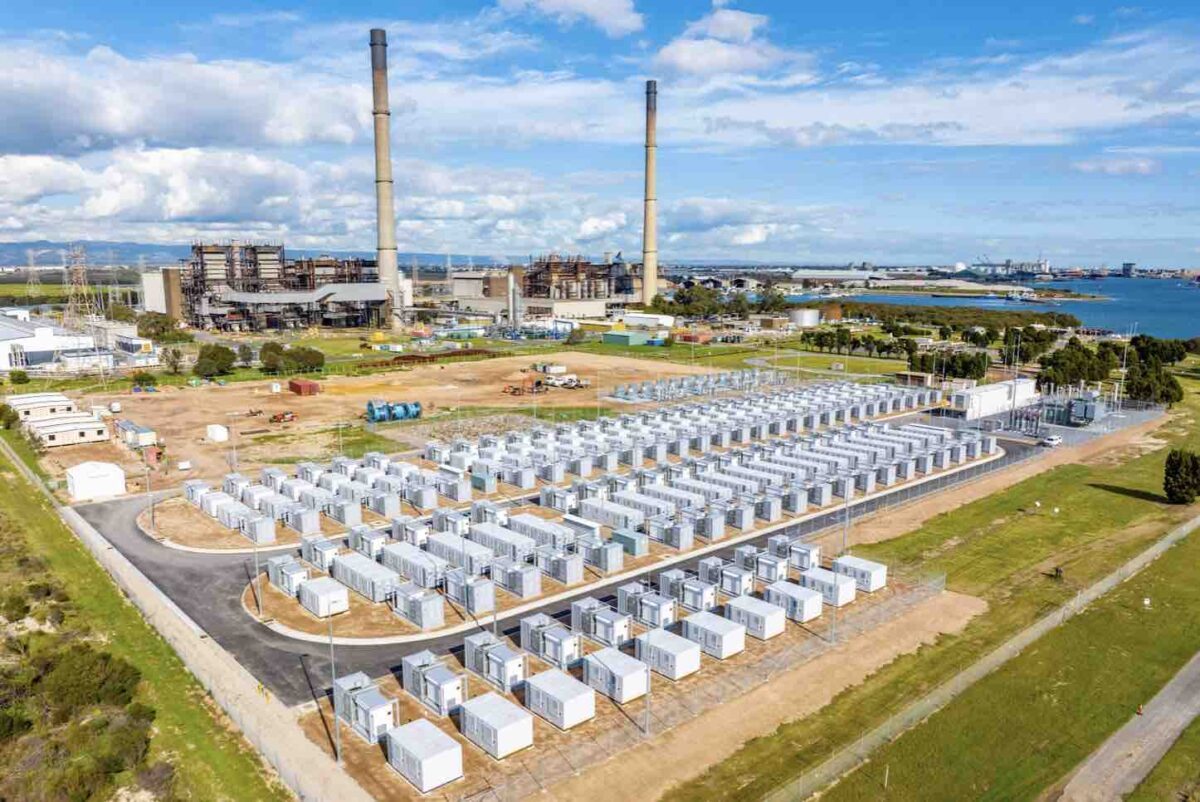
    Origin Energy's 460-megawatt Eraring battery begins commercial operation at the site of Australia's largest coal plant, planned for closure by 2029.

  4. Australia Becomes Third-Largest Battery Market

    Market Milestone

    Australia surpasses the United Kingdom to become the third-largest market globally for large-scale battery storage, with 14 gigawatts at or near financial close.

  5. Waratah Super Battery Begins Commissioning

    Milestone

    The 850-megawatt, 1,680-megawatt-hour Waratah Super Battery in New South Wales begins testing as Australia's largest and most powerful battery.

  6. Quinbrook and CATL Unveil Eight-Hour Battery

    Technical Achievement

    Quinbrook announces the EnerQB, developed with CATL over two years, as the world's first eight-hour duration grid-scale battery system.

  7. Origin Signs 12-Year Supernode Agreements

    Contract

    Origin Energy secures tolling agreements for 100% of Supernode Stages 1 and 2 capacity, guaranteeing long-term revenue for the battery project.

  8. Liddell Coal Plant Closes

    Coal Retirement

    Australia's oldest coal-fired power plant shuts down after 52 years of operation, removing approximately 10% of New South Wales electricity supply.

  9. Hornsdale Provides Grid Inertia in World First

    Technical Achievement

    The Hornsdale battery becomes the first in the world to provide inertia services at scale, delivering an estimated 2,000 megawatt-seconds of inertial response.

  10. Victorian Big Battery Begins Operations

    Milestone

    The 300-megawatt, 450-megawatt-hour Victorian Big Battery becomes the largest lithium-ion battery in the Southern Hemisphere at commissioning.

  11. Tesla's Hornsdale Battery Goes Live

    Milestone

    The 100-megawatt Hornsdale Power Reserve in South Australia becomes the world's largest lithium-ion battery, completed in under 100 days after a bet by Elon Musk.

Scenarios

1

Australia Deploys 16+ GW of Storage by 2027

Discussed by: AEMO projections and Capacity Investment Scheme targets

The federal government's Capacity Investment Scheme successfully underwrites 40 gigawatts of clean capacity by 2030, with battery deployment accelerating as costs continue falling 11-16% annually. By 2027, over 16 gigawatts of storage operates on the grid, providing sufficient flexibility for coal capacity to fall below 30% without reliability concerns.

2

Revenue Compression Slows Deployment

Discussed by: Energy storage market analysts, California and Texas market precedents

As battery capacity grows, arbitrage spreads and ancillary service prices compress—mirroring California where net revenues fell from A$103/kW in 2022 to A$53/kW in 2024. Investment slows, the project pipeline stalls, and coal plant closures are delayed again to maintain grid reliability.

3

Eight-Hour Storage Enables Full Overnight Renewable Power

Discussed by: Quinbrook, CATL partnership announcements, long-duration storage advocates

Quinbrook's EnerQB and similar long-duration technologies prove commercially viable, enabling eight-hour discharge at scale. Industrial operations shift to running two full shifts on stored solar power. The technology eliminates the need for gas peaker plants and positions Australia as a leader in long-duration storage deployment.

4

Safety Incident Triggers Regulatory Delays

Discussed by: California regulatory responses to Moss Landing fire, Australian safety standards discussions

A significant battery fire at an Australian installation prompts state governments to impose moratoriums similar to California's post-Moss Landing response. While Australia's newer installations use safer lithium iron phosphate chemistry, regulatory review processes add 12-18 months to project timelines, delaying the coal transition.

Historical Context

Hornsdale Power Reserve (2017)

December 2017

What Happened

After South Australia suffered a state-wide blackout in 2016, the government sought grid stability solutions. Tesla won a contract and built the 100-megawatt Hornsdale battery in under 100 days, making it the world's largest lithium-ion battery at the time.

Outcome

Short Term

The battery saved South Australian consumers A$150 million over two years and provided 55% of the state's frequency control services within six months of operation.

Long Term

Hornsdale demonstrated that batteries could profitably provide grid services at scale, catalyzing Australia's battery storage industry. In 2022, it became the first battery globally to provide synthetic inertia services.

Why It's Relevant Today

Supernode represents the next generation of this approach—batteries positioned at critical grid nodes, designed from the start to provide system stability services, at six times Hornsdale's original capacity.

Moss Landing Battery Fire (2024-2025)

January 2024 - ongoing

What Happened

A fire at the world's largest battery storage facility in California consumed 75% of the 300-megawatt system, forcing evacuation of 1,200 residents. Tests detected elevated levels of cobalt, nickel, and other metals in surrounding soil.

Outcome

Short Term

California imposed new safety regulations and several counties adopted moratoriums on new battery facilities. Vistra, the operator, faced significant financial losses and regulatory scrutiny.

Long Term

The incident highlighted risks of older nickel-manganese-cobalt battery chemistries and indoor installations. Newer projects increasingly use safer lithium iron phosphate cells and outdoor configurations.

Why It's Relevant Today

Australia's large battery deployments predominantly use lithium iron phosphate chemistry in outdoor installations, reducing comparable risks. However, the Moss Landing incident remains a reference point for safety regulation discussions.

California Battery Buildout (2020-2025)

2020 - 2025

What Happened

California deployed more grid battery capacity than any jurisdiction except China, driven by aggressive renewable mandates and the retirement of the Diablo Canyon nuclear extension controversy. By 2025, the state had over 10 gigawatts of installed storage.

Outcome

Short Term

Batteries helped California avoid rolling blackouts during heat waves and reduced reliance on gas peaker plants. Revenue fell as capacity saturated—from US$103/kW in 2022 to US$53/kW in 2024.

Long Term

California's experience demonstrated both the potential and the economic challenges of rapid battery deployment, providing a roadmap for other markets navigating similar transitions.

Why It's Relevant Today

Australia is following a similar trajectory but with different market structures. The revenue compression California experienced warns that Australia's current deployment pace may face economic headwinds as capacity grows.

12 Sources: