
Pull to refresh
Logo
US Treasury sanctions Iran's shadow banking network

US Treasury sanctions Iran's shadow banking network

Force in Play

Operation Economic Outcast targets the exchange houses and front companies that carry Iran's remaining foreign trade

Overview

Updated 2 hours ago

Iran's government runs a second banking system, built from currency exchange houses and front companies, that keeps its export earnings moving without touching the U.S. dollar. On November 23, the U.S. Treasury sanctioned 22 entities and eight people inside it.

The targets include exchange houses in Iran, front companies in the United Arab Emirates and Hong Kong, and the bank affiliates Treasury calls 'rahbar' companies that coordinate deals for Iranian clients. Treasury's Financial Crimes Enforcement Network separately reported flagging about $14.7 billion in possibly related transactions between January 2025 and August 2026.

Why it matters

Banks that keep moving Iran's oil money now risk losing access to the U.S. financial system.

Questions about this story

Free account needed to ask — your question is kept and asked for you right after sign-up. Answers are public.

No questions yet — be the first to ask.

Key Indicators

30
Targets designated
22 entities and eight individuals across Iran, the UAE, Türkiye and Hong Kong.
$14.7B
Flagged shadow banking activity
FinCEN's total for transactions from January 2025 to August 2026.
4,983
Transactions in FinCEN's dataset
Limited to transfers of $500,000 or more.
$2.9M
Average transaction size
FinCEN says the median was larger, at about $3.7 million.
4
Jurisdictions named
Iran, the United Arab Emirates, Türkiye and Hong Kong.

Voices

Curated perspectives — historical figures and your fellow readers.

Sign up to generate historical perspectives on this story.

People Involved

Organizations Involved

Timeline

August 2026 November 2026

4 events Latest: Yesterday
Tap a bar to jump to that date
  1. OFAC designates 30 targets in the shadow banking network

    Latest Sanctions

    Treasury blocks 22 entities and eight individuals, including exchange houses, front companies and the rahbar company serving Bank Sarmayeh.

  2. FinCEN flags $14.7 billion in potential shadow banking

    Analysis

    Treasury's financial intelligence unit reports 4,983 transactions from January 2025 to August 2026 and says flagged volume appears to be declining.

  3. Iran's foreign minister signals openness to diplomacy

    Statement

    Abbas Araghchi says Tehran still hopes diplomacy can end its nine-month war with the United States, according to the Associated Press.

  4. Bessent launches Operation Economic Outcast

    Policy

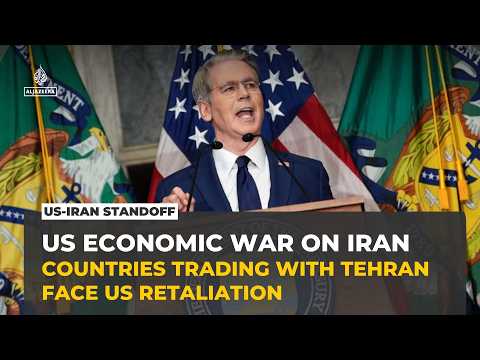
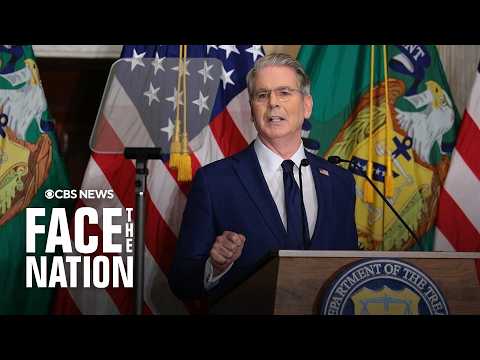
    Treasury Secretary Scott Bessent announces a maximum-pressure campaign he calls 'Economic D-Day,' aimed at the networks Iran uses to smuggle oil and move money.

Scenarios

1

FinCEN's next update shows flagged activity falling again

Likely Resolves by Q2 2027

Discussed by: FinCEN's November 2026 trend analysis, which reported that flagged volume declined over the review period

FinCEN said suspected shadow banking activity appeared to shrink between January 2025 and August 2026. Another decline in the next update would support Treasury's argument that designating exchange houses and rahbar companies reduces the network rather than just rerouting it. A flat or rising figure would undercut that case.

2

Network rebuilds through front companies in new jurisdictions

Possible Resolves by Q2 2027

Discussed by: Treasury's own release, which says the networks use thousands of front companies in multiple jurisdictions

The designations name specific firms, but the underlying system is a matching service that can re-form around new intermediaries. Treasury says the Central Bank of Iran oversees it and that front companies number in the thousands, leaving room to reroute trade through jurisdictions not named in the November 23 action.

3

Washington and Tehran reach a deal that eases some sanctions

Unlikely Resolves by Q2 2027

Discussed by: Iran's Foreign Minister Abbas Araghchi and President Trump, as reported by the Associated Press

Araghchi's comment came the same day as the designations. Trump said Iran wanted a deal, but not one acceptable to him. Any agreement would have to cover the war and Iran's nuclear program before Treasury rolled back designations, and Operation Economic Outcast has moved in the opposite direction.

Historical Context

3 moments from history that rhyme with this story — and how they unfolded.

March 2012

SWIFT disconnects Iranian banks (2012)

The European Union ordered the Belgium-based messaging network SWIFT to cut off Iranian banks, closing Iran's main channel for settling international payments. Buyers of Iranian oil struggled to pay, and the country's export volumes fell.

Then

Iran lost access to the standard plumbing of global trade and turned to barter, gold and informal intermediaries.

Now

The exchange-house and rahbar system Treasury targeted in 2026 exists to fill the gap that formal banking sanctions create.

Why this matters now

Shows what happens when the formal channel closes: trade moves into the informal network, which is exactly what the November 23 action tries to reach.

2015-2017

Halkbank and the Zarrab case (2015-2017)

Federal prosecutors in New York charged Reza Zarrab, a Turkish-Iranian gold trader, with helping Iran move oil revenue through U.S. banks by disguising it as gold trades. He pleaded guilty in 2017 and testified against a Halkbank executive, pulling Turkey's state lender into the case.

Then

A Halkbank deputy general manager was convicted in January 2018. Halkbank itself was indicted in 2019.

Now

The case established that a foreign bank handling Iran's informal trade could face U.S. prosecution, not just a Treasury designation.

Why this matters now

Türkiye is again a named jurisdiction in the November 23 action, and Treasury is warning foreign financial institutions that handling this trade risks losing U.S. market access.

July 1991

BCCI shut down (1991)

Regulators in the United States, Britain and Luxembourg closed the Bank of Credit and Commerce International after investigations found it had been used for money laundering, arms trafficking and sanctions evasion across dozens of countries.

Then

It became one of the largest bank failures in history, and senior executives were convicted.

Now

It set the template for unwinding a bank structure built to obscure who is really moving money, and it shaped modern anti-money-laundering rules.

Why this matters now

Treasury's case against Iran's network rests on the same premise: exchange houses and front companies exist to hide the identity of the party moving the funds.

Sources

(9)