
Pull to refresh
Logo
Van Gogh painting sets auction record after heirs settle Nazi-era claim

Van Gogh painting sets auction record after heirs settle Nazi-era claim

Money Moves

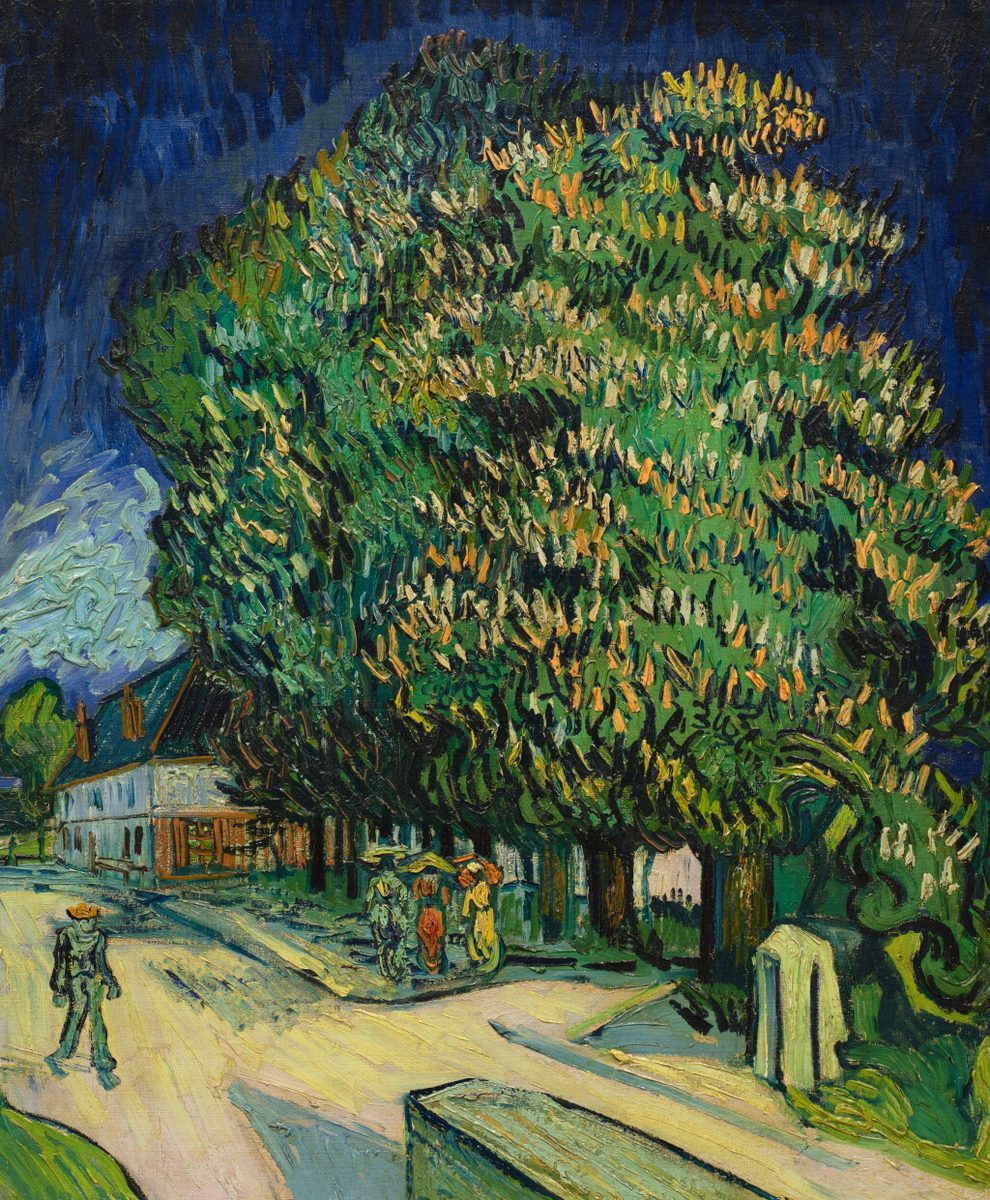
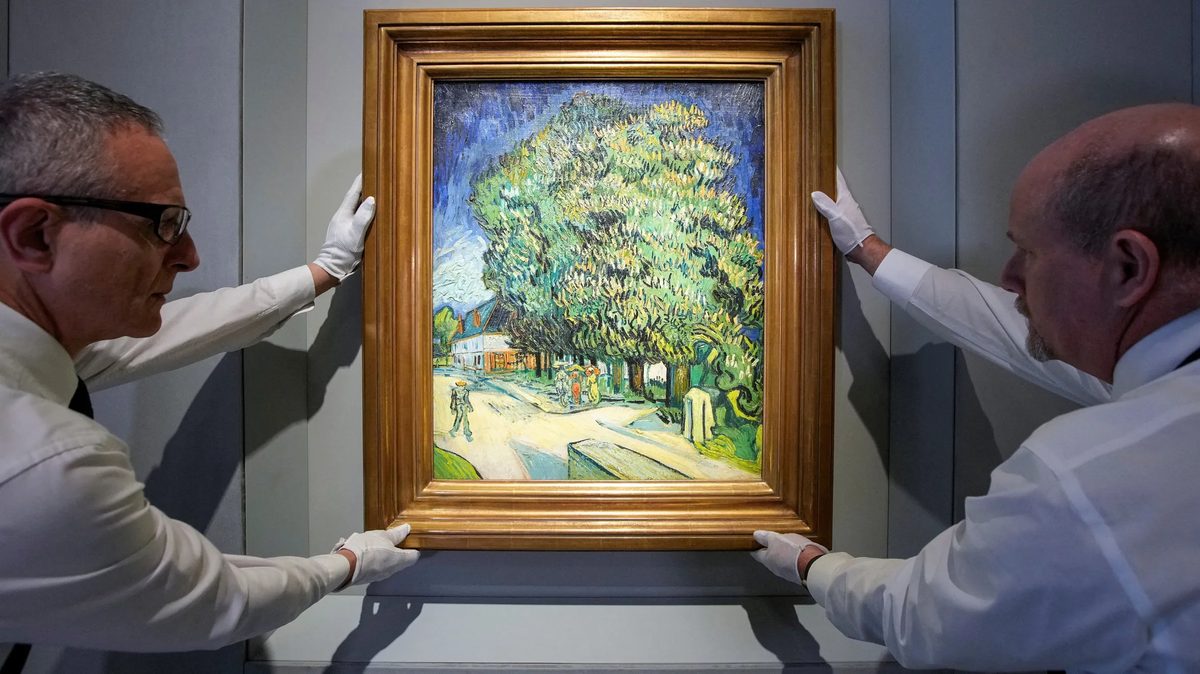
Sotheby's sold Châtaigniers en fleurs for $190.4 million with fees, a day after the seller and Samuel Fischer's descendants reached a confidential agreement.

Overview

Updated 4 hours ago

A Van Gogh landscape that a Jewish publishing family sold in 1936 after fleeing Nazi Germany sold at Sotheby's in New York on 18 November for $190.4 million, fees included. The auction went ahead one day after Sotheby's announced the sellers had settled with the descendants of the painting's former owner, who had asked the house to pull the work.

The price is the highest ever paid at auction for a Van Gogh, above the $117.2 million Christie's took for Orchard with Cypresses in 2022. It also came in under Sotheby's roughly $180 million estimate, and neither family nor the auction house disclosed the settlement terms or the buyer's name.

Why it matters

The template is now visible: settle with the heirs before the gavel, keep the terms secret, sell.

Questions about this story

Free account needed to ask — your question is kept and asked for you right after sign-up. Answers are public.

No questions yet — be the first to ask.

Key Indicators

$190.4M
Final sale price
Includes Sotheby's buyer's fees; the highest price paid at auction for a Van Gogh.
$117.2M
Previous Van Gogh auction record
Orchard with Cypresses, sold at Christie's New York in November 2022.
$180M
Sotheby's pre-sale estimate
The hammer estimate published before the auction; the result landed below it.
51
Years the seller's family held the painting
The Blaquier-Arrieta family bought it in 1975 and consigned it in 2026.

Voices

Curated perspectives — historical figures and your fellow readers.

Sign up to generate historical perspectives on this story.

People Involved

Organizations Involved

Timeline

1909 November 2026

8 events Latest: Today
Tap a bar to jump to that date
  1. Painting sells for $190.4 million with fees

    Today Auction

    A buyer in the room takes it, a record for a Van Gogh at auction. Le Parisien reported the sale at $165 million; the $190.4 million figure includes buyer's fees.

  2. Sotheby's announces a settlement

    Settlement

    The house says the sellers and 'all of the legal descendants' of Samuel and Hedwig Fischer reached a mutually satisfactory agreement. Terms stay confidential.

  3. Fischer heirs demand the painting be withdrawn

    Claim

    Their lawyer asks Sotheby's to prove the 1936 sale was voluntary and at market value, or pull the lot.

  4. Sotheby's announces the collection sale

    Announcement

    The house estimates the Van Gogh at about $180 million and guarantees it. The wider collection is valued near $480 million.

  5. Christie's sets the previous Van Gogh record

    Market

    Orchard with Cypresses sells in New York for $117.2 million, the benchmark the 2026 sale would beat.

  6. Blaquier-Arrieta family acquires the work

    Provenance

    The Argentine collectors add it to a collection they had been building since the 1960s.

  7. Fischer family sells through an Amsterdam gallery

    Provenance

    Three months after fleeing Berlin for Vienna, the family parts with the painting. His heirs later call the sale forced.

  8. Samuel Fischer buys the painting

    Provenance

    The German Jewish publisher acquires Châtaigniers en fleurs, which Van Gogh painted at Auvers-sur-Oise in May 1890.

Scenarios

1

No further claims surface against the Arrieta-Blaquier collection

Likely Resolves by Nov 18, 2027

Discussed by: Sotheby's, which said its provenance research found no established duress, and Art Recovery International's Christopher Marinello, who said such claims are hard to prove.

The settlement clears the one work that had drawn a public challenge. The rest of the collection, including Cézanne's Harlequin, sells without a claim, and no heir group comes forward within a year. The confidential deal becomes the quiet end of the matter rather than the start of a pattern.

2

A second claim hits another work from the same collection

Possible Resolves by Q2 2027

Discussed by: Claribel Terré Morell, who said similar cases could recur in Argentina and elsewhere in Latin America where families bought works without knowing their history.

Researchers or heirs examine the other 1875-1905 works consigned from the same Argentine collection and find a pre-1945 provenance gap. A demand for withdrawal or a share of proceeds follows, testing whether the Fischer settlement was a one-off or a template.

3

Auction houses tighten provenance disclosure for 1933-1945 sales

Unlikely Resolves by End of 2027

Discussed by: No auction house has proposed this. The claim's outcome, a private deal with undisclosed terms, is the kind of result critics of the current system point to.

Sotheby's or Christie's writes a cataloguing rule requiring consignors to explain gaps in ownership between 1933 and 1945, rather than handling each challenge case by case after the catalogue prints. That would move the cost of provenance research from the claimant to the seller.

Historical Context

3 moments from history that rhyme with this story — and how they unfolded.

1938-2006

Portrait of Adele Bloch-Bauer I (1938-2006)

Ferdinand Bloch-Bauer, a Viennese sugar magnate, fled Austria in 1938 and left five Klimt paintings behind, including the portrait of his wife Adele. The Austrian state gallery acquired them. In 2000 his niece Maria Altmann sued Austria in a United States court, and a Vienna arbitration panel ordered the paintings returned in 2006.

Then

Austria returned the five paintings. Altmann sold the portrait to Ronald Lauder's Neue Galerie for a reported $135 million.

Now

The case made civil litigation and arbitration standard tools for Nazi-era claims against museums holding looted work.

Why this matters now

The Van Gogh claim rested on the same question, whether a 1930s sale was voluntary, but ended in a private settlement instead of a ruling.

1998-2010

United States v. Portrait of Wally (1998-2010)

Egon Schiele's portrait of his lover Walburga Neuzil belonged to Viennese gallery owner Lea Bondi Jaray, who fled Austria in 1939. A Nazi-appointed dealer took the painting, and collector Rudolf Leopold later acquired it. In 1998 New York prosecutors subpoenaed it from a Museum of Modern Art exhibition, and the case ran for 12 years.

Then

A 2010 settlement returned the painting to Bondi's heirs.

Now

It showed that American courts would hear claims over art that changed hands in Europe decades earlier, raising the cost of ignoring provenance gaps.

Why this matters now

Sotheby's faced the same exposure with the Van Gogh: a claim that could have frozen the sale, resolved by negotiation instead.

December 1998

Washington Principles on Nazi-Confiscated Art (1998)

Delegates from 44 governments met in Washington and endorsed non-binding principles for art taken by the Nazis: identify looted works, open archives, publicize provenance, and reach just and fair solutions with claimants.

Then

Museums and governments began publishing provenance research on holdings with pre-1945 gaps.

Now

The principles became the reference point for restitution claims, though they carry no legal force.

Why this matters now

The Fischer heirs' demand that Sotheby's prove the 1936 sale was voluntary is that logic applied to a private auction rather than a museum wall.

Sources

(10)