

Pull to refresh
Logo
Getty Images files for Chapter 11 bankruptcy, goes private under Koch-backed deal

Getty Images files for Chapter 11 bankruptcy, goes private under Koch-backed deal

Money Moves

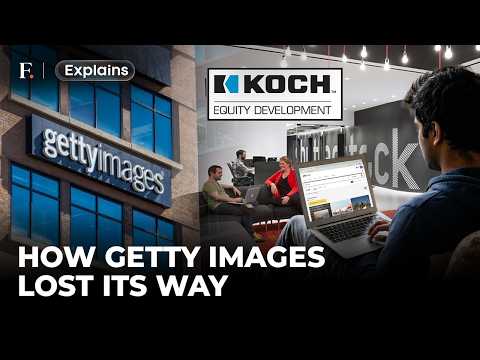
Stock-photo pioneer unwinds its failed Shutterstock merger and hands ownership to the Getty family and Koch Equity Development

2 days ago: Getty files for Chapter 11

Overview

Updated 1 hour ago

Getty Images, the stock-photo company that supplies news outlets around the world, filed for Chapter 11 bankruptcy in Delaware on October 21. The filing comes after the collapse of its $3.7 billion merger with rival Shutterstock under UK antitrust pressure. The company carries about $2.1 billion in debt.

The investors will inject up to $533 million and own 100% of a private Getty once the court confirms the plan. Existing shareholders get nothing; their stock was worth about $20 million in early October, down 99% from a $4.8 billion valuation when the company listed in 2022.

Why it matters

The company that supplies news photos worldwide is now owned by its lenders, and AI image tools are shrinking the paid-stock market it depends on.

Questions about this story

Free account needed to ask — your question is kept and asked for you right after sign-up. Answers are public.

No questions yet — be the first to ask.

Key Indicators

$2.1B
Total debt as of June 30, 2026
Debt owed before the bankruptcy filing, roughly equal to the company's entire debut valuation in 2022.
$533M
New equity from Getty family and Koch
Investment that funds the restructuring; investors will own 100% of the private company.
99%
Stock value lost since 2022 SPAC listing
Shares fell from a $4.8 billion debut valuation to a $20.7 million market cap by early October.
$154M
Annual interest expense
Interest payments that consumed a substantial portion of free cash flow, per the disclosure statement.

Voices

Curated perspectives — historical figures and your fellow readers.

Ever wondered what historical figures would say about today's headlines?

Sign up to generate historical perspectives on this story.

People Involved

Organizations Involved

Timeline

2022 November 2026

9 events Latest: 2 days ago
Tap a bar to jump to that date
  1. Restructuring agreement announced

    Finance

    Getty announces plans to file bankruptcy and go private with $533 million in new equity from the Getty family and Koch Equity Development.

  2. Stock moves to OTC market

    Finance

    Getty shares begin trading on OTC Pink after delisting; Getty pays overdue note interest within its grace period.

  3. NYSE begins delisting Getty stock

    Regulatory

    NYSE starts proceedings to delist Getty's Class A shares, citing an abnormally low selling price.

  4. Remaining credit exhausted

    Finance

    Getty draws the remaining $30 million of the credit line within about three months.

  5. Getty draws down credit line

    Finance

    Getty draws $120 million from its revolving credit facility, partly to pay a warrant-litigation judgment.

  6. Shutterstock merger collapses

    Deal

    The planned $3.7 billion merger with rival Shutterstock is scrapped under UK antitrust pressure after $100 million in fees.

  7. Getty returns to public markets via SPAC

    Finance

    Getty Images lists through a SPAC merger valuing the company at about $4.8 billion.

Scenarios

1

Court confirms plan; Getty emerges private by year-end

Likely Resolves by End of 2026

Discussed by: The company's own filings, Reuters, and Bloomberg Law

The plan is prepackaged: secured lenders holding roughly 89% of secured debt agreed to extended maturities and lower interest, and unsecured bondholders approved retiring $270 million of notes. The outstanding step is the creditor vote, which closes November 30. Getty expects confirmation and emergence by the end of 2026.

2

Creditor objections delay emergence into 2027

Possible Resolves by Q1 2027

Discussed by: Bankruptcy practitioners cited in Reuters coverage

The plan cancels all existing equity, which can draw objections from shareholders or holdout creditors. A judge could require added disclosure or hearings. That would push confirmation and emergence past year-end, extending the debtor-in-possession period.

3

Reorganized Getty sells or merges within a year of emergence

Uncertain Resolves by Oct 31, 2027

Discussed by: Reuters and The Verge market commentary

Once private and debt-light, Getty becomes a potential acquisition target. A rival platform, private equity firm, or technology company could buy it. The warrant-litigation liability and AI competition that helped drive it into bankruptcy would remain.

Historical Context

2 moments from history that rhyme with this story — and how they unfolded.

January 2012

Eastman Kodak bankruptcy (2012)

Kodak, the dominant film-photography company, filed for Chapter 11 after digital cameras destroyed its film business. Kodak had invented the first consumer digital camera in 1975 but failed to monetize it, protecting film revenue instead.

Then

Kodak emerged from bankruptcy in 2013 as a much smaller commercial-printing and imaging company.

Now

The case became the standard example of a market leader disrupted by a technology it helped create.

Why this matters now

Getty faces the same pattern from generative AI image tools, which let companies create visuals without paying for licensed stock photos.

September 2017-April 2018

Toys "R" Us liquidation (2017-2018)

Private equity firms KKR, Bain Capital and Vornado Realty Trust took Toys "R" Us private in a $6.6 billion leveraged buyout in 2005. The deal loaded the retailer with debt, leaving it unable to invest in stores or e-commerce as Amazon and Walmart competed.

Then

Toys "R" Us filed for Chapter 11 in September 2017 and liquidated its U.S. stores in early 2018, putting tens of thousands of workers out of jobs.

Now

It became the cautionary tale of debt-heavy private equity ownership meeting a changing competitive market.

Why this matters now

Getty's $2.1 billion debt load, built through years of private equity control, constrained its ability to respond to AI pressure in the same way.

Sources

(9)