




Pull to refresh
Logo
Vanda's anxiety drug VQW-765 fails late-stage trial, program on hold

Vanda's anxiety drug VQW-765 fails late-stage trial, program on hold

New Capabilities

Phase III study missed its primary endpoint in social anxiety disorder; shares fell in after-hours trading

Yesterday: VQW-765 misses primary endpoint in Phase III

Overview

Updated 1 hour ago

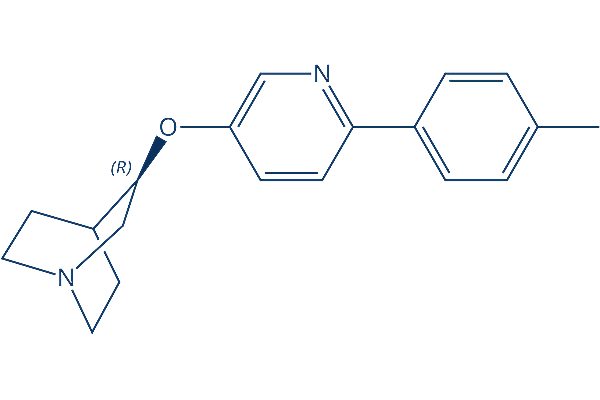
Vanda Pharmaceuticals' experimental anxiety drug failed its 546-patient Phase III trial, and the company has put the program on hold. VQW-765 missed its primary endpoint in adults with social anxiety disorder, matching placebo on a stress-test measure of distress.

The failure matters because no FDA-approved drug exists for performance anxiety, which Vanda estimates affects over one in five Americans. Shares fell 10.7% within 10 minutes of the announcement.

Why it matters

Roughly one in five Americans have performance anxiety; with no FDA-approved drug for it, a failed trial leaves them no non-sedating option.

Questions about this story

Free account needed to ask — your question is kept and asked for you right after sign-up. Answers are public.

No questions yet — be the first to ask.

Key Indicators

0.8899
P-value, primary endpoint (female SUDS)
Female participants on VQW-765 showed no significant difference from placebo during the stress-test performance phase.
546
Patients randomized in Phase III trial
Adults aged 18-65 with social anxiety disorder at about 30 U.S. sites.
10.7%
Stock drop in 10 minutes after announcement
VNDA fell from $4.21 to $3.76 in after-hours trading.

Voices

Curated perspectives — historical figures and your fellow readers.

Ever wondered what historical figures would say about today's headlines?

Sign up to generate historical perspectives on this story.

People Involved

Organizations Involved

Timeline

September 2025 October 2026

2 events Latest: Yesterday
  1. VQW-765 misses primary endpoint in Phase III

    Latest Clinical Results

    Vanda announces Study 3201 failed to beat placebo; program on hold. Shares fell after hours.

  2. Phase III trial of VQW-765 begins

    Trial Start

    Vanda launches Study 3201, randomizing 546 adults with social anxiety disorder at ~30 U.S. sites.

Scenarios

1

Vanda terminates VQW-765 after analyzing failed dataset

Likely Resolves by Q2 2027

Discussed by: Investing.com and biotech market analysts covering the stock drop

Vanda said the program is on hold pending full analysis. With p-values of 0.89 on the primary endpoint and 0.66 on the key secondary, the likely outcome is formal discontinuation, matching how Vanda has exited earlier failed programs.

2

Post-hoc analysis finds a subgroup signal; program continues

Unlikely Resolves by Q2 2027

Discussed by: Vanda's own statement that it will analyze the full dataset

The primary endpoint was measured only in women. A signal in a subgroup (by severity, sex, or responder status) could justify a new trial design. This is rare at these p-values, but psychiatric drug developers sometimes find one.

3

Vanda out-licenses or sells VQW-765

Unlikely Resolves by End of 2027

Discussed by: Biotech partnership watchers tracking pipeline deals

A partner willing to absorb the risk could acquire rights for a specific indication or region. Broad efficacy failure makes this unlikely, but Vanda could still salvage some value from the asset rather than write it off.

Historical Context

3 moments from history that rhyme with this story — and how they unfolded.

2015

Encenicline's Phase III failure (2015)

Encenicline, an alpha-7 nicotinic acetylcholine receptor partial agonist developed by Forum Pharmaceuticals for Alzheimer's disease, failed to show efficacy in Phase III trials. It was also being tested for schizophrenia.

Then

Forum halted the encenicline program after the efficacy miss.

Now

Added to a string of alpha-7 agonists failing in late-stage trials despite promising earlier data.

Why this matters now

VQW-765 targets the same receptor type. Developers have repeatedly struggled to turn alpha-7 modulation into measurable clinical benefit.

1990-2023

Gepirone's decades-long approval saga (1990s-2023)

Gepirone, a 5-HT1A receptor agonist developed by Fabre-Kramer, faced repeated FDA rejections over three decades as a treatment for major depressive disorder. The agency finally approved it in 2023 as Exxua.

Then

Exxua reached the U.S. market as a treatment for major depressive disorder.

Now

Showed CNS psychiatric drugs can reach approval after very long paths, but such persistence is rare.

Why this matters now

Anxiety and depression drugs face high late-stage failure rates; even successes take years. VQW-765's Phase III miss fits that pattern.

2010s-present

The Phase III 'valley of death' (industry pattern)

Industry analyses, including BIO's annual drug development reports, have long found that roughly half of drugs entering Phase III never reach approval. The rate is higher for central nervous system drugs.

Then

Many promising Phase II candidates never reach the market.

Now

Positive Phase II data, like VQW-765's, is treated as weak evidence of eventual approval.

Why this matters now

VQW-765's Phase II signal did not survive the larger Phase III test, a common failure mode in drug development.

Sources

(5)