
Pull to refresh
Logo
VMware folds its telco platform into Cloud Foundation

VMware folds its telco platform into Cloud Foundation

New Capabilities

Standalone Telco Cloud Platform licenses stop being sold as Broadcom pushes carriers onto one stack for network, IT and AI workloads

Overview

Updated 1 hour ago

For most of a decade, phone companies bought a separate VMware product to run their network functions. On November 2, 2026, that product stopped being sold on its own. Broadcom introduced VMware Cloud Foundation Telco, a telco-tuned edition of its main enterprise cloud platform, and ended availability for the standalone Telco Cloud Platform licenses the same day.

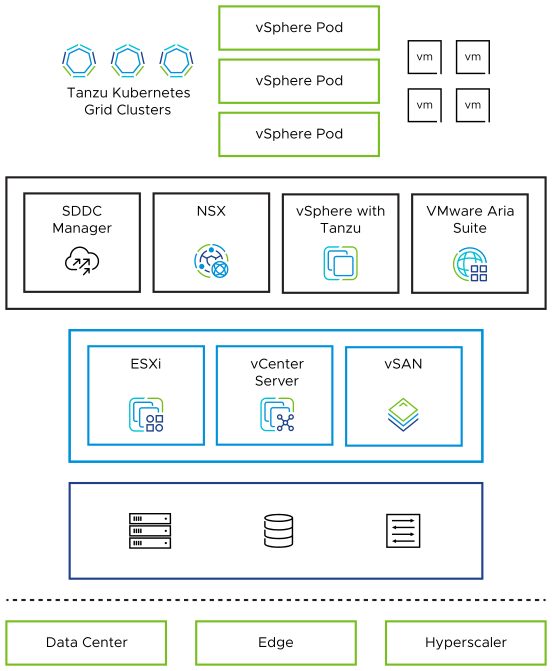
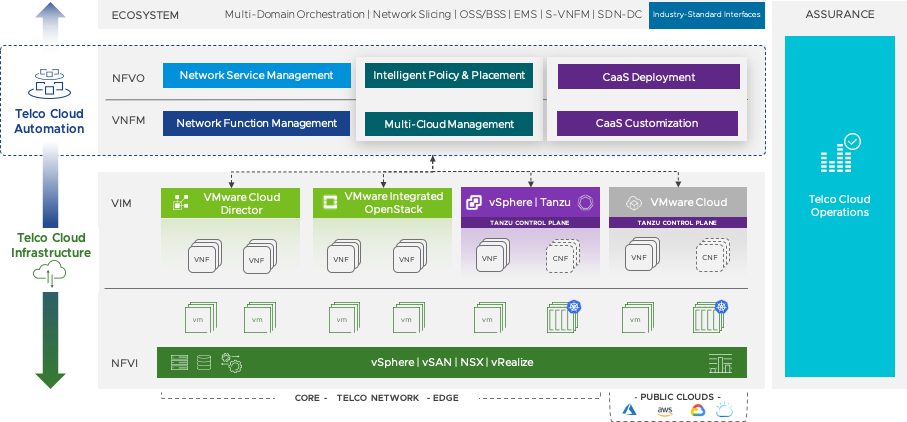
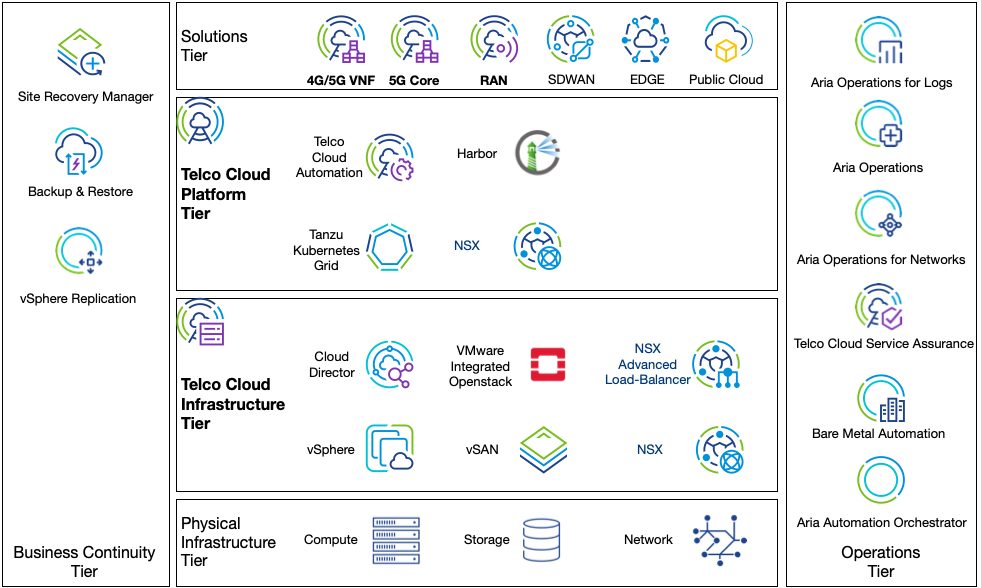
The change means a carrier that already runs VMware for billing systems can now run 5G network functions, containerized workloads and AI services on the same stack, under one license and one management domain. Broadcom says the platform is engineered to telco-grade standards for reliability, security and energy use. Carriers that preferred buying network infrastructure separately no longer have that option from VMware.

Why it matters

Telecom operators now buy one VMware license for network, IT and AI workloads, or take their network business to a rival.

Questions about this story

Free account needed to ask — your question is kept and asked for you right after sign-up. Answers are public.

No questions yet — be the first to ask.

Key Indicators

40%
Five-year TCO savings
Broadcom's estimate for running telco workloads on a unified stack versus separate siloed architectures.
38%
Memory and server TCO reduction
Estimated saving from Advanced NVMe memory tiering, which removes the need for hardware RAID.
38%
Storage TCO reduction
Estimated saving from vSAN ESA global deduplication compared with external storage arrays.
25–30%
Lower power consumption
Broadcom's estimate from improved server performance and virtual machine density.

Voices

Curated perspectives — historical figures and your fellow readers.

Sign up to generate historical perspectives on this story.

People Involved

Organizations Involved

Timeline

March 2026 November 2026

3 events Latest: Yesterday
  1. VCF Telco introduced; standalone licenses end

    Latest Product launch

    Broadcom launches VMware Cloud Foundation Telco and stops selling standalone Telco Cloud Platform licenses the same day.

  2. Telco Cloud Platform 5.2 ships

    Product release

    The release adds Kubernetes lifecycle management, policy enforcement and container registry improvements.

  3. Broadcom unveils Telco Cloud Platform 9

    Product announcement

    At Mobile World Congress, Broadcom says the next telco platform will be built on VMware Cloud Foundation 9 with telco-specific additions.

Scenarios

1

A named tier-1 carrier commits to VCF Telco at renewal

Likely Resolves by Nov 2, 2027

Discussed by: Broadcom's announcement and its account teams, which say renewals will be mapped to VCF

Broadcom says existing Telco Cloud Platform subscriptions stay supported through the transition, and that account representatives will align renewals to VCF. If a large operator publicly confirms a VCF Telco deployment, it would show the licensing consolidation did not push customers away. The trigger is a renewal cycle landing after November 2026.

2

Another flagship telco defects to a rival platform

Possible Resolves by Q2 2027

Discussed by: SDxCentral, which reported Boost Mobile's move to Wind River and Nokia's shift toward Red Hat

Boost Mobile already replaced its VMware container platform, citing cost. Nokia has moved primary cloud infrastructure development to Red Hat while still validating on VMware. A second high-profile operator making the same switch would show that folding telco into a broader, pricier license accelerates defections rather than slowing them.

3

A European carrier launches sovereign AI on VCF Telco

Uncertain Resolves by End of 2027

Discussed by: Broadcom, which built air-gapped deployment and in-jurisdiction controls into the platform

VCF Telco includes VMware Private AI Services, fully air-gapped deployment and controls aligned to NIST and the UK Telecommunications Security Act. Broadcom is betting that carriers want to sell sovereign AI services to governments and enterprises. A commercial launch by a European operator would validate that bet.

Historical Context

2 moments from history that rhyme with this story — and how they unfolded.

November 2023

Broadcom acquires VMware (2023)

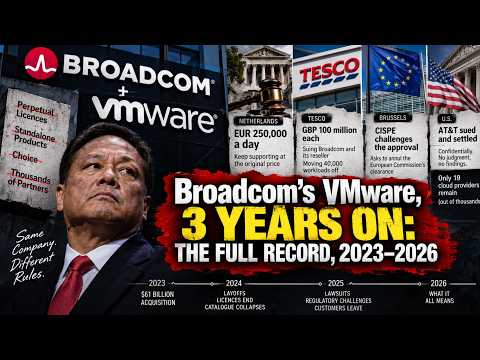
Broadcom closed its purchase of VMware and began moving customers from perpetual licenses to bundled subscriptions. Many enterprise customers saw costs rise and some began evaluating alternatives.

Then

VMware partners and customers renegotiated contracts, and competitors marketed migration paths.

Now

Broadcom consolidated VMware's product lines into fewer bundles, a pattern that reached the telco business in 2026.

Why this matters now

The end of standalone Telco Cloud Platform licenses follows the same playbook: fewer SKUs, one platform, higher-level bundles.

2012–2020

The network functions virtualization wave (2012 onward)

Telecom operators began replacing dedicated hardware appliances with software network functions running on general-purpose servers. VMware built a carrier-grade platform to host those virtual network functions and assembled an ecosystem of certified vendors.

Then

Carriers ran virtualized 4G core functions on VMware and similar platforms.

Now

The stack fragmented as containerized, cloud-native network functions arrived with their own Kubernetes tooling, creating the separate operational silos Broadcom now cites.

Why this matters now

VCF Telco is Broadcom's answer to that fragmentation, putting virtual and containerized network functions on one horizontal platform.

Sources

(6)